


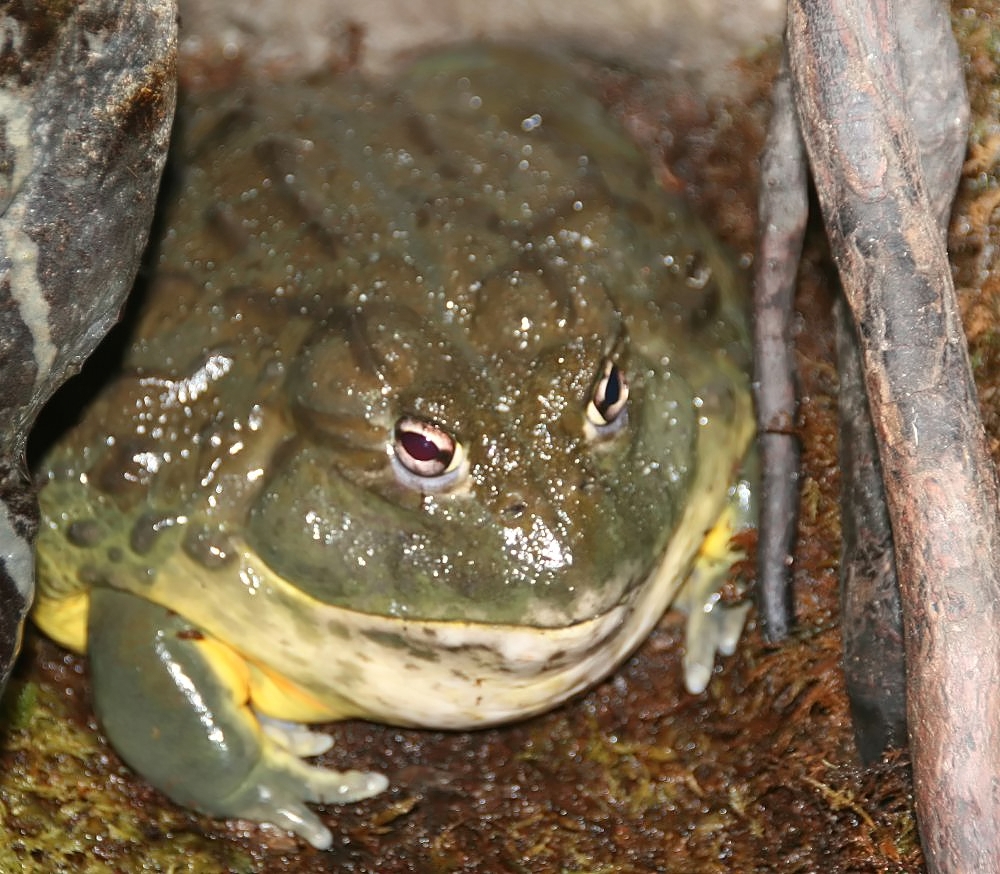
AFRICAN BULLFROG
Pyxicephalus adspersus
DESCRIPTION
The African Bullfrog is a large, robust amphibian known for its impressive size and distinctive appearance. Males can grow up to 25 cm in length and are characterized by their bright green coloration with darker mottling, while females are generally smaller and less colorful. This species is known for its aggressive behavior, particularly during the breeding season, where males will defend their territory fiercely and can even engage in combat with other males.
FUN FACTS
- The African Bullfrog is known for its unique breeding behavior, where males will create a nest and call to attract females
- Once the eggs are laid, males often guard the nest and may even help the tadpoles to water
- | This species can survive in extremely dry conditions by burrowing into the ground and entering a state of dormancy until the rains return
- This adaptation allows them to thrive in unpredictable environments where water availability fluctuates significantly
QUICK INFO
Lifespan8-15 years in the wild, up to 20 years in captivit
Average Weight1-2 kg
Average Length20-25 cm
Diet TypeCarnivore
Social Structuresolitary, males are territorial and will defend their breeding sites
Activity PatternNocturnal
Breeding SeasonRainy season (varies by region)
- Habitat
- African Bullfrogs inhabit a range of environments, including savannas, grasslands, and temporary ponds. They are often found in areas with abundant water sources, which are crucial for their breeding.
- Biomes
- Savanna, Grassland, Wetland
- Native Range
- The species is native to sub-Saharan Africa, particularly in countries with seasonal rainfall that creates temporary water bodies.
- Continent
- Africa
- Countries
- Botswana, Namibia, South Africa, Zimbabwe, Democratic Republic of the Congo
- Diet
- The African Bullfrog is primarily carnivorous, feeding on a variety of prey including insects, small mammals, and other amphibians. They are opportunistic feeders and will consume whatever is available in their environment.
- Diet Type
- Carnivore
- Favorite Food
- insects, small mammals
- Social Structure
- solitary, males are territorial and will defend their breeding sites
- Activity Pattern
- Nocturnal
- Group Size
- 1-5
- Territorial
- 1
 VU
VU
 LC
LC
1-2 kg
Weight
20-25 cm
Length
- Coloration
- bright green with darker mottling
- Sexual Dimorphism
- males are larger and more colorful than females
- Lifespan
- 8-15 years in the wild, up to 20 years in captivit
- Offspring per Birth
- 1000-4000 eggs
- Sexual Maturity
- 2-3 years
- Breeding Season
- Rainy season (varies by region)
LC
Least Concern
IUCN Red List Status
- Population Status
- The population is currently stable, but local declines may occur due to habitat loss.
- Wild Population Estimate
- unknown
- Population Trend
- Stable
- Endangered
- 0
- Threats
- Main threats include habitat destruction due to agriculture and urbanization, as well as pollution of water sources. Climate change may also impact their breeding habitats.
- Predators
- birds of prey, snakes, larger mammals
- Defense Mechanisms
- They can inflate their bodies to appear larger and may also use their strong legs to escape quickly.
- Found in Zoos
- Common