


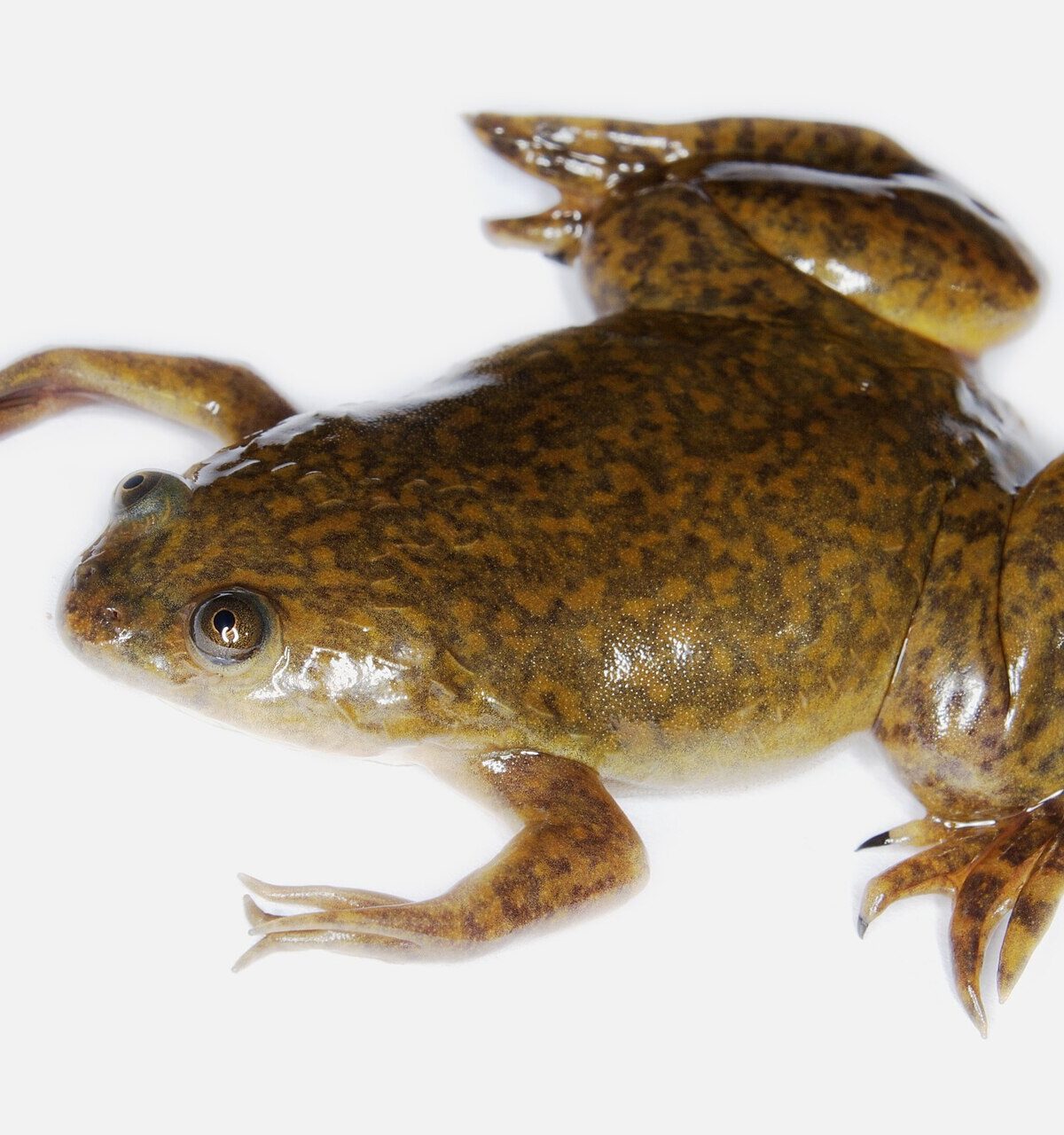
AFRICAN CLAWED FROG
Xenopus laevis
DESCRIPTION
African Clawed Frog (Xenopus laevis) is commonly known as the Clawed Frog and is characterized by its flattened body and long, webbed toes, which are adapted for swimming. This species exhibits a unique behavior of using its claws to dig and burrow into the substrate, making it an interesting subject for study in both natural and laboratory settings. Ecologically, it thrives in freshwater environments, often found in ponds and slow-moving streams across its native range.
FUN FACTS
- African Clawed Frogs are often used in scientific research due to their unique reproductive biology and ability to regenerate limbs
- They have a fascinating method of reproduction where females can lay hundreds of eggs at once, which develop into tadpoles that are free-swimming and can grow rapidly.| These frogs are also known for their ability to survive in a variety of aquatic environments, including those with low oxygen levels, making them a resilient species in the face of environmental changes
QUICK INFO
Lifespan10-15 years in the wild, up to 20 years in captivi
Average Weight50-100 g
Average Length10-15 cm
Diet TypeCarnivore
Social Structuresolitary, though they may gather during breeding season
Activity PatternNocturnal
Breeding SeasonWet season, typically during warmer months
- Habitat
- African Clawed Frogs inhabit freshwater bodies such as ponds, marshes, and slow-moving streams. They prefer areas with abundant vegetation for cover and breeding.
- Biomes
- Freshwater, Wetlands
- Native Range
- This species is native to sub-Saharan Africa, particularly in countries with suitable freshwater habitats.
- Continent
- Africa
- Countries
- South Africa, Botswana, Namibia, Zimbabwe, Democratic Republic of the Congo
- Diet
- It primarily feeds on small invertebrates and other aquatic organisms. Its diet can include insects, crustaceans, and small fish.
- Diet Type
- Carnivore
- Favorite Food
- insects, crustaceans
- Social Structure
- solitary, though they may gather during breeding season
- Activity Pattern
- Nocturnal
- Group Size
- 1-5
- Territorial
- 0
 VU
VU
 LC
LC
50-100 g
Weight
10-15 cm
Length
- Coloration
- Typically olive green to brown with lighter underbellies, providing camouflage in their aquatic environments.
- Sexual Dimorphism
- Males are generally smaller and have more pronounced vocal sacs compared to females.
- Lifespan
- 10-15 years in the wild, up to 20 years in captivi
- Offspring per Birth
- 100-200 eggs
- Sexual Maturity
- 1-2 years
- Breeding Season
- Wet season, typically during warmer months
LC
Least Concern
IUCN Red List Status
- Population Status
- The population is currently stable, but habitat destruction poses a potential threat.
- Wild Population Estimate
- Unknown
- Population Trend
- Stable
- Endangered
- 0
- Threats
- Main threats include habitat loss due to agricultural expansion and pollution of water bodies. Additionally, they are sometimes collected for the pet trade and scientific research.
- Predators
- Birds, snakes, larger fish, and other aquatic predators.
- Defense Mechanisms
- They can burrow into the substrate to avoid predators and have a toxic skin secretion that deters some threats.
- Compatible Animals
- Other small aquatic frogs, certain fish species
- Found in Zoos
- Common