


AFRICAN DWARF CLAWED FROG
Hymenochirus boettgeri
DESCRIPTION
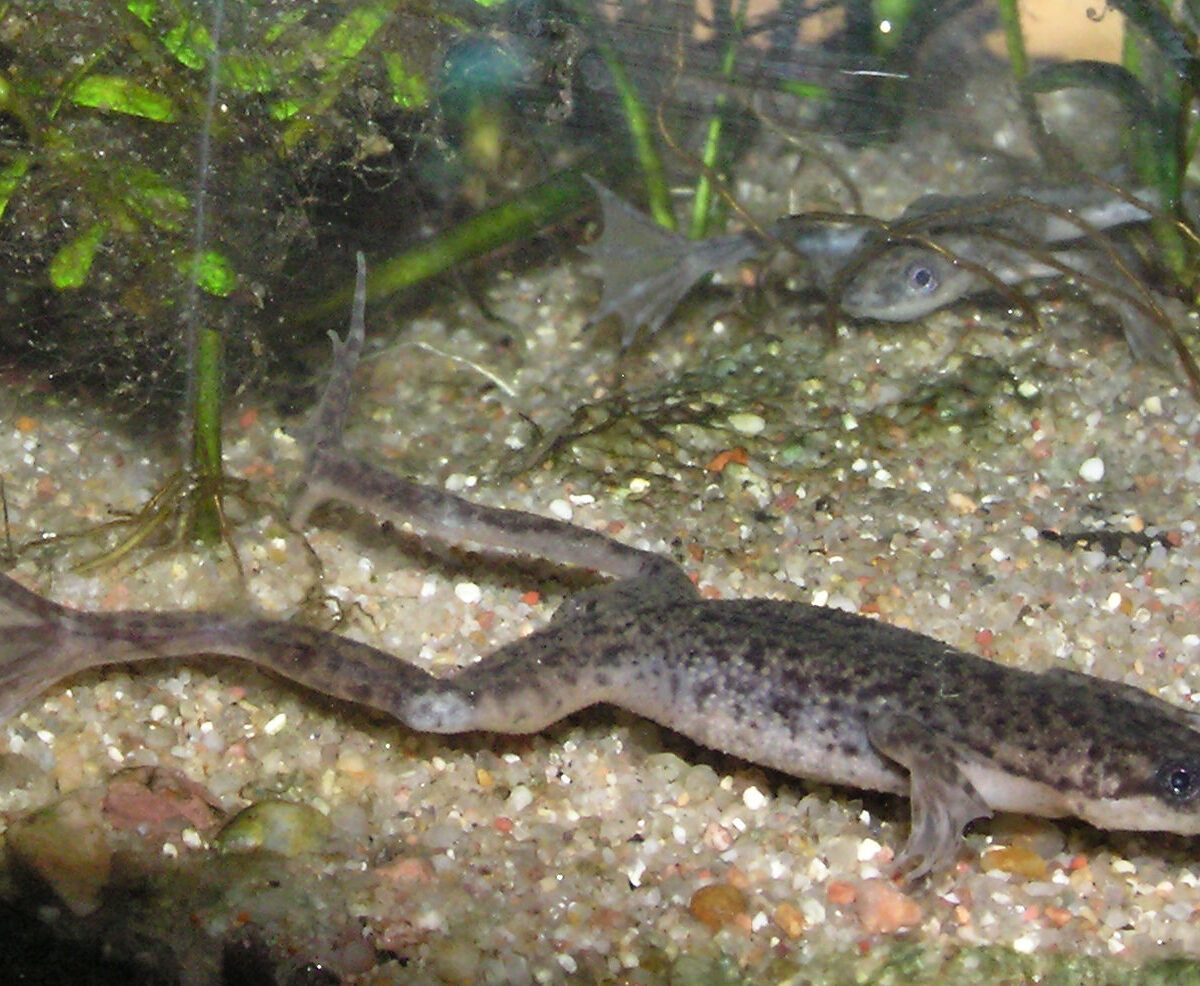
African Dwarf Clawed Frog (Hymenochirus boettgeri) is a small aquatic frog known for its distinctive clawed toes, which are used for foraging and climbing. These frogs have a smooth, olive-green to brown skin with lighter spots, allowing them to blend into their watery environments. They are social creatures that often inhabit slow-moving waters, where they can be seen swimming and foraging for food.
FUN FACTS
- African Dwarf Clawed Frogs are unique among frogs for their ability to swim using their webbed feet, which makes them agile swimmers
- | They are also known for their interesting breeding behavior, where males call to attract females, and after mating, the female lays eggs in water, which hatch into tadpoles within a few days
QUICK INFO
Lifespan5-10 years in the wild, up to 15 years in captivit
Average Weight10-20 g
Average Length3-5 cm
Diet TypeInsectivore
Social StructureThey are generally found in groups, often seen in pairs during the breeding season.
Activity PatternNocturnal
Breeding SeasonYear-round in suitable conditions
- Habitat
- African Dwarf Clawed Frogs thrive in freshwater habitats such as ponds, swamps, and slow-moving streams. They prefer areas with abundant vegetation that provides cover and breeding sites.
- Biomes
- Freshwater, Wetlands
- Native Range
- This species is native to the central and western regions of Africa.
- Continent
- Africa
- Countries
- Cameroon, Central African Republic, Democratic Republic of the Congo, Gabon, Nigeria
- Diet
- They primarily feed on small invertebrates, including insects and crustaceans, which they capture using their long, sticky tongues.
- Diet Type
- Insectivore
- Favorite Food
- small insects, crustaceans
- Social Structure
- They are generally found in groups, often seen in pairs during the breeding season.
- Activity Pattern
- Nocturnal
- Group Size
- 2-10
- Territorial
- 0
 LC
LC
 VU
VU
10-20 g
Weight
3-5 cm
Length
- Coloration
- Olive-green to brown with lighter spots
- Sexual Dimorphism
- Males are typically smaller and have more pronounced vocal sacs than females.
- Lifespan
- 5-10 years in the wild, up to 15 years in captivit
- Offspring per Birth
- 100-200 eggs
- Sexual Maturity
- 6-12 months
- Breeding Season
- Year-round in suitable conditions
LC
Least Concern
IUCN Red List Status
- Population Status
- The population is currently stable, but habitat destruction poses a potential threat.
- Wild Population Estimate
- Unknown
- Population Trend
- Stable
- Endangered
- 0
- Threats
- Main threats include habitat loss due to agricultural expansion and pollution of water bodies. Additionally, climate change may impact their aquatic habitats.
- Predators
- Fish, birds, and larger amphibians are known predators of the African Dwarf Clawed Frog.
- Defense Mechanisms
- They can use their coloration for camouflage and may also exhibit evasive swimming behaviors to escape predators.
- Compatible Animals
- Other small aquatic frogs, small fish
- Found in Zoos
- Common