


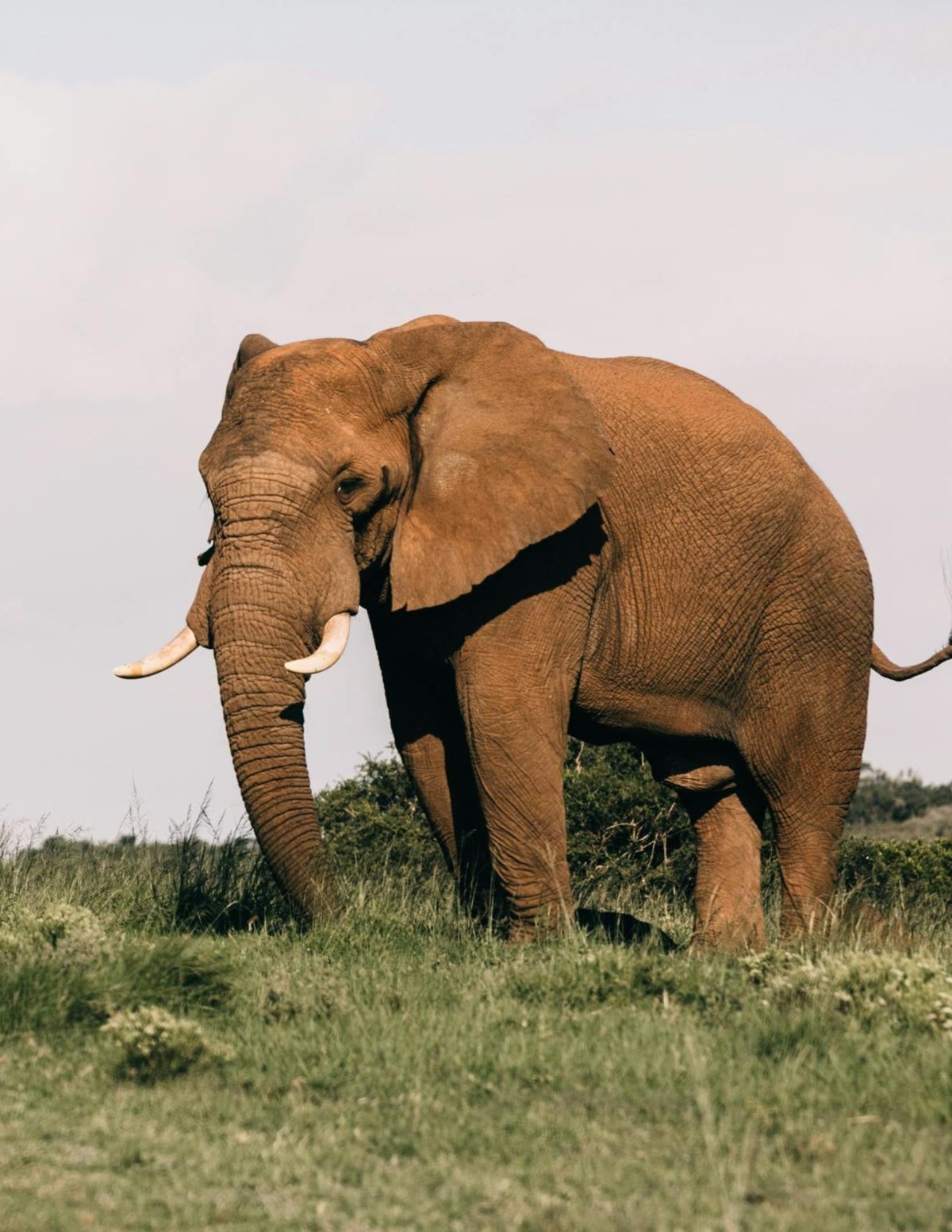
AFRICAN ELEPHANT
Loxodonta africana
DESCRIPTION
The African Elephant (Loxodonta africana) is the largest land mammal on Earth, known for its large ears, long trunk, and tusks. They are highly social animals that exhibit complex behaviors and strong family bonds.
FUN FACTS
- African Elephants can communicate over long distances using low-frequency sounds | Their trunks have over 40,000 muscles, allowing for incredible dexterity | They can consume up to 300 pounds of food in a single day
QUICK INFO
Lifespan60-70 years in the wild
Average Weight4000-7000 kg
Average Length6-7.5 m
Diet TypeHerbivore
Social Structuregroup — typically matriarchal herds consisting of related females and their offspring
Activity PatternDiurnal
Breeding SeasonYear-round
- Habitat
- African Elephants inhabit a variety of environments, including savannas, forests, and deserts. They require access to water sources and often migrate to find food and water.
- Biomes
- Savanna, Tropical Rainforest, Desert
- Native Range
- Sub-Saharan Africa
- Continent
- Africa
- Countries
- Botswana, Tanzania, Kenya, South Africa, Namibia, Zimbabwe
- Diet
- African Elephants are herbivores, primarily feeding on grasses, leaves, fruits, and bark. They require large quantities of food daily to sustain their massive size.
- Diet Type
- Herbivore
- Favorite Food
- grasses, leaves, fruits
- Social Structure
- group — typically matriarchal herds consisting of related females and their offspring
- Activity Pattern
- Diurnal
- Group Size
- 10-30
- Territorial
- 0
4000-7000 kg
Weight
6-7.5 m
Length
3-4 m at shoulder
Height (Shoulder)
- Coloration
- gray with variations due to mud and dust
- Sexual Dimorphism
- males are larger than females and have larger tusks
- Lifespan
- 60-70 years in the wild
- Gestation Period
- 22 months
- Offspring per Birth
- 1
- Sexual Maturity
- 10-12 years
- Breeding Season
- Year-round
EN
Endangered
IUCN Red List Status
- Population Status
- The population of African Elephants is currently declining due to poaching and habitat loss.
- Wild Population Estimate
- 415,000
- Population Trend
- Decreasing
- Endangered
- 1
- Threats
- Main threats include poaching for ivory and habitat destruction due to agriculture and human settlement.
- Conservation Program
- African Elephant Conservation Program
- Defense Mechanisms
- They use their size, tusks, and social structure to defend against threats.
- Compatible Animals
- none
- Found in Zoos
- Common