


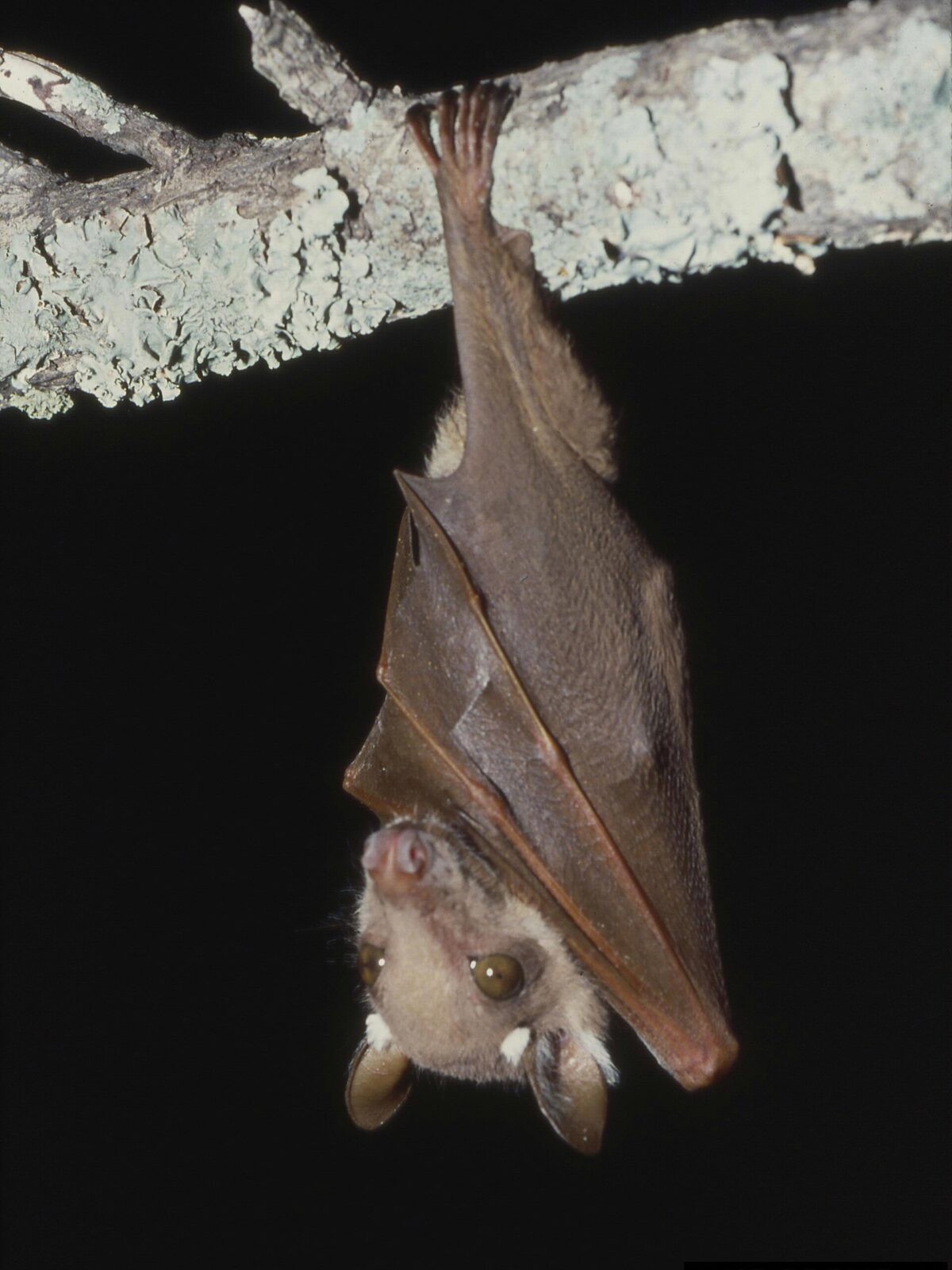
AFRICAN FRUIT BAT
Epomophorus wahlbergi
DESCRIPTION
African Fruit Bat (Epomophorus wahlbergi) is also known as Wahlberg's Fruit Bat. This species is characterized by its large size, with a wingspan that can reach up to 1 meter. They have a distinctive fur coloration that ranges from brown to gray, and their large eyes are adapted for nocturnal activity, allowing them to forage effectively at night.
FUN FACTS
- African Fruit Bats are important for their role in ecosystems as pollinators and seed dispersers, helping to maintain the health of their habitats
- They can consume large quantities of fruit in a single night, which aids in the growth of various plant species by spreading seeds over wide areas.| These bats have a unique social structure, often forming large colonies that can be quite noisy, especially during the evening when they are most active
- Their vocalizations include a range of clicks and screeches, which help them communicate with one another in the dark
QUICK INFO
Lifespan10-15 years in the wild, up to 20 years in captivi
Average Weight150-300 g
Average Length20-30 cm
Diet TypeHerbivore
Social StructureThey are typically found in groups, often roosting in colonies that can number in the hundreds.
Activity PatternNocturnal
Breeding SeasonVariable, often linked to fruit availability
- Habitat
- African Fruit Bats inhabit a variety of environments, including forests, savannas, and urban areas. They are often found roosting in trees or man-made structures.
- Biomes
- Tropical Rainforest, Savanna
- Native Range
- This species is native to sub-Saharan Africa, particularly in regions with abundant fruiting trees.
- Continent
- Africa
- Countries
- South Africa, Botswana, Zimbabwe, Namibia, Mozambique
- Diet
- They primarily feed on fruits, nectar, and flowers, playing a crucial role in pollination and seed dispersal in their ecosystems.
- Diet Type
- Herbivore
- Favorite Food
- Fruits and nectar
- Social Structure
- They are typically found in groups, often roosting in colonies that can number in the hundreds.
- Activity Pattern
- Nocturnal
- Group Size
- 50-200
- Territorial
- 0
 VU
VU
 LC
LC
150-300 g
Weight
20-30 cm
Length
- Coloration
- Their fur is generally a mix of brown and gray, with lighter underparts.
- Sexual Dimorphism
- Males are generally larger than females.
- Lifespan
- 10-15 years in the wild, up to 20 years in captivi
- Gestation Period
- 120 days
- Offspring per Birth
- 1
- Sexual Maturity
- 1-2 years
- Breeding Season
- Variable, often linked to fruit availability
LC
Least Concern
IUCN Red List Status
- Population Status
- The population is currently stable, but habitat loss poses a potential threat.
- Wild Population Estimate
- Unknown
- Population Trend
- Stable
- Endangered
- 0
- Threats
- Main threats include habitat destruction due to deforestation and urbanization. Additionally, hunting for bushmeat can impact local populations.
- Predators
- Birds of prey, snakes, and larger mammals such as cats can pose threats to African Fruit Bats.
- Defense Mechanisms
- They rely on their ability to fly and roost high in trees to avoid predators.
- Found in Zoos
- Uncommon