


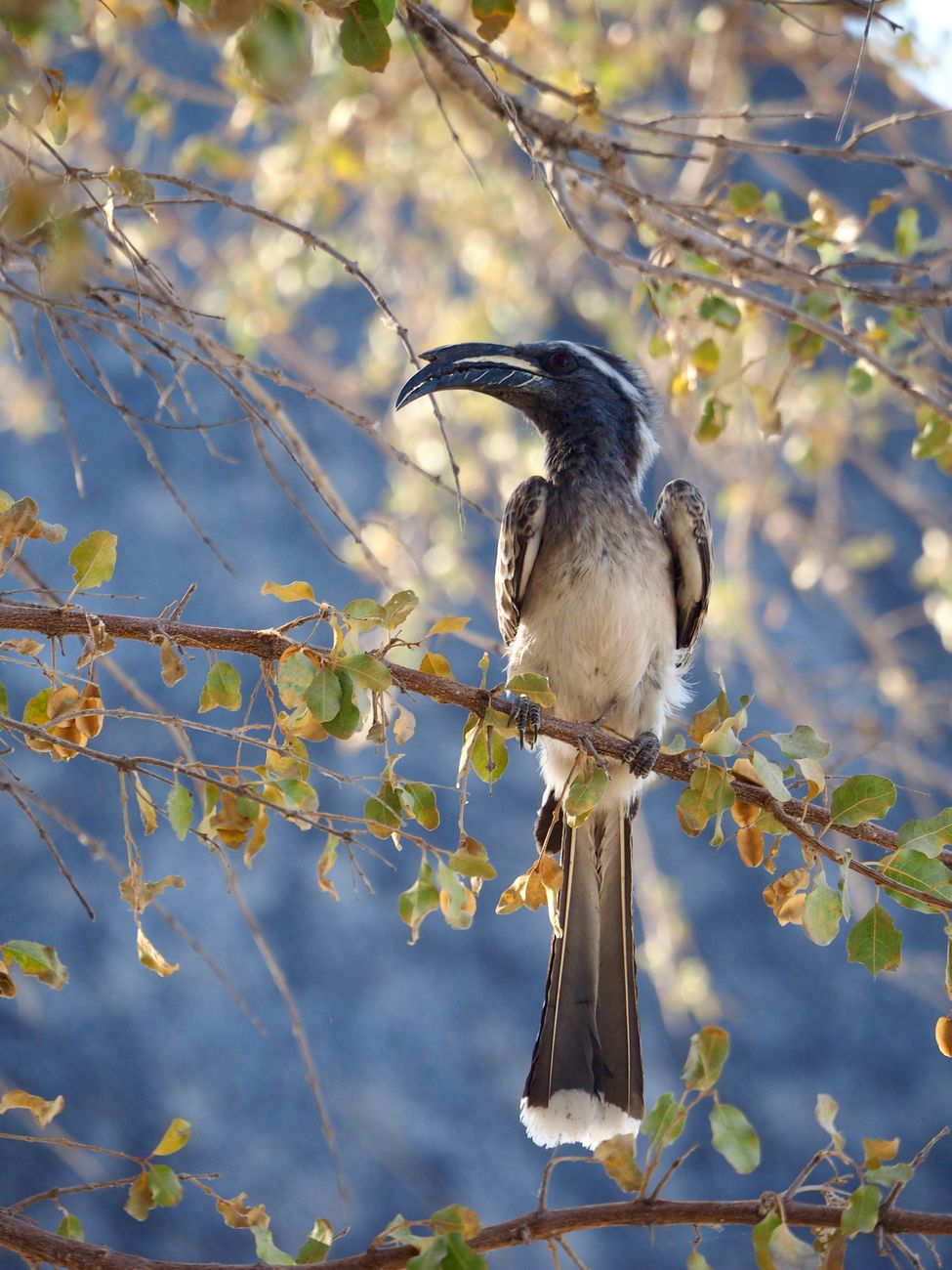
AFRICAN GREY HORNBILL
Tockus nasutus
DESCRIPTION
African Grey Hornbill (Tockus nasutus) is a medium-sized bird known for its distinctive long, curved bill and striking grey plumage. This species exhibits a unique behavior of foraging for insects and fruits in trees, often seen hopping along branches. They are social birds, typically found in pairs or small groups, and are known for their vocalizations, which include a variety of calls and whistles.
FUN FACTS
- African Grey Hornbills are known for their unique nesting behavior, where the female seals herself inside a tree cavity during breeding, relying on the male to bring her food
- This fascinating adaptation helps protect the female and her chicks from predators
- | These birds have a remarkable ability to mimic sounds, including human voices, which makes them popular in aviculture
- Their intelligence and social nature allow them to form strong bonds with their caretakers
QUICK INFO
Lifespan10-15 years in the wild, up to 20 years in captivi
Average Weight150-200 g
Average Length45-50 cm
Diet TypeOmnivore
Social Structurepair, often seen in small groups during foraging
Activity PatternDiurnal
Breeding SeasonSpring (March-May)
- Habitat
- They inhabit open woodlands, savannas, and forest edges, often favoring areas with abundant fruiting trees. Their adaptability allows them to thrive in both dry and moist habitats.
- Biomes
- Savanna, Tropical Rainforest
- Native Range
- The African Grey Hornbill is native to sub-Saharan Africa, ranging from Senegal and Gambia in the west to Ethiopia and Tanzania in the east.
- Continent
- Africa
- Countries
- Senegal, Gambia, Ethiopia, Tanzania, Kenya, Uganda, South Africa
- Diet
- African Grey Hornbills primarily feed on insects, fruits, and seeds, showcasing a diverse diet that allows them to thrive in various environments.
- Diet Type
- Omnivore
- Favorite Food
- insects, fruits, seeds
- Social Structure
- pair, often seen in small groups during foraging
- Activity Pattern
- Diurnal
- Group Size
- 2-10
- Territorial
- 1
 LC
LC
 CR
CR
 LC
LC
150-200 g
Weight
45-50 cm
Length
- Coloration
- grey body with a distinctive yellow and black bill
- Sexual Dimorphism
- males typically have larger bills than females
- Lifespan
- 10-15 years in the wild, up to 20 years in captivi
- Offspring per Birth
- 2-4
- Sexual Maturity
- 2-3 years
- Breeding Season
- Spring (March-May)
LC
Least Concern
IUCN Red List Status
- Population Status
- The population of African Grey Hornbills is currently stable, although habitat loss poses a potential threat.
- Wild Population Estimate
- 50,000-100,000
- Population Trend
- Stable
- Endangered
- 0
- Threats
- Main threats include habitat destruction due to deforestation and agricultural expansion. Additionally, they face risks from hunting and trapping in some regions.
- Predators
- eagles, hawks, snakes, and larger mammals
- Defense Mechanisms
- They often rely on their ability to fly quickly and their vocalizations to warn of danger.
- Found in Zoos
- Common