


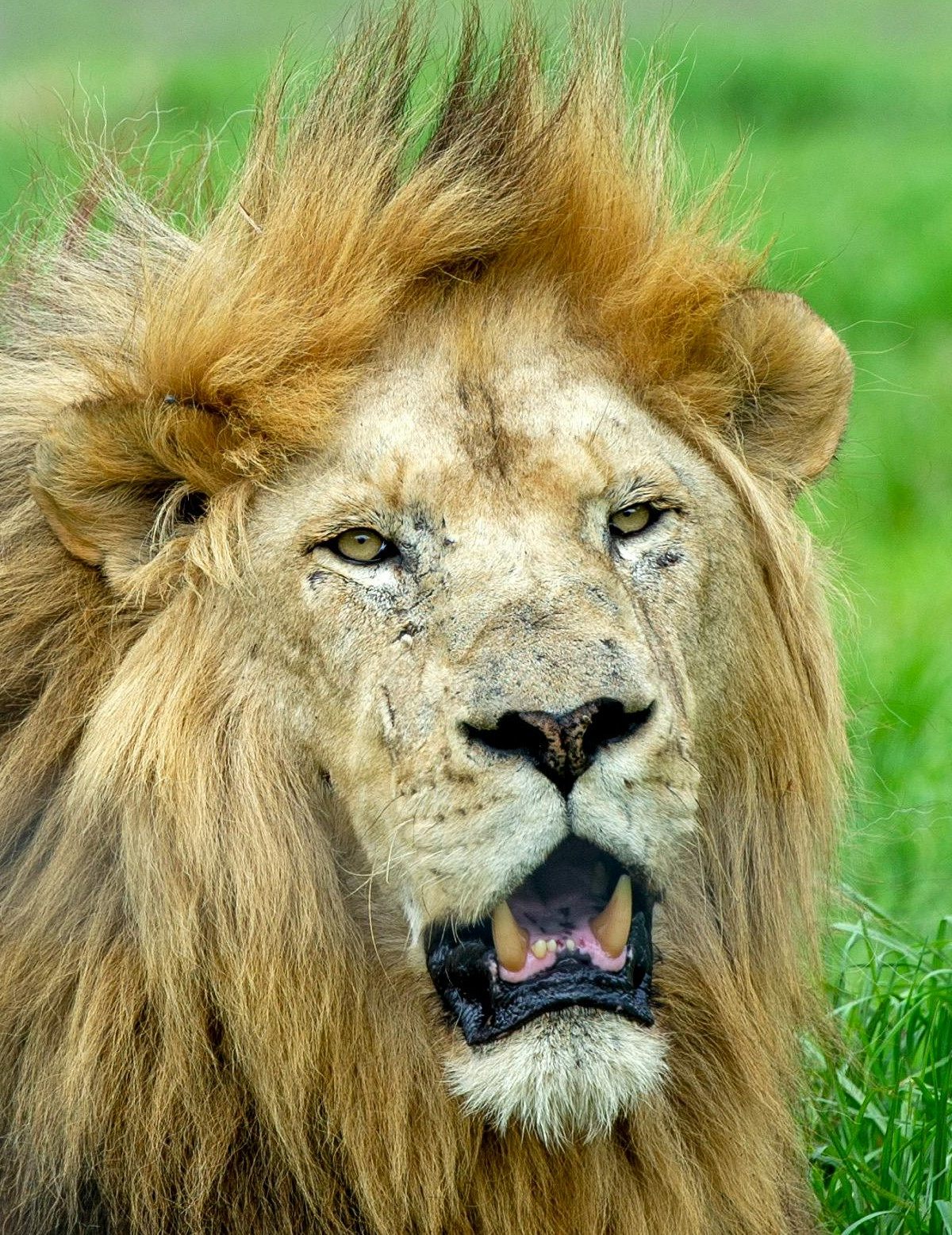
AFRICAN LION
Panthera leo
DESCRIPTION
The African lion is a large, muscular cat with a distinctive mane that varies in color from blonde to black, depending on the individual and its environment. Males are typically larger than females, with a robust build and a head that is broad and powerful. Lions are social animals, living in groups called prides, which consist of related females, their offspring, and a small number of adult males, allowing them to cooperate in hunting and raising young.
FUN FACTS
- Lions are the only big cats that live in social groups, which allows them to work together to hunt and protect their young
- | The roar of a lion can be heard from up to 8 kilometers away, serving as a powerful means of communication and territorial display
QUICK INFO
Lifespan15-20 years in the wild, up to 30 in captivity
Average Weight150-250 kg
Average Length1.8-2.5 m
Diet TypeCarnivore
Social StructureGroup; lions live in prides, which typically consist of related females and a few males.
Activity PatternDiurnal
Breeding SeasonYear-round, with peaks depending on region
- Habitat
- Lions inhabit a variety of habitats, including savannas, grasslands, and open woodlands. They prefer areas with ample prey and cover for stalking.
- Biomes
- Savanna, Grassland, Woodland
- Native Range
- Historically widespread across Africa, lions are now primarily found in sub-Saharan Africa, with a small population in the Gir Forest of India.
- Continent
- Africa
- Countries
- Tanzania, Kenya, South Africa, Botswana, Namibia, Zimbabwe, Angola, Mozambique
- Diet
- African lions are carnivorous and primarily hunt large ungulates such as zebras, wildebeests, and buffalo. They are known for their cooperative hunting strategies, often working together to take down prey.
- Diet Type
- Carnivore
- Favorite Food
- Zebras, wildebeests, buffalo
- Social Structure
- Group; lions live in prides, which typically consist of related females and a few males.
- Activity Pattern
- Diurnal
- Group Size
- 5-15
- Territorial
- 1
 VU
VU
150-250 kg
Weight
1.8-2.5 m
Length
1.2 m at shoulder
Height (Shoulder)
- Coloration
- Tan to golden with a lighter underbelly; males have a darker mane.
- Sexual Dimorphism
- Males are larger and have manes, while females are smaller and lack manes.
- Lifespan
- 15-20 years in the wild, up to 30 in captivity
- Gestation Period
- 110 days
- Offspring per Birth
- 1-4
- Sexual Maturity
- 3-4 years
- Breeding Season
- Year-round, with peaks depending on region
VU
Vulnerable
IUCN Red List Status
- Population Status
- The African lion population is currently declining due to habitat loss and human-wildlife conflict.
- Wild Population Estimate
- 20,000-25,000
- Population Trend
- Decreasing
- Endangered
- 1
- Threats
- Main threats include habitat loss, poaching, and conflicts with humans. As human populations expand, lions face increasing pressure on their habitats and prey.
- Conservation Program
- Various programs exist, including protected areas and community-based conservation efforts.
- Predators
- Humans are the primary threat, but lion cubs may be vulnerable to hyenas and leopards.
- Defense Mechanisms
- Lions use their strength, social structure, and vocalizations to defend their territory and pride.
- Compatible Animals
- None
- Found in Zoos
- Common