


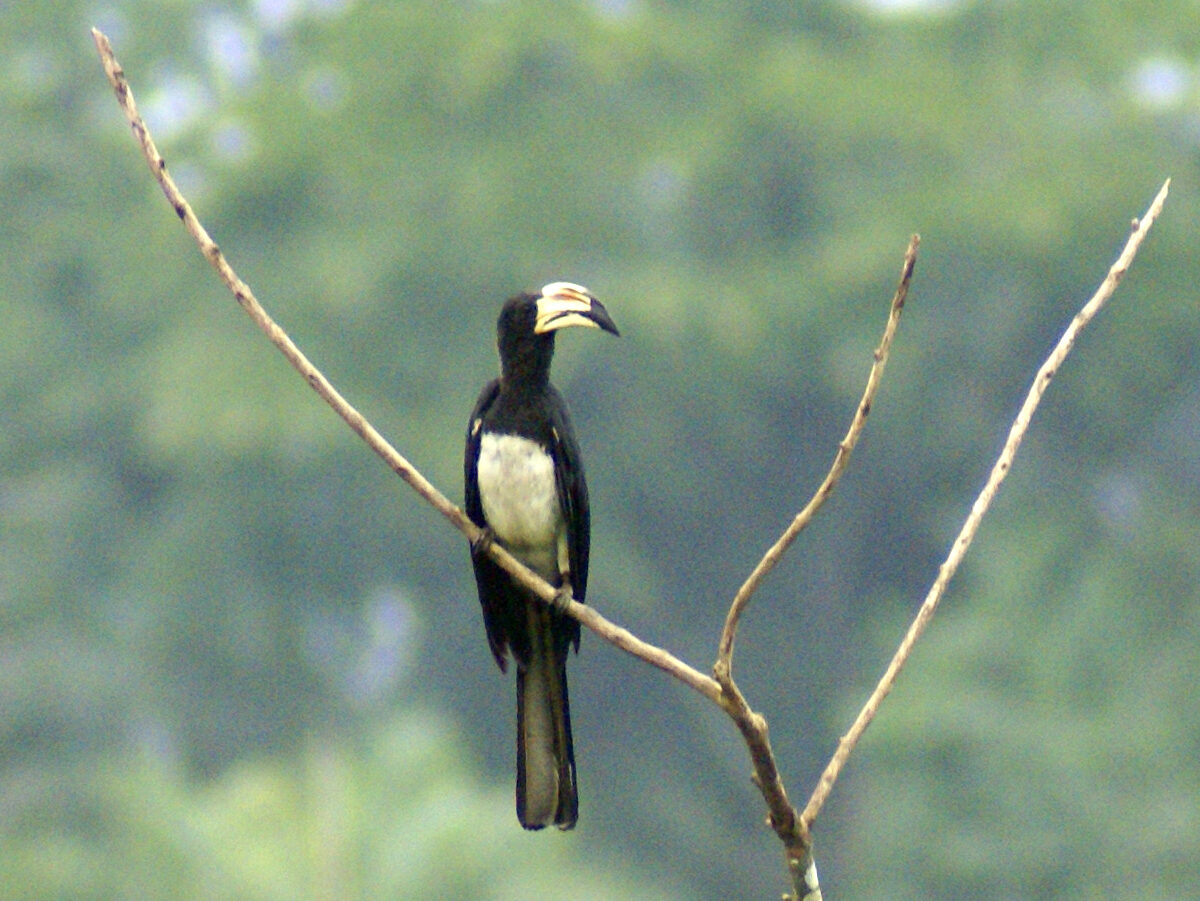
AFRICAN PIED HORNBILL
Tockus fasciatus
DESCRIPTION
African Pied Hornbill (Tockus fasciatus) is a striking bird characterized by its distinctive black and white plumage and a prominent curved bill. This species exhibits a unique behavior of nesting in tree cavities, where the female seals herself inside to protect her young from predators. The male plays a crucial role in feeding the female and chicks during this period, showcasing a fascinating aspect of their reproductive ecology.
FUN FACTS
- African Pied Hornbills are known for their unique nesting behavior, where the female seals herself inside a tree cavity during breeding, relying on the male for food
- This fascinating adaptation helps protect the young from predators and ensures their survival
- | These hornbills are also excellent foragers, using their keen eyesight to spot insects and fruits from a distance
- Their social nature allows them to communicate effectively, often seen engaging in playful interactions with one another
QUICK INFO
Lifespan10-15 years in the wild, up to 20 years in captivi
Average Weight150-200 g
Average Length45-50 cm
Diet TypeOmnivore
Social StructureThey are often found in pairs or small family groups, showcasing a cooperative breeding behavior.
Activity PatternDiurnal
Breeding SeasonVaries by region, generally during the rainy season
- Habitat
- This species inhabits open woodlands, savannas, and forest edges, often near water sources. They prefer areas with abundant trees for nesting and foraging.
- Biomes
- Savanna, Tropical Rainforest
- Native Range
- The African Pied Hornbill is native to sub-Saharan Africa, particularly in regions from Senegal to Ethiopia and south to South Africa.
- Continent
- Africa
- Countries
- Senegal, Ethiopia, South Africa, Kenya, Tanzania, Uganda
- Diet
- The African Pied Hornbill primarily feeds on insects, fruits, and small vertebrates. Its diet is diverse, allowing it to thrive in various habitats.
- Diet Type
- Omnivore
- Favorite Food
- insects, fruits
- Social Structure
- They are often found in pairs or small family groups, showcasing a cooperative breeding behavior.
- Activity Pattern
- Diurnal
- Group Size
- 2-10
- Territorial
- 1
 LC
LC
 VU
VU

150-200 g
Weight
45-50 cm
Length
- Coloration
- The plumage is predominantly black and white, with a striking yellow bill.
- Sexual Dimorphism
- Males and females are similar in appearance, but males typically have a larger bill.
- Lifespan
- 10-15 years in the wild, up to 20 years in captivi
- Offspring per Birth
- 2-4
- Sexual Maturity
- 2-3 years
- Breeding Season
- Varies by region, generally during the rainy season
LC
Least Concern
IUCN Red List Status
- Population Status
- The population is currently stable, with no immediate threats to their survival.
- Wild Population Estimate
- 50,000-100,000
- Population Trend
- Stable
- Endangered
- 0
- Threats
- Main threats include habitat loss due to deforestation and hunting. However, they are not currently facing significant population declines.
- Predators
- Snakes, large birds of prey, and mammals such as monkeys may pose threats to eggs and young hornbills.
- Defense Mechanisms
- They use their strong bills to defend themselves and can be quite aggressive when threatened.
- Found in Zoos
- Uncommon