


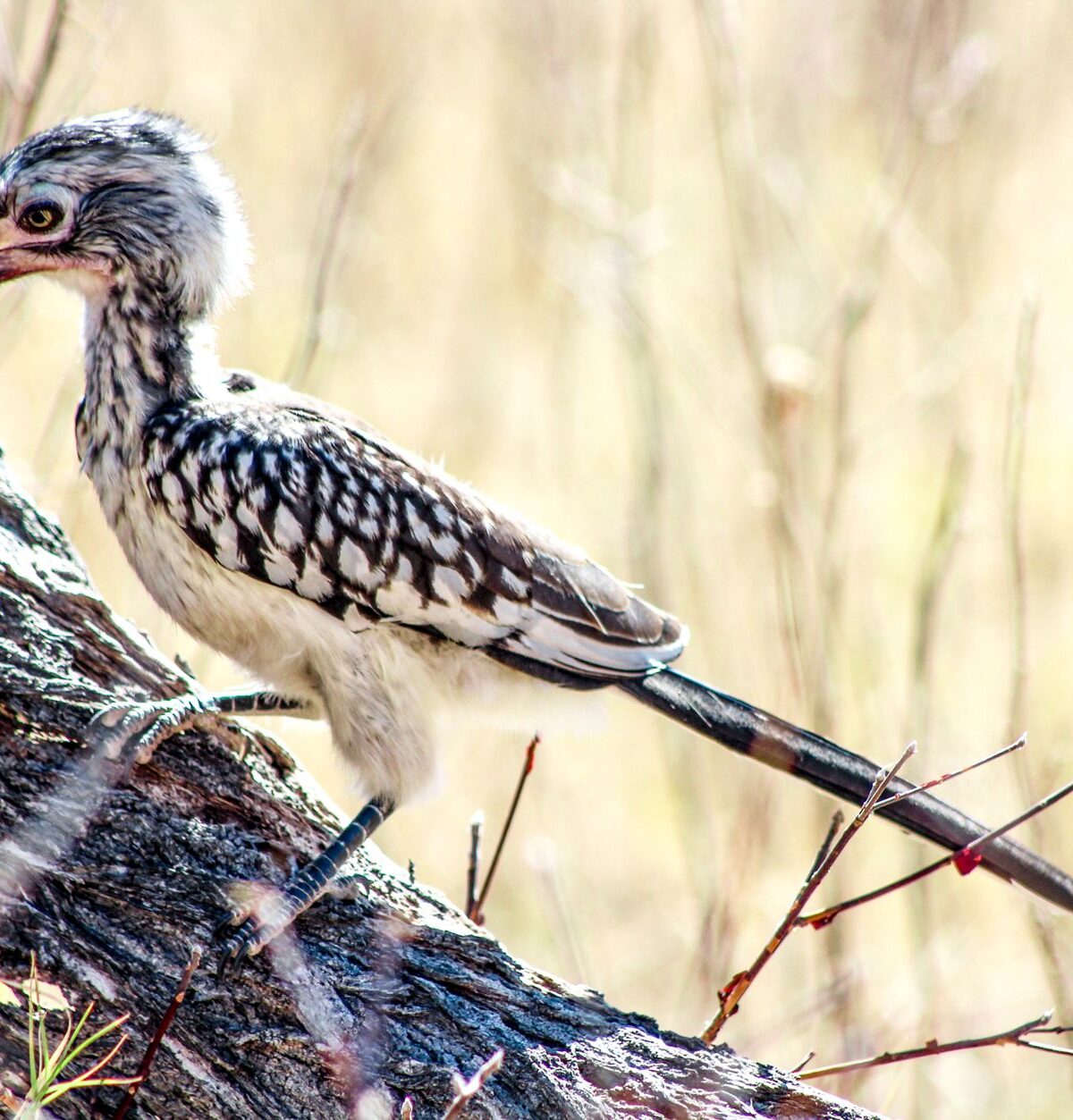
AFRICAN RED-BILLED HORNBILL
Tockus erythrorhynchus
DESCRIPTION
African Red-Billed Hornbill (Tockus erythrorhynchus) is a medium-sized bird known for its striking red bill and distinctive black and white plumage. This species exhibits a unique behavior of foraging on the ground for insects, fruits, and small reptiles, often seen in pairs or small groups. They play an important ecological role in their habitat by aiding in seed dispersal and controlling insect populations.
FUN FACTS
- African Red-Billed Hornbills are known for their unique nesting behavior, where the female seals herself inside a tree cavity during breeding, relying on the male to bring her food
- This fascinating adaptation helps protect the young from predators while ensuring the female's safety during incubation.| These birds are also known for their playful behavior, often engaging in aerial displays and social interactions that strengthen pair bonds
- Their vibrant calls and social nature make them a favorite among birdwatchers and wildlife enthusiasts
QUICK INFO
Lifespan10-15 years in the wild, up to 20 years in captivi
Average Weight120-150 g
Average Length40-50 cm
Diet TypeOmnivore
Social StructureThey are often found in pairs or small family groups, showcasing a social structure that promotes cooperative foraging.
Activity PatternDiurnal
Breeding SeasonSpring to early summer
- Habitat
- African Red-Billed Hornbills inhabit open woodlands, savannas, and scrublands, often near water sources. They prefer areas with scattered trees that provide nesting sites and foraging opportunities.
- Biomes
- Savanna, Woodland
- Native Range
- They are native to sub-Saharan Africa, particularly in countries south of the Sahara Desert.
- Continent
- Africa
- Countries
- Botswana, Namibia, South Africa, Zimbabwe
- Diet
- They primarily eat insects, fruits, and small reptiles.
- Diet Type
- Omnivore
- Favorite Food
- insects, fruits
- Social Structure
- They are often found in pairs or small family groups, showcasing a social structure that promotes cooperative foraging.
- Activity Pattern
- Diurnal
- Group Size
- 2-10
- Territorial
- 0
 LC
LC
 DD
DD
120-150 g
Weight
40-50 cm
Length
- Coloration
- They have a black body with a white belly and a prominent red bill.
- Sexual Dimorphism
- Males and females are similar in appearance, but males typically have slightly larger bills.
- Lifespan
- 10-15 years in the wild, up to 20 years in captivi
- Offspring per Birth
- 2-4
- Sexual Maturity
- 2-3 years
- Breeding Season
- Spring to early summer
LC
Least Concern
IUCN Red List Status
- Population Status
- The population is currently stable, with no immediate threats to their numbers.
- Wild Population Estimate
- 50,000-100,000
- Population Trend
- Stable
- Endangered
- 0
- Threats
- Main threats include habitat loss due to deforestation and agricultural expansion. However, they are not currently facing significant population declines.
- Predators
- Snakes, raptors, and larger mammals may prey on their eggs and young.
- Defense Mechanisms
- They use their strong bills to defend themselves and can also make loud calls to warn off potential threats.
- Found in Zoos
- Common