


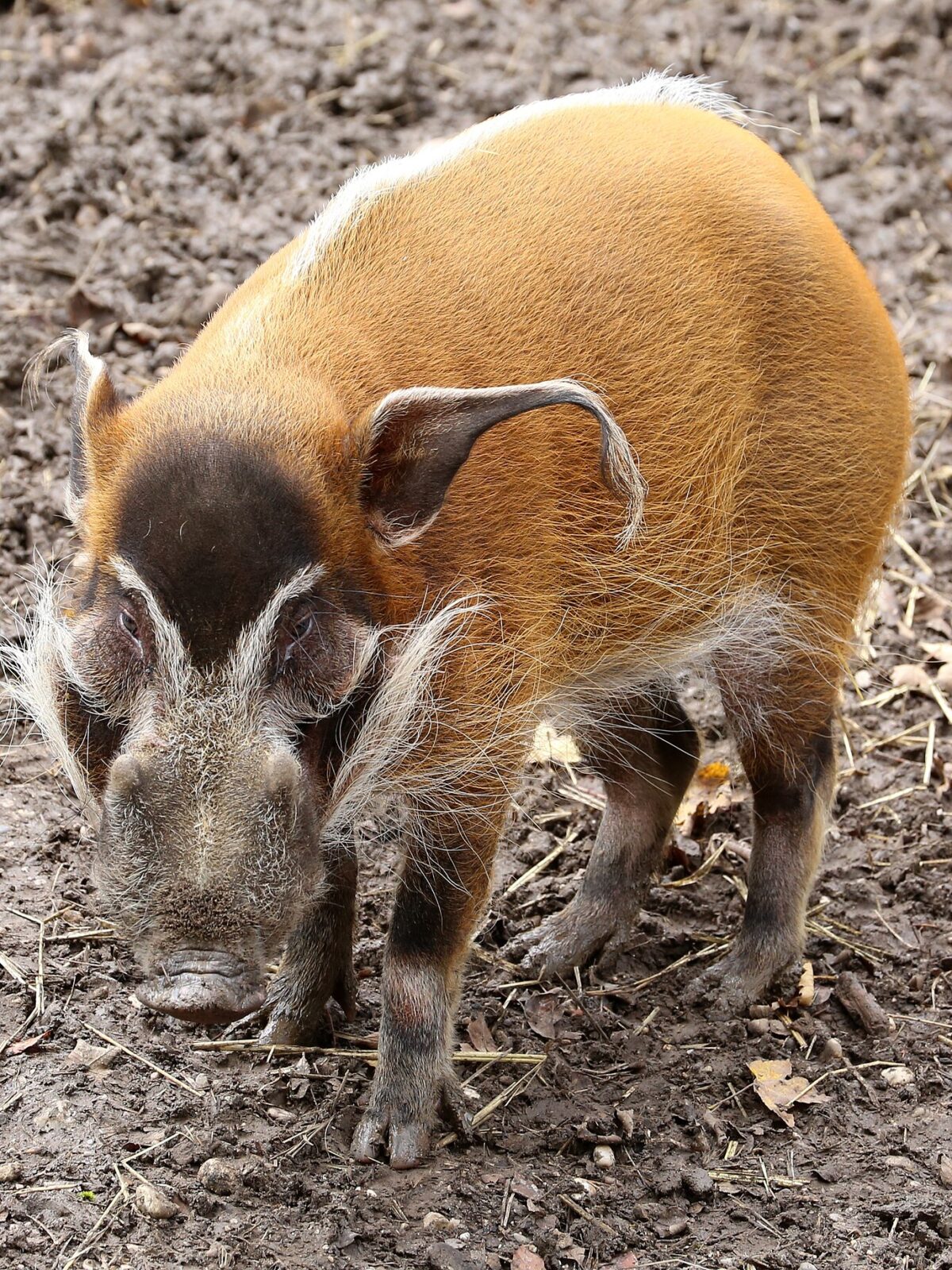
AFRICAN RED RIVER HOG
DESCRIPTION
Also called the Bush Pig, the African Red River Hog is a wild pig species known for its striking appearance, characterized by a reddish-brown coat and distinctive white facial markings. These hogs are social animals, often found in groups, and are known for their playful behavior, especially among young individuals. They inhabit dense forests and swamps, where they forage for food and establish their territories.
FUN FACTS
- African Red River Hogs are excellent swimmers and often take to water to escape predators or to cool off
- They have a unique grooming behavior where they roll in mud to protect their skin from parasites and sunburn
QUICK INFO
Lifespan10-15 years in the wild, up to 20 years in captivi
Average Weight50-150 kg
Average Length1.2-1.8 m
Diet TypeOmnivore
Social StructureThey typically live in small groups, often consisting of females and their young, while adult males may be solitary or join groups during mating season.
Activity PatternNocturnal
Breeding SeasonYear-round, with peaks depending on local conditions
- Habitat
- They primarily inhabit dense forests, swamps, and areas with thick vegetation. This habitat provides them with ample cover and food sources.
- Biomes
- Tropical Rainforest, Swamp
- Native Range
- The African Red River Hog is native to sub-Saharan Africa, particularly in the central and western regions.
- Continent
- Africa
- Countries
- Angola, Cameroon, Central African Republic, Democratic Republic of the Congo, Gabon, Ghana, Ivory Coast, Nigeria, Republic of the Congo, Uganda
- Diet
- African Red River Hogs are omnivorous, feeding on a variety of plant materials, fruits, and small animals. They are known to root in the ground for tubers and other edible items.
- Diet Type
- Omnivore
- Favorite Food
- roots, fruits, small animals
- Social Structure
- They typically live in small groups, often consisting of females and their young, while adult males may be solitary or join groups during mating season.
- Activity Pattern
- Nocturnal
- Group Size
- 5-15
- Territorial
- 1
 LC
LC
 VU
VU
 LC
LC
 VU
VU
50-150 kg
Weight
1.2-1.8 m
Length
0.8-1.0 m at shoulder
Height (Shoulder)
- Coloration
- Reddish-brown with white facial markings and stripes on the body.
- Sexual Dimorphism
- Males are generally larger and have larger tusks than females.
- Lifespan
- 10-15 years in the wild, up to 20 years in captivi
- Gestation Period
- 120 days
- Offspring per Birth
- 2-6
- Sexual Maturity
- 2-3 years
- Breeding Season
- Year-round, with peaks depending on local conditions
LC
Least Concern
IUCN Red List Status
- Population Status
- The population is currently stable, but habitat loss poses a threat.
- Wild Population Estimate
- 50,000-100,000
- Population Trend
- Stable
- Endangered
- 0
- Threats
- Main threats include habitat destruction due to agriculture and hunting. They are also sometimes hunted for bushmeat.
- Predators
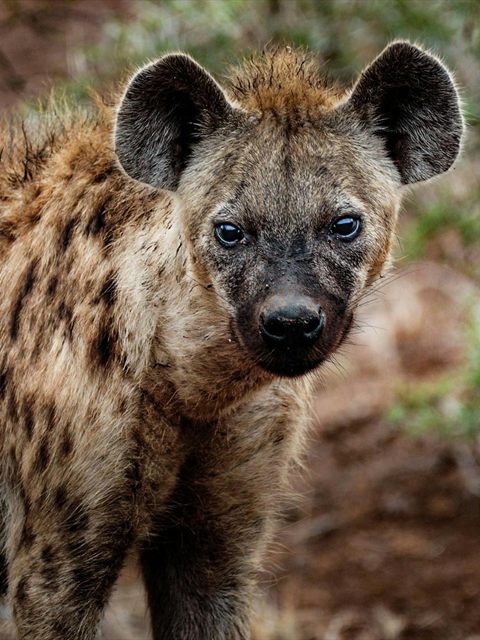
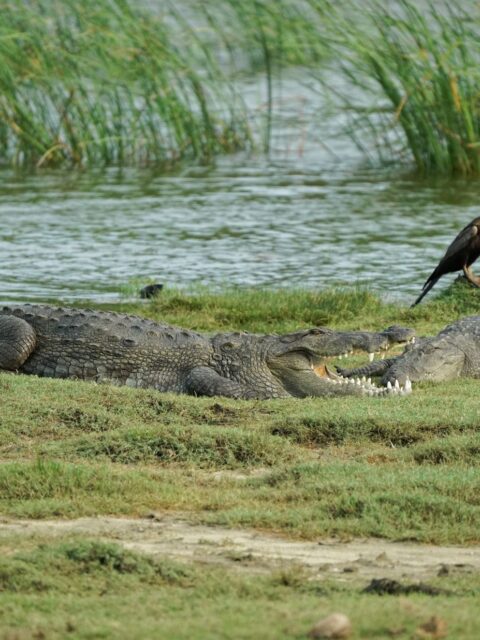
- Lions, leopards, hyenas, crocodiles
- Defense Mechanisms
- They use their speed and agility to escape predators, and males have sharp tusks for defense.
- Found in Zoos
- Common