


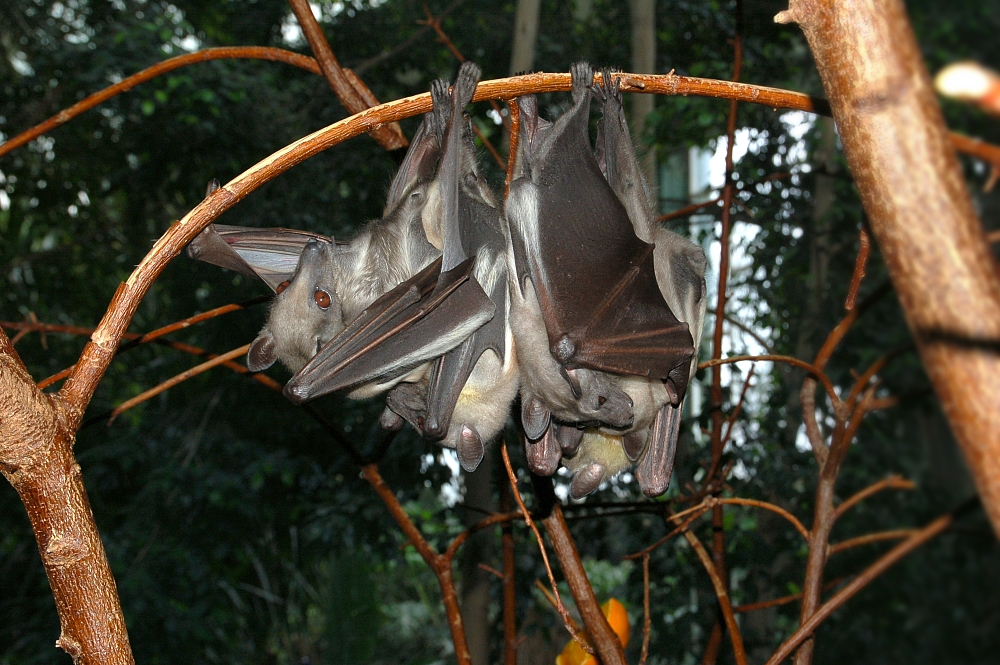
AFRICAN STRAW-COLOURED FRUIT BAT
DESCRIPTION
Also called the Straw-Coloured Fruit Bat, this species is known for its striking golden-brown fur and large wingspan, which can reach up to 1 meter. They are primarily frugivorous, feeding on a variety of fruits, and play a crucial role in seed dispersal within their ecosystems. These bats are social creatures, often roosting in large colonies, which can number in the thousands, and are known for their loud vocalizations during the night.
FUN FACTS
- African Straw-Coloured Fruit Bats are known for their impressive flying abilities, capable of covering large distances in search of food
- They can consume up to their body weight in fruit each night, making them vital for the ecosystems they inhabit by aiding in seed dispersal.| These bats have a unique social structure, often forming large colonies that can create a significant amount of noise at night
- Their vocalizations are not only for communication but also play a role in navigation and locating food sources
QUICK INFO
Lifespan5-10 years in the wild, up to 15 years in captivit
Average Weight150-250 g
Average Length20-25 cm
Diet TypeHerbivore
Social StructureThey are highly social and often found in large colonies, sometimes exceeding 1,000 individuals.
Activity PatternNocturnal
Breeding SeasonVariable, often linked to fruit availability
- Habitat
- African Straw-Coloured Fruit Bats inhabit tropical and subtropical forests, often roosting in large trees or caves. They prefer areas with abundant fruiting trees, which provide both food and shelter.
- Biomes
- Tropical Rainforest, Savanna
- Native Range
- This species is found across much of sub-Saharan Africa.
- Continent
- Africa
- Countries
- Nigeria, Ghana, Uganda, Kenya, Tanzania, Democratic Republic of the Congo
- Diet
- They primarily consume fruits, particularly figs and other soft fruits.
- Diet Type
- Herbivore
- Favorite Food
- Figs, soft fruits
- Social Structure
- They are highly social and often found in large colonies, sometimes exceeding 1,000 individuals.
- Activity Pattern
- Nocturnal
- Group Size
- 100-1,000
- Territorial
- 0
 VU
VU
 LC
LC
150-250 g
Weight
20-25 cm
Length
- Coloration
- Golden-brown fur with a lighter underside
- Lifespan
- 5-10 years in the wild, up to 15 years in captivit
- Gestation Period
- 120 days
- Offspring per Birth
- 1
- Sexual Maturity
- 1-2 years
- Breeding Season
- Variable, often linked to fruit availability
LC
Least Concern
IUCN Red List Status
- Population Status
- The population is currently stable, but habitat loss poses a potential threat.
- Wild Population Estimate
- Unknown
- Population Trend
- Stable
- Endangered
- 0
- Threats
- Main threats include habitat destruction due to deforestation and agricultural expansion. Additionally, hunting in some regions poses a risk to local populations.
- Predators
- Birds of prey, snakes, and larger mammals such as cats may prey on them.
- Defense Mechanisms
- They rely on their ability to fly and roost in high places to avoid predators.
- Found in Zoos
- Uncommon