


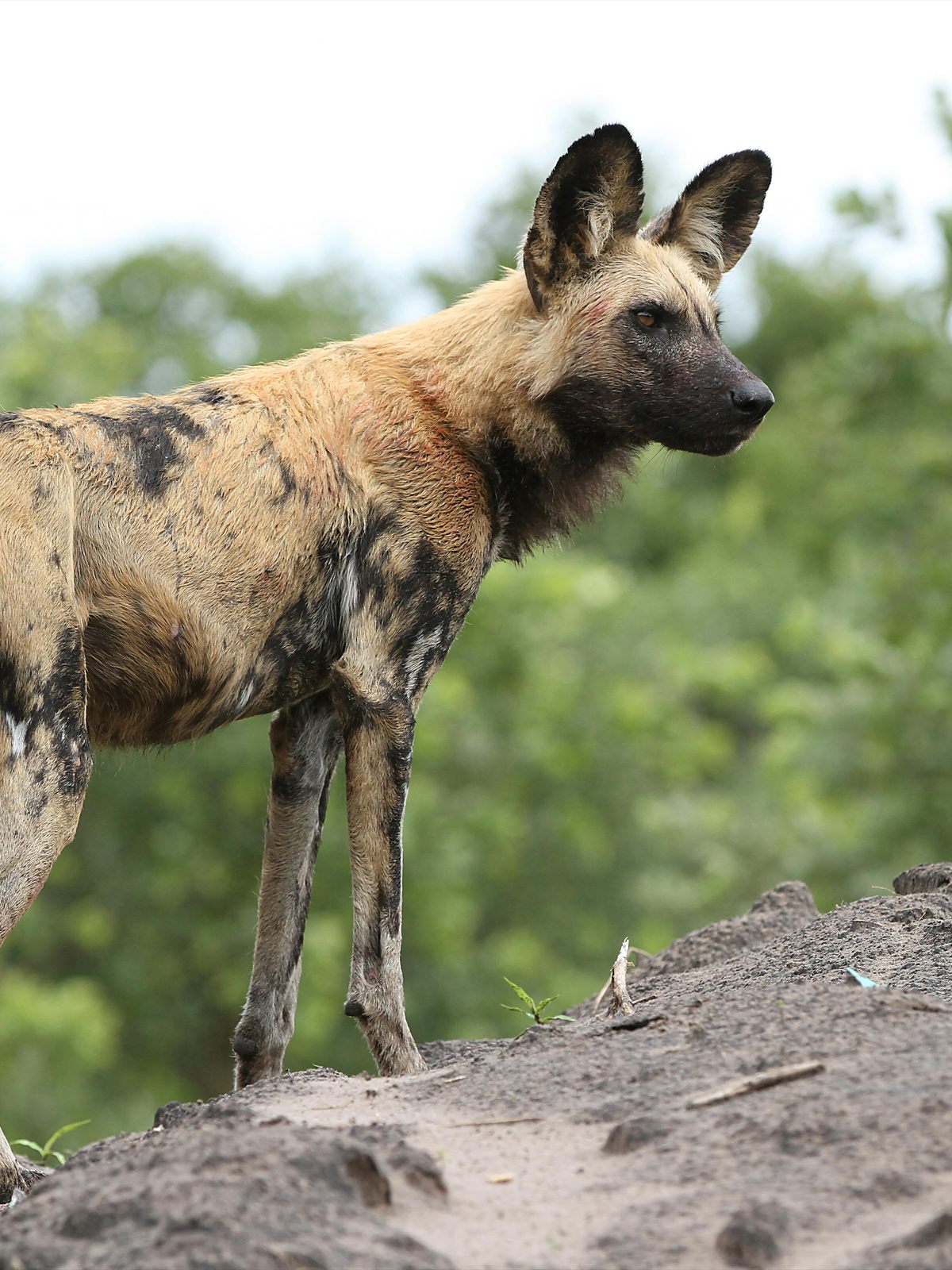
AFRICAN WILD DOG
DESCRIPTION
Also called the Painted Wolf and Cape Hunting Dog, the African Wild Dog is a highly social and cooperative hunter known for its unique coat pattern of irregular patches of yellow, black, brown, and white. These dogs are characterized by their large, rounded ears and slender bodies, which help them regulate heat in their often hot savanna habitats. They are known for their complex social structures and pack dynamics, often working together to hunt and raise their young, making them one of the most successful predators in their environment.
FUN FACTS
- African Wild Dogs are known for their incredible stamina and can run at speeds of up to 44 miles per hour for extended periods, making them one of the fastest land animals
- They have a unique hunting strategy that involves taking turns chasing prey, allowing them to tire out their targets and increase their chances of a successful hunt
QUICK INFO
Lifespan10-12 years in the wild, up to 16 years in captivi
Average Weight18-36 kg
Average Length75-100 cm
Diet TypeCarnivore
Social Structuregroup — they live in packs that are typically matriarchal, with strong social bonds among members.
Activity PatternDiurnal
Breeding SeasonYear-round, with peaks depending on region
- Habitat
- African Wild Dogs inhabit a variety of environments, including savannas, grasslands, and arid zones. They prefer areas with a mix of open land for hunting and cover for denning.
- Biomes
- Savanna, Grassland, Woodland
- Native Range
- The native range of the African Wild Dog includes sub-Saharan Africa, with populations found in various regions from West Africa to East and Southern Africa.
- Continent
- Africa
- Countries
- Botswana, Zimbabwe, Tanzania, South Africa, Namibia, Kenya
- Diet
- African Wild Dogs primarily hunt medium-sized ungulates, such as impalas and gazelles, but they will also scavenge when necessary. Their hunting strategy involves endurance and teamwork, allowing them to chase prey over long distances.
- Diet Type
- Carnivore
- Favorite Food
- Impala, gazelle
- Social Structure
- group — they live in packs that are typically matriarchal, with strong social bonds among members.
- Activity Pattern
- Diurnal
- Group Size
- 5-20
- Territorial
- 1
 LC
LC
 LC
LC
 VU
VU
18-36 kg
Weight
75-100 cm
Length
60-75 cm at shoulder
Height (Shoulder)
- Coloration
- Irregular patches of yellow, black, brown, and white
- Sexual Dimorphism
- males are generally slightly larger than females
- Lifespan
- 10-12 years in the wild, up to 16 years in captivi
- Gestation Period
- 70 days
- Offspring per Birth
- 2-20
- Sexual Maturity
- 1-2 years
- Breeding Season
- Year-round, with peaks depending on region
EN
Endangered
IUCN Red List Status
- Population Status
- The population of African Wild Dogs is currently fragmented and declining due to habitat loss and human-wildlife conflict.
- Wild Population Estimate
- 6,000-7,000
- Population Trend
- Decreasing
- Endangered
- 1
- Threats
- Main threats to African Wild Dogs include habitat loss, human-wildlife conflict, and diseases such as canine distemper. Their populations are also affected by competition with larger predators like lions and hyenas.
- Conservation Program
- African Wild Dog conservation programs include habitat protection, anti-poaching efforts, and community education initiatives.
- Predators
- Lions, hyenas, leopards, humans
- Defense Mechanisms
- They rely on their pack structure and cooperative behavior to defend against larger predators, often using their speed and agility to escape threats.
- Compatible Animals
- none
- Found in Zoos
- Uncommon