


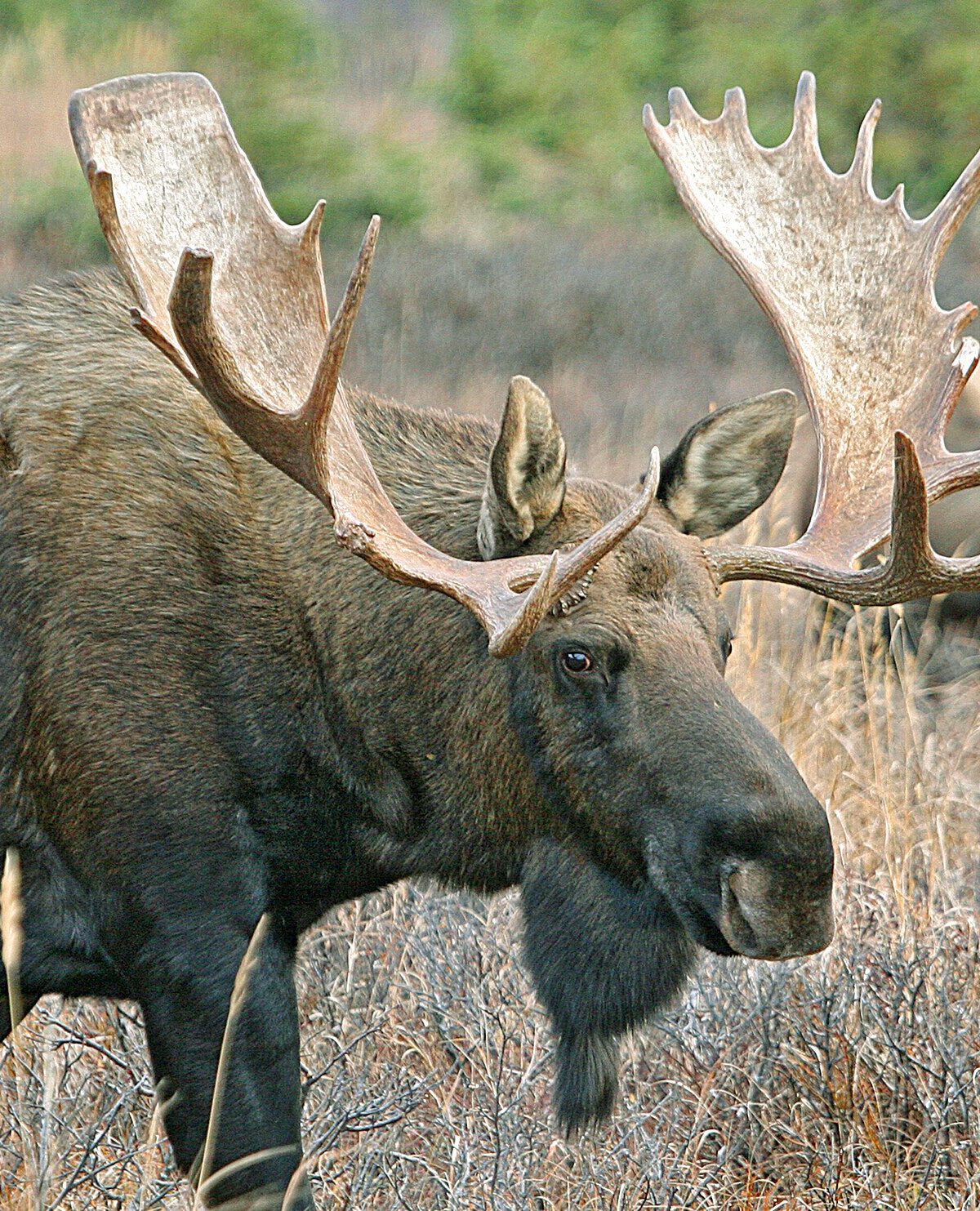
ALASKA MOOSE
Alces alces gigas
DESCRIPTION
Alaska Moose (Alces alces gigas) is a subspecies of the moose, characterized by its large size and long legs. Males are particularly notable for their broad, palmate antlers, which can span up to 1.8 meters. These moose are generally solitary animals, often found in forested areas and wetlands, where they can forage for food and evade predators.
FUN FACTS
- Alaska Moose are the largest species of the deer family, with males weighing up to 700 kg
- Their antlers can grow up to 1.8 meters wide, making them one of the most impressive features of this species.|Despite their large size, Alaska Moose are surprisingly agile and can run at speeds of up to 56 km/h
- They are also excellent swimmers, capable of crossing rivers and lakes in search of food
QUICK INFO
Lifespan15-25 years in the wild, up to 30 years in captivi
Average Weight360-700 kg
Average Length2.4-3.0 m
Diet TypeHerbivore
Social StructureSolitary, with occasional pairs during mating season.
Activity PatternCrepuscular
Breeding SeasonAutumn (September-October)
- Habitat
- Alaska Moose inhabit a range of environments, including boreal forests, wetlands, and river valleys. They prefer areas with abundant vegetation for foraging and access to water sources.
- Biomes
- Boreal Forest, Temperate Forest, Wetlands
- Native Range
- The native range of Alaska Moose includes the interior and coastal regions of Alaska, extending into parts of Canada.
- Continent
- North America
- Countries
- United States, Canada
- Diet
- Alaska Moose primarily feeds on a variety of vegetation, including leaves, twigs, and aquatic plants. They are known to consume large quantities of willow, birch, and aspen.
- Diet Type
- Herbivore
- Favorite Food
- Willow, birch, aspen
- Social Structure
- Solitary, with occasional pairs during mating season.
- Activity Pattern
- Crepuscular
- Group Size
- 1-2
- Territorial
- 0
 LC
LC
 LC
LC
360-700 kg
Weight
2.4-3.0 m
Length
1.5-2.1 m at shoulder
Height (Shoulder)
- Coloration
- Dark brown to light brown, with a lighter patch on the muzzle.
- Sexual Dimorphism
- Males are larger than females and possess antlers.
- Lifespan
- 15-25 years in the wild, up to 30 years in captivi
- Gestation Period
- 230 days
- Offspring per Birth
- 1-2
- Sexual Maturity
- 1.5-2 years
- Breeding Season
- Autumn (September-October)
LC
Least Concern
IUCN Red List Status
- Population Status
- The population of Alaska Moose is stable, with healthy numbers in many areas.
- Wild Population Estimate
- 100,000-150,000
- Population Trend
- Stable
- Endangered
- 0
- Threats
- Main threats include habitat loss due to human development and hunting. Climate change also poses a risk by altering their habitat and food availability.
- Predators
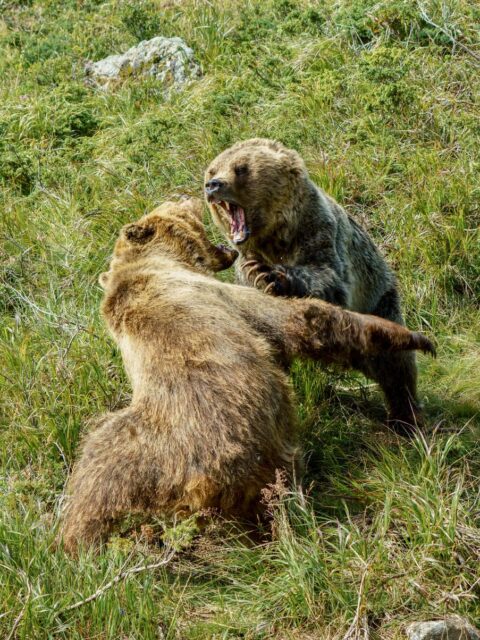
- Wolves, bears, and humans are the primary predators of Alaska Moose.
- Defense Mechanisms
- Alaska Moose rely on their size and strength to deter predators, and they can be aggressive when threatened.
- Found in Zoos
- Uncommon