


ALBINO WALLABY
DESCRIPTION
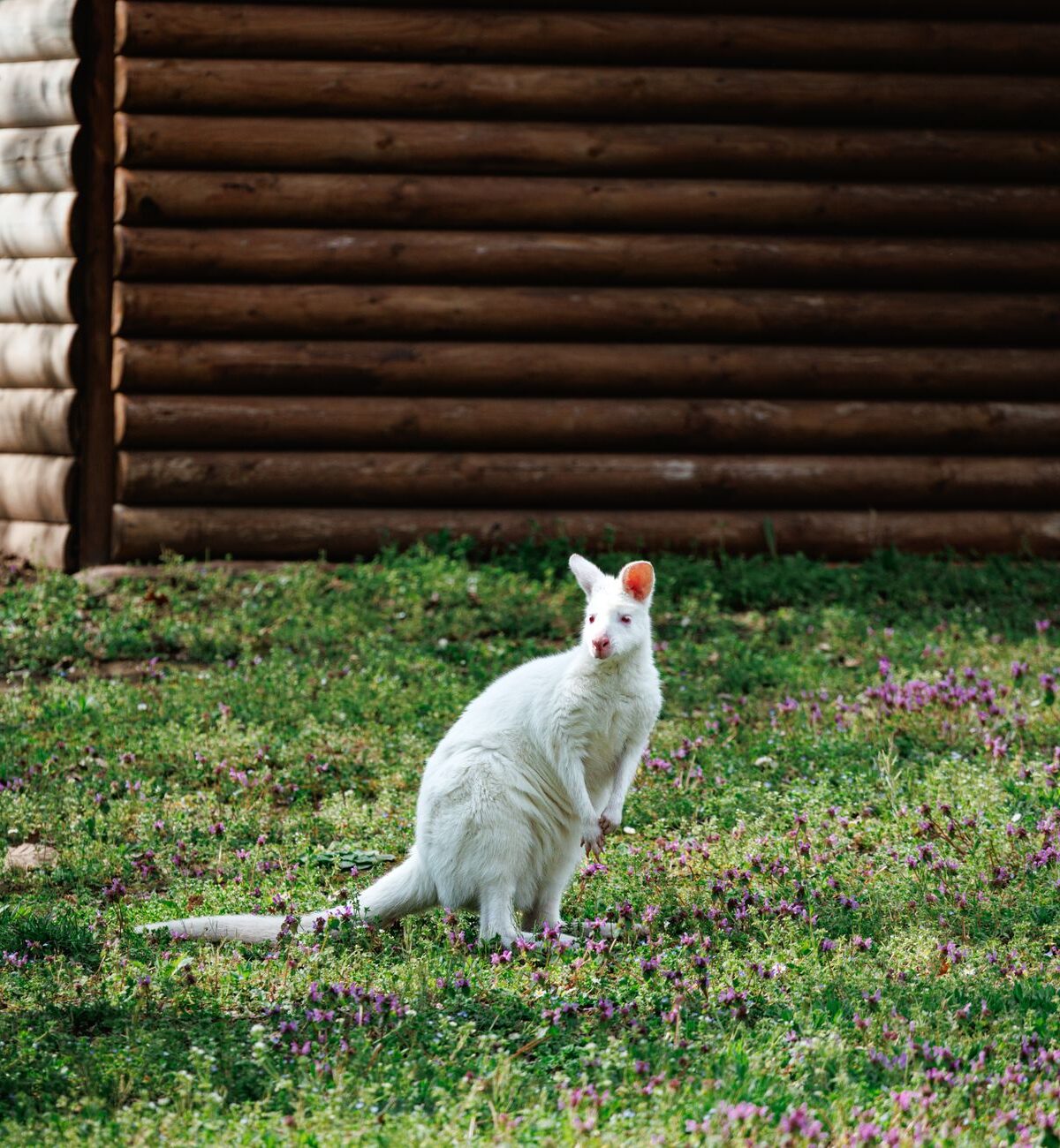
Albino Wallaby, also known as the White Wallaby, is a rare color variant of the wallaby species characterized by its striking white fur and pink eyes. This unique coloration is due to a genetic mutation that affects pigmentation, making them stand out in their natural habitat. In terms of behavior, they are generally social animals, often seen in small groups, and they exhibit typical wallaby behaviors such as hopping and grazing.
FUN FACTS
- Albino Wallabies are not a separate species but rather a color variant of existing wallaby species, making them a fascinating example of genetic diversity in wildlife
- Their striking appearance has made them popular in zoos, where they attract visitors who are curious about their unique look.| The albino condition in wallabies is caused by a recessive gene, which means that both parents must carry the gene for an albino offspring to be born
- This rarity contributes to their appeal and highlights the importance of genetic variation in animal populations
QUICK INFO
Lifespan10-15 years in the wild, up to 20 years in captivi
Average Weight10-15 kg
Average Length0.8-1.2 m
Diet TypeHerbivore
Social Structuregroup — they often live in small groups for social interaction and protection.
Activity PatternDiurnal
Breeding SeasonYear-round, with peaks in spring and summer
- Habitat
- Albino Wallabies inhabit a variety of environments, including grasslands and open forests. They prefer areas with ample vegetation for grazing and shelter.
- Biomes
- Grassland, Temperate Forest
- Native Range
- Albino Wallabies are native to Australia, particularly in regions where wallabies are commonly found.
- Continent
- Australia
- Countries
- Australia
- Diet
- Albino Wallabies primarily feed on grasses, leaves, and other vegetation. They are herbivores and have a diet similar to that of other wallaby species.
- Diet Type
- Herbivore
- Favorite Food
- grasses, leaves
- Social Structure
- group — they often live in small groups for social interaction and protection.
- Activity Pattern
- Diurnal
- Group Size
- 2-10
- Territorial
- 0

 LC
LC
10-15 kg
Weight
0.8-1.2 m
Length
- Coloration
- white fur with pink eyes
- Sexual Dimorphism
- males are generally larger than females
- Lifespan
- 10-15 years in the wild, up to 20 years in captivi
- Gestation Period
- 30-35 days
- Offspring per Birth
- 1
- Sexual Maturity
- 1-2 years
- Breeding Season
- Year-round, with peaks in spring and summer
LC
Least Concern
IUCN Red List Status
- Population Status
- The population of Albino Wallabies is not well-documented, but they are considered rare due to their unique coloration.
- Wild Population Estimate
- unknown
- Population Trend
- Unknown
- Endangered
- 0
- Threats
- Main threats include habitat loss and predation by introduced species such as foxes and feral cats. Their unique coloration may also make them more vulnerable to predators in the wild.
- Predators
- foxes, feral cats, eagles
- Defense Mechanisms
- They rely on their agility and speed to escape from predators.
- Compatible Animals
- other wallaby species, kangaroos
- Found in Zoos
- Uncommon