


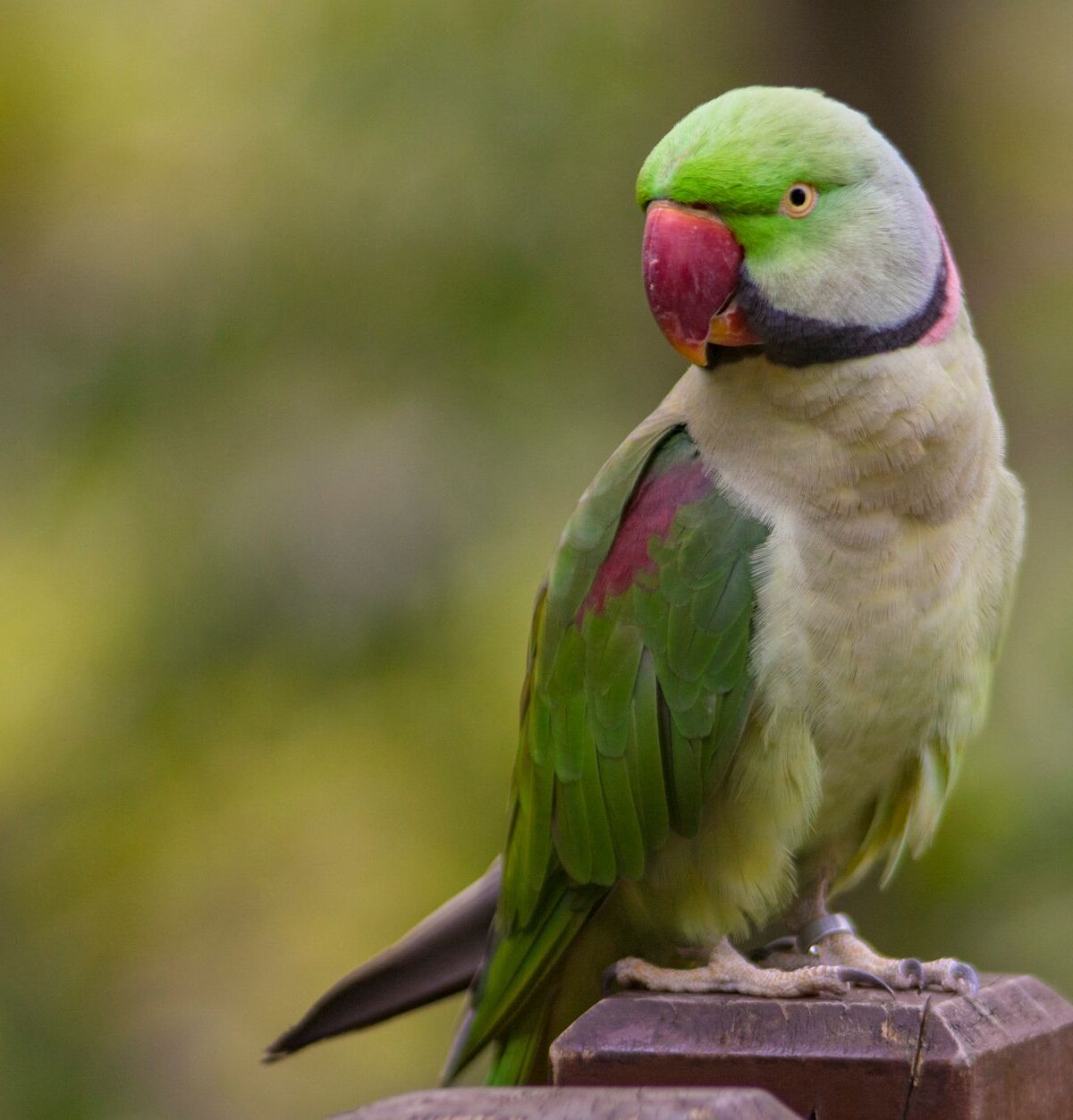
ALEXANDRINE PARAKEET
Psittacula eupatria
DESCRIPTION
Also called the Alexandrine Parrot, the Alexandrine Parakeet (Psittacula eupatria) is a large parakeet known for its striking green plumage and distinctive red beak. Males typically exhibit a prominent black neck ring, while females lack this feature, showcasing sexual dimorphism. These birds are highly social and intelligent, often seen in flocks, and they are known for their playful behavior and ability to mimic sounds.
FUN FACTS
- Alexandrine Parakeets are known for their exceptional vocal mimicry, often imitating human speech and other sounds they hear in their environment
- They are also highly intelligent and can solve puzzles and engage in complex play, making them popular pets and subjects of study in avian intelligence research
QUICK INFO
Lifespan15-20 years in the wild, up to 30 years in captivi
Average Weight120-150 g
Average Length40-42 cm
Diet TypeHerbivore
Social StructureThey are typically found in pairs or small groups, often forming larger flocks outside of the breeding season.
Activity PatternDiurnal
Breeding SeasonSpring (March-May)
- Habitat
- These parakeets inhabit a range of environments, including forests, woodlands, and urban areas. They prefer areas with abundant trees for nesting and foraging.
- Biomes
- Tropical Rainforest, Temperate Forest, Urban
- Native Range
- The native range of the Alexandrine Parakeet includes parts of South Asia, particularly India, Nepal, and Bangladesh, as well as some regions in Southeast Asia.
- Continent
- Asia
- Countries
- India, Nepal, Bangladesh, Myanmar
- Diet
- Alexandrine Parakeets primarily feed on seeds, fruits, and nuts, showing a preference for a variety of plant materials. They are known to forage in trees and on the ground for their food.
- Diet Type
- Herbivore
- Favorite Food
- seeds, fruits, nuts
- Social Structure
- They are typically found in pairs or small groups, often forming larger flocks outside of the breeding season.
- Activity Pattern
- Diurnal
- Group Size
- 5-30
- Territorial
- 1
 VU
VU
 LC
LC
120-150 g
Weight
40-42 cm
Length
- Coloration
- Predominantly green with a red beak and a distinctive black neck ring in males.
- Sexual Dimorphism
- Males have a black neck ring, while females do not.
- Lifespan
- 15-20 years in the wild, up to 30 years in captivi
- Offspring per Birth
- 3-5
- Sexual Maturity
- 2-3 years
- Breeding Season
- Spring (March-May)
LC
Least Concern
IUCN Red List Status
- Population Status
- The population of Alexandrine Parakeets is currently stable, but they face threats from habitat loss and trapping for the pet trade.
- Wild Population Estimate
- 50,000-100,000
- Population Trend
- Stable
- Endangered
- 0
- Threats
- Main threats include habitat destruction due to deforestation and illegal trapping for the pet trade. These factors have led to localized declines in some areas.
- Predators
- Birds of prey, snakes, and larger mammals can pose threats to Alexandrine Parakeets, especially to their eggs and young.
- Defense Mechanisms
- They often use their agility and flight to escape predators, and they can also be quite vocal to alert others of danger.
- Compatible Animals
- other parakeets, cockatiels, lovebirds
- Found in Zoos
- Common