


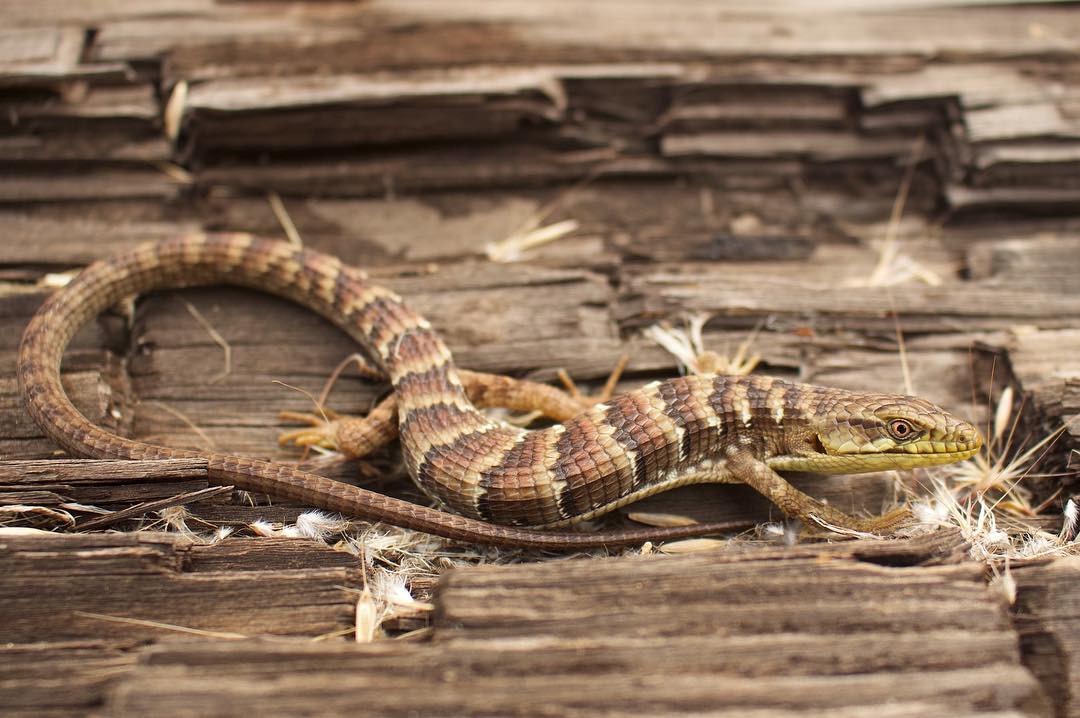
ALLIGATOR LIZARD
Elgaria multicarinata
DESCRIPTION
Alligator Lizard (Elgaria multicarinata) is commonly known as the California Alligator Lizard and the Northern Alligator Lizard. This species is characterized by its elongated body, short limbs, and a distinctive rough, keeled texture on its scales, which gives it a somewhat alligator-like appearance. They are typically found in a variety of habitats, including grasslands, forests, and shrublands, where they exhibit a secretive behavior, often hiding under rocks or logs.
FUN FACTS
- Alligator Lizards are known for their unique ability to drop their tails as a defense mechanism, which can regrow over time, although the new tail may not have the same appearance as the original
- | These lizards are also quite agile and can climb trees and shrubs, which helps them evade predators and hunt for food in a variety of environments
QUICK INFO
Lifespan5-10 years in the wild, up to 15 years in captivit
Average Weight50-150 g
Average Length20-30 cm
Diet TypeInsectivore
Social Structuresolitary, typically found alone except during mating season
Activity PatternDiurnal
Breeding SeasonSpring (April-June)
- Habitat
- These lizards inhabit a range of environments, including grasslands, forests, and rocky areas. They prefer areas with ample cover for hiding and hunting.
- Biomes
- Temperate Forest, Grassland, Shrubland
- Native Range
- Elgaria multicarinata is native to the western United States, particularly in California and parts of Oregon and Nevada.
- Continent
- North America
- Countries
- United States, Canada
- Diet
- Alligator Lizards primarily feed on insects and other small invertebrates, but they may also consume small vertebrates. Their diet is crucial for their growth and reproductive success.
- Diet Type
- Insectivore
- Favorite Food
- insects, small invertebrates
- Social Structure
- solitary, typically found alone except during mating season
- Activity Pattern
- Diurnal
- Group Size
- 1
- Territorial
- 0
 VU
VU
 LC
LC
50-150 g
Weight
20-30 cm
Length
- Coloration
- They exhibit a range of colors from brown to greenish, often with darker stripes or spots.
- Sexual Dimorphism
- Males are generally larger than females and may have more vibrant coloration.
- Lifespan
- 5-10 years in the wild, up to 15 years in captivit
- Offspring per Birth
- 3-10
- Sexual Maturity
- 2-3 years
- Breeding Season
- Spring (April-June)
LC
Least Concern
IUCN Red List Status
- Population Status
- The population of Alligator Lizards is currently stable, though local declines may occur due to habitat loss.
- Wild Population Estimate
- Unknown
- Population Trend
- Stable
- Endangered
- 0
- Threats
- Main threats include habitat destruction due to urban development and agriculture. Additionally, they face predation from larger animals and competition with invasive species.
- Predators
- Birds of prey, snakes, and larger mammals are known to prey on Alligator Lizards.
- Defense Mechanisms
- They can drop their tails when threatened, allowing them to escape while the predator is distracted.
- Found in Zoos
- Uncommon