


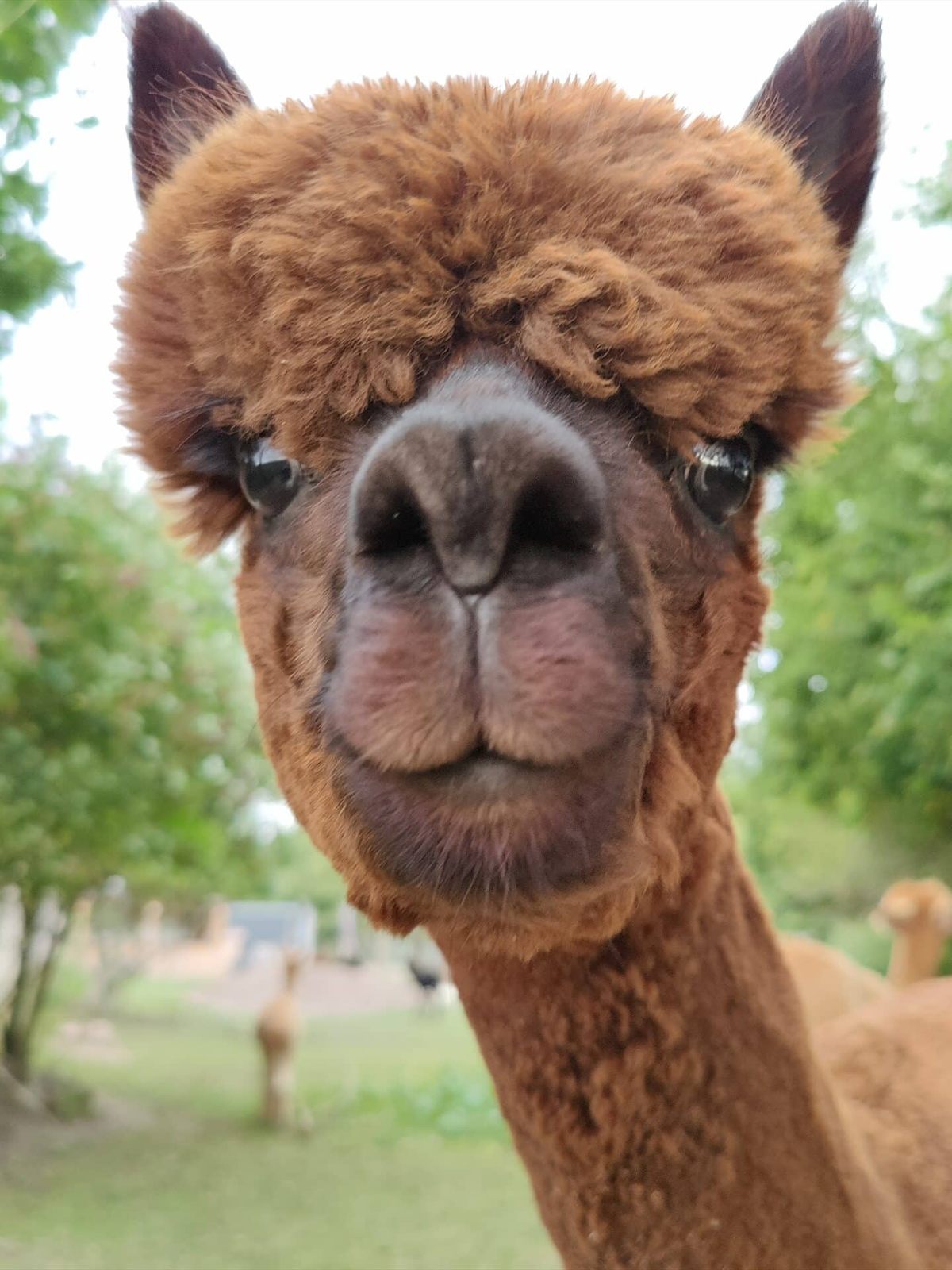
ALPACA
Vicugna pacos
DESCRIPTION
Alpacas are domesticated South American camelids, valued for their soft and luxurious fleece. They are closely related to llamas and are primarily raised for their wool, which is used in textiles.
FUN FACTS
- Alpacas can spit to show dominance or when they feel threatened | Their fleece is hypoallergenic and comes in over 52 natural colors | Alpacas have a unique way of communicating through humming
QUICK INFO
Lifespan15-20 years in the wild, up to 25 in captivity
Average Weight55-65 kg
Average Length0.9-1.0 m
Diet TypeHerbivore
Social Structuregroup — they live in herds typically consisting of 5-20 individuals.
Activity PatternDiurnal
Breeding SeasonYear-round
- Habitat
- Alpacas are typically found in high-altitude regions of the Andes Mountains. They thrive in cool, dry climates with plenty of open space for grazing.
- Biomes
- Montane, Grassland
- Native Range
- Native to the Andes mountains of Peru, Bolivia, Ecuador, and northern Chile.
- Continent
- South America
- Countries
- Peru, Bolivia, Ecuador, Chile
- Diet
- Alpacas are herbivores that primarily graze on grasses and other vegetation. They have a unique digestive system that allows them to efficiently process fibrous plant material.
- Diet Type
- Herbivore
- Favorite Food
- grasses, hay
- Social Structure
- group — they live in herds typically consisting of 5-20 individuals.
- Activity Pattern
- Diurnal
- Group Size
- 5-20
- Territorial
- 0

55-65 kg
Weight
0.9-1.0 m
Length
0.8-1.0 m at shoulder
Height (Shoulder)
- Coloration
- varies widely, including white, black, brown, and gray
- Sexual Dimorphism
- males are generally larger than females
- Lifespan
- 15-20 years in the wild, up to 25 in captivity
- Gestation Period
- 11.5 months
- Offspring per Birth
- 1
- Sexual Maturity
- 1-2 years
- Breeding Season
- Year-round
LC
Least Concern
IUCN Red List Status
- Population Status
- The population of alpacas is stable due to their domestication and breeding.
- Population Trend
- Stable
- Endangered
- 0
- Threats
- Main threats include habitat loss and competition with livestock. However, they are not currently considered endangered.
- Predators
- pumas, coyotes
- Defense Mechanisms
- Alpacas use spitting, kicking, and fleeing as defense mechanisms.
- Compatible Animals
- llamas, sheep, goats
- Found in Zoos
- Uncommon