


ALPINE HARE
Lepus timidus
DESCRIPTION
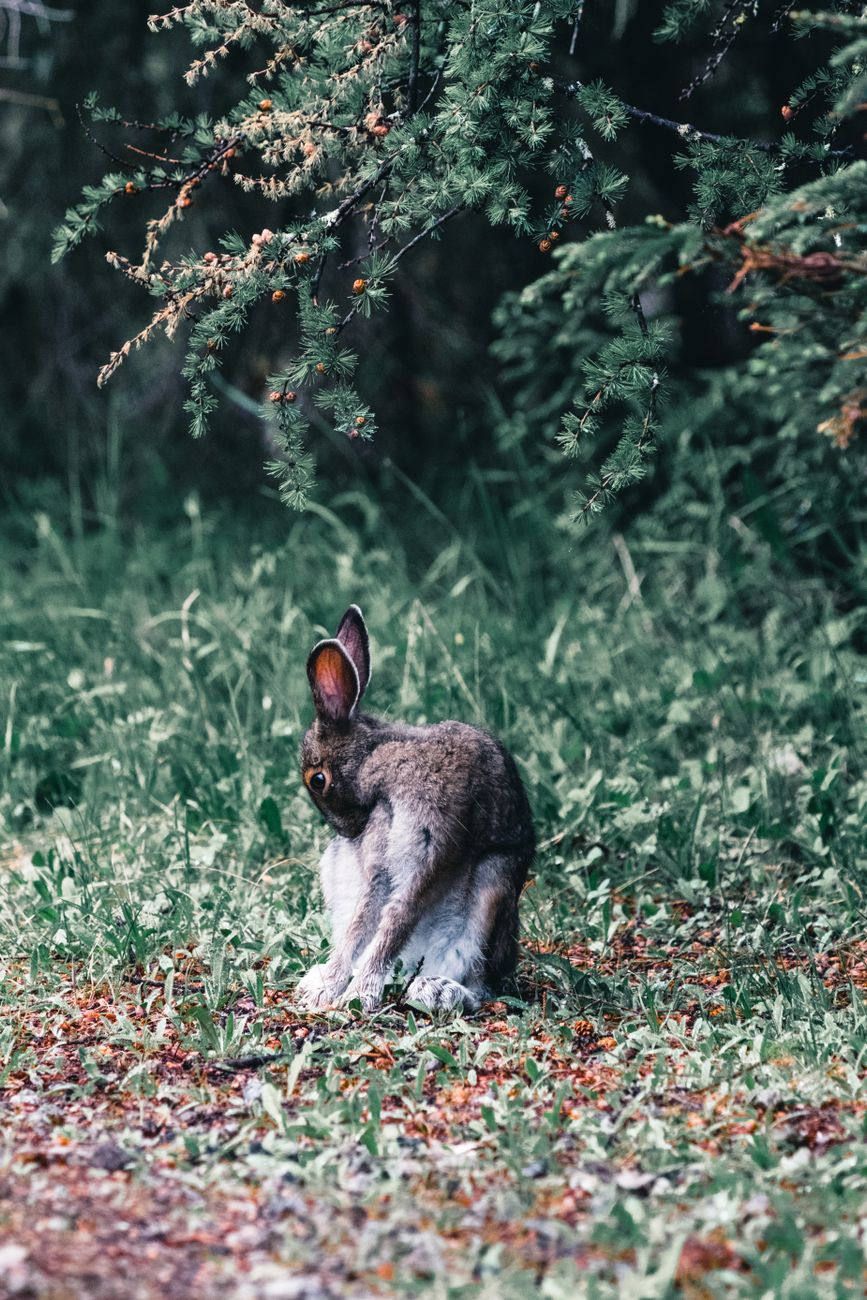
Alpine Hare (Lepus timidus), also known as the Mountain Hare, is a medium-sized lagomorph characterized by its long ears and powerful hind legs. This species exhibits seasonal color changes, with a brown or gray coat in summer that turns white in winter, providing excellent camouflage in snowy environments. Alpine Hares are primarily found in mountainous regions and are well-adapted to cold climates, often living in areas above the tree line where they can evade predators.
FUN FACTS
- Alpine Hares can reach speeds of up to 60 km/h when fleeing from predators, making them one of the fastest hares in the world
- Their ability to change color with the seasons not only helps them blend into their environment but also plays a crucial role in thermoregulation, as the white coat reflects sunlight in winter
QUICK INFO
Lifespan3-5 years in the wild, up to 10 years in captivity
Average Weight2-5 kg
Average Length50-60 cm
Diet TypeHerbivore
Social Structuresolitary, occasionally seen in pairs during breeding
Activity PatternCrepuscular
Breeding SeasonSpring (March-May)
- Habitat
- Alpine Hares inhabit alpine and subalpine regions, often in tundra-like environments with sparse vegetation. They prefer areas with plenty of cover to hide from predators.
- Biomes
- Alpine, Tundra
- Native Range
- The native range of the Alpine Hare includes the mountainous regions of Europe and Asia, particularly in the Alps, Pyrenees, and the Scandinavian mountains.
- Continent
- Europe, Asia
- Countries
- Austria, Switzerland, Norway, Sweden, Finland
- Diet
- Alpine Hares are herbivores, primarily feeding on grasses, herbs, and shrubs. They may also consume bark and twigs during the winter months when other food sources are scarce.
- Diet Type
- Herbivore
- Favorite Food
- grasses, herbs, shrubs
- Social Structure
- solitary, occasionally seen in pairs during breeding
- Activity Pattern
- Crepuscular
- Group Size
- 1-2
- Territorial
- 0
 LC
LC
LC
LC
2-5 kg
Weight
50-60 cm
Length
- Coloration
- brown or gray in summer, white in winter
- Sexual Dimorphism
- males and females are similar in size and appearance
- Lifespan
- 3-5 years in the wild, up to 10 years in captivity
- Gestation Period
- 42-44 days
- Offspring per Birth
- 2-4
- Sexual Maturity
- 1 year
- Breeding Season
- Spring (March-May)
LC
Least Concern
IUCN Red List Status
- Population Status
- The population of Alpine Hares is generally stable, although local declines may occur due to habitat loss.
- Wild Population Estimate
- unknown
- Population Trend
- Stable
- Endangered
- 0
- Threats
- Main threats to Alpine Hares include habitat destruction due to climate change and human activities, as well as predation by natural predators. In some areas, they are also threatened by hunting.
- Predators
- Golden Eagles, Foxes, Lynxes, Wolves
- Defense Mechanisms
- Alpine Hares rely on their camouflage and speed to evade predators, often freezing in place to avoid detection.
- Found in Zoos
- Uncommon