


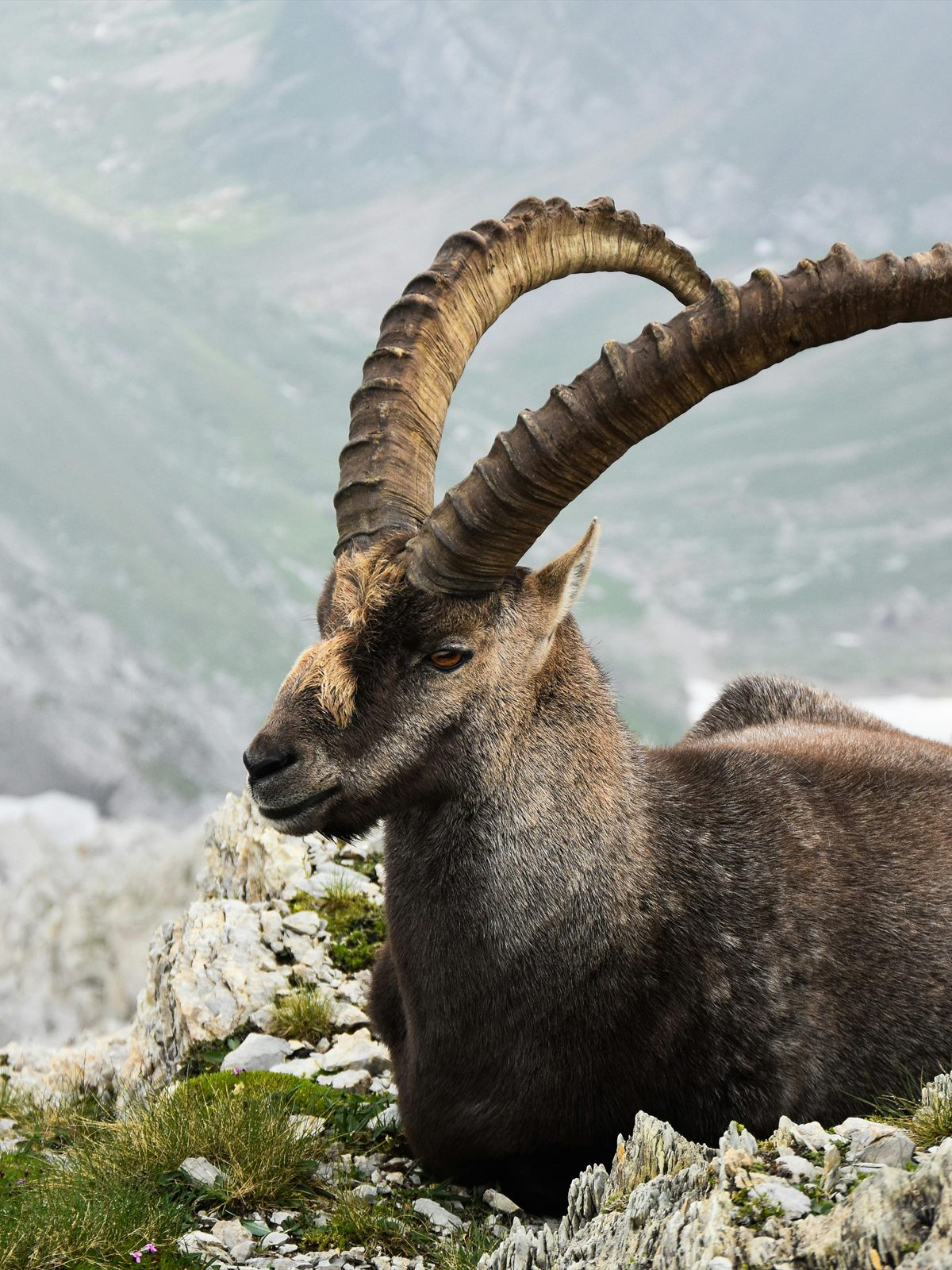
ALPINE IBEX
Capra ibex
DESCRIPTION
Also called Steinbock, the Alpine Ibex is a species of wild goat known for its impressive curved horns that can grow up to 1 meter long. These animals are well adapted to their mountainous habitats, with strong, muscular bodies and specialized hooves that allow them to navigate steep, rocky terrain with ease. Alpine Ibex are social animals, often found in groups, and they exhibit a range of behaviors including climbing, grazing, and social interactions within their herds.
FUN FACTS
- Alpine Ibex are remarkable climbers, capable of scaling nearly vertical rock faces with ease, thanks to their specialized hooves and strong leg muscles
- They can often be seen standing on narrow ledges, seemingly defying gravity
- | During the winter months, Alpine Ibex can be found descending to lower altitudes in search of food, but they are known to return to higher elevations as soon as conditions improve
- Their ability to adapt to harsh alpine environments makes them a fascinating subject of study in animal behavior and ecology
QUICK INFO
Lifespan15-20 years in the wild, up to 25 years in captivi
Average Weight50-100 kg
Average Length1.2-1.5 m
Diet TypeHerbivore
Social Structuregroup — they typically live in herds that can vary in size, often consisting of females and their young, while males may be more solitary or form bachelor groups.
Activity PatternDiurnal
Breeding SeasonAutumn (November-December)
- Habitat
- Alpine Ibex inhabit rocky, mountainous regions, typically at elevations between 1,500 and 3,200 meters. They prefer steep, rugged terrain where they can find shelter and food.
- Biomes
- Alpine, Mountain
- Native Range
- The native range of the Alpine Ibex includes the European Alps, the Apennines, and the Pyrenees.
- Continent
- Europe
- Countries
- France, Italy, Switzerland, Austria, Slovenia
- Diet
- Alpine Ibex primarily feed on grasses, herbs, and shrubs, which they graze on in their mountainous habitats. They are known to be selective feeders, often choosing the most nutritious plants available.
- Diet Type
- Herbivore
- Favorite Food
- grasses, herbs, shrubs
- Social Structure
- group — they typically live in herds that can vary in size, often consisting of females and their young, while males may be more solitary or form bachelor groups.
- Activity Pattern
- Diurnal
- Group Size
- 5-30
- Territorial
- 0
 LC
LC
50-100 kg
Weight
1.2-1.5 m
Length
0.8-1.0 m at shoulder
Height (Shoulder)
- Coloration
- The Alpine Ibex has a light brown to grayish coat, which becomes darker in winter. They have a distinctive beard and a lighter patch on their face.
- Sexual Dimorphism
- Males are larger than females and have much longer horns.
- Lifespan
- 15-20 years in the wild, up to 25 years in captivi
- Gestation Period
- 150 days
- Offspring per Birth
- 1
- Sexual Maturity
- 2-3 years
- Breeding Season
- Autumn (November-December)
LC
Least Concern
IUCN Red List Status
- Population Status
- The population of Alpine Ibex has recovered significantly since the late 19th century due to conservation efforts.
- Wild Population Estimate
- 30,000-40,000
- Population Trend
- Increasing
- Endangered
- 0
- Threats
- Main threats to the Alpine Ibex include habitat loss due to human encroachment and climate change, as well as hunting in some areas. They are also vulnerable to diseases transmitted by domestic livestock.
- Conservation Program
- Successful reintroduction programs in various countries have helped stabilize and increase their populations.
- Predators
- Wolves, lynxes, and golden eagles are known predators of the Alpine Ibex, particularly targeting young or weak individuals.
- Defense Mechanisms
- Alpine Ibex rely on their agility and climbing skills to escape predators, often retreating to steep cliffs where they are difficult to reach.
- Found in Zoos
- Uncommon