


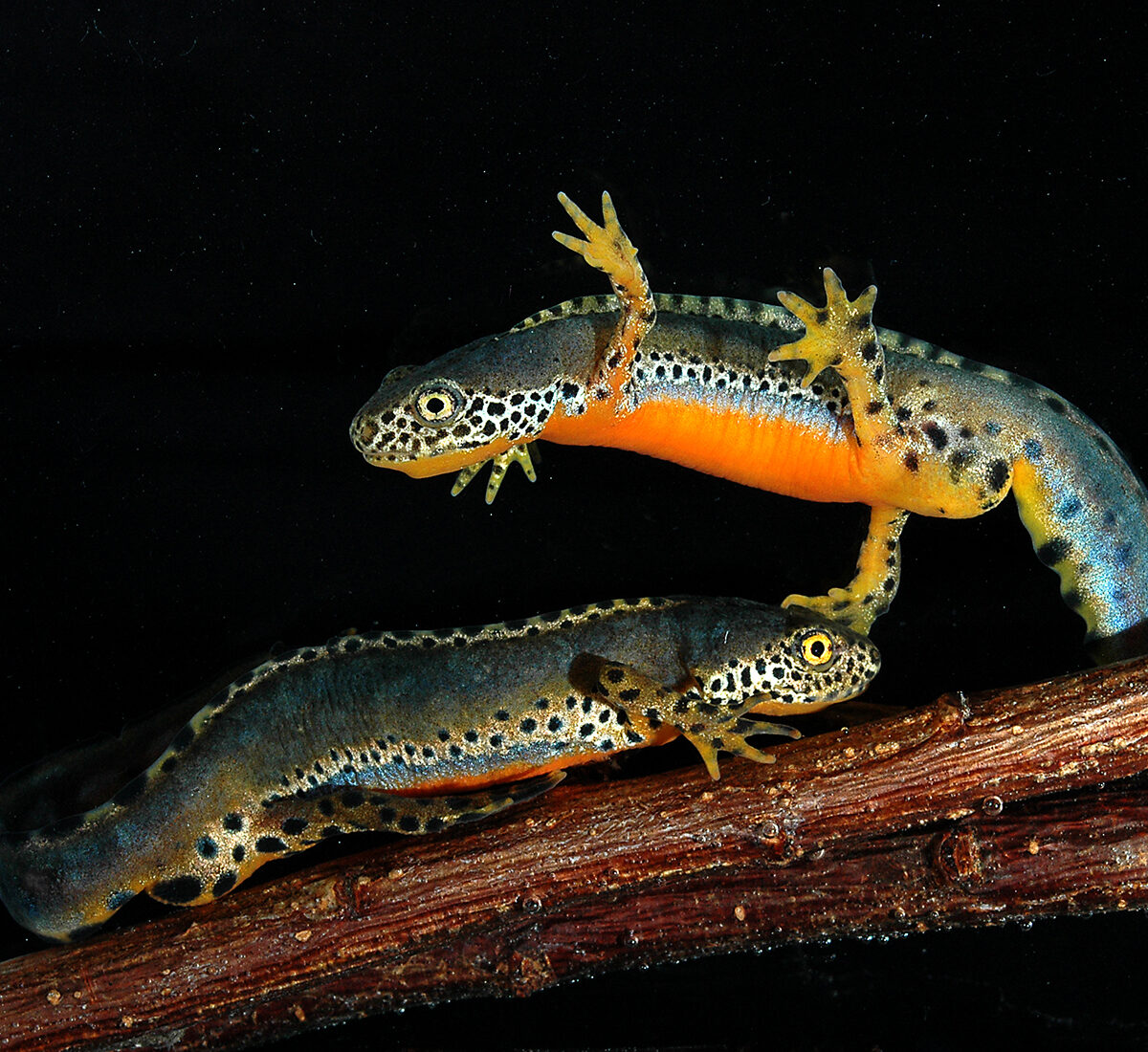
ALPINE NEWT
Ichthyosaura alpestris
DESCRIPTION
Alpine Newt (Ichthyosaura alpestris) is a small amphibian known for its striking coloration, particularly in males during the breeding season when they exhibit bright orange or yellow bellies. This species is primarily aquatic, spending much of its life in ponds and streams, but it also inhabits moist terrestrial environments during the non-breeding season. They are known for their ability to adapt to various altitudes, often found in mountainous regions across Europe.
FUN FACTS
- Alpine Newts are capable of regenerating lost limbs, a fascinating ability that has drawn the interest of researchers studying regeneration
- | During the breeding season, males perform elaborate courtship displays, including swimming in circles and showing off their vibrant colors to attract females
QUICK INFO
Lifespan10-15 years in the wild, up to 20 in captivity
Average Weight10-20 g
Average Length7-10 cm
Diet TypeInsectivore
Social Structuresolitary, with occasional pairings during breeding
Activity PatternNocturnal
Breeding SeasonSpring (March-May)
- Habitat
- Alpine Newts thrive in freshwater habitats such as ponds, lakes, and streams, particularly in mountainous areas. They require moist terrestrial environments for their non-breeding activities.
- Biomes
- Temperate Forest, Alpine
- Native Range
- The native range of the Alpine Newt includes various parts of Europe, particularly in the Alps, Carpathians, and other mountainous regions.
- Continent
- Europe
- Countries
- Austria, Switzerland, Germany, France, Italy, Slovenia, Czech Republic, Poland
- Diet
- Alpine Newts primarily feed on small invertebrates, including insects and their larvae. They are opportunistic feeders and will consume a variety of prey items available in their habitat.
- Diet Type
- Insectivore
- Favorite Food
- small insects, larvae
- Social Structure
- solitary, with occasional pairings during breeding
- Activity Pattern
- Nocturnal
- Group Size
- 1-5
- Territorial
- 0
 VU
VU
 LC
LC
10-20 g
Weight
7-10 cm
Length
- Coloration
- Males are typically bright orange or yellow with dark spots, while females are more subdued in color with a brownish hue.
- Sexual Dimorphism
- Males are more colorful than females, especially during the breeding season.
- Lifespan
- 10-15 years in the wild, up to 20 in captivity
- Offspring per Birth
- 100-300 eggs
- Sexual Maturity
- 2-3 years
- Breeding Season
- Spring (March-May)
LC
Least Concern
IUCN Red List Status
- Population Status
- The population of Alpine Newts is currently stable, although local declines have been observed in some areas due to habitat loss.
- Wild Population Estimate
- Unknown
- Population Trend
- Stable
- Endangered
- 0
- Threats
- Main threats to Alpine Newts include habitat destruction, pollution, and climate change. These factors can lead to a decline in suitable breeding sites and food availability.
- Predators
- Birds, snakes, and larger amphibians are known predators of the Alpine Newt.
- Defense Mechanisms
- Alpine Newts possess toxic skin secretions that deter many potential predators.
- Compatible Animals
- other amphibians, small fish
- Found in Zoos
- Uncommon