


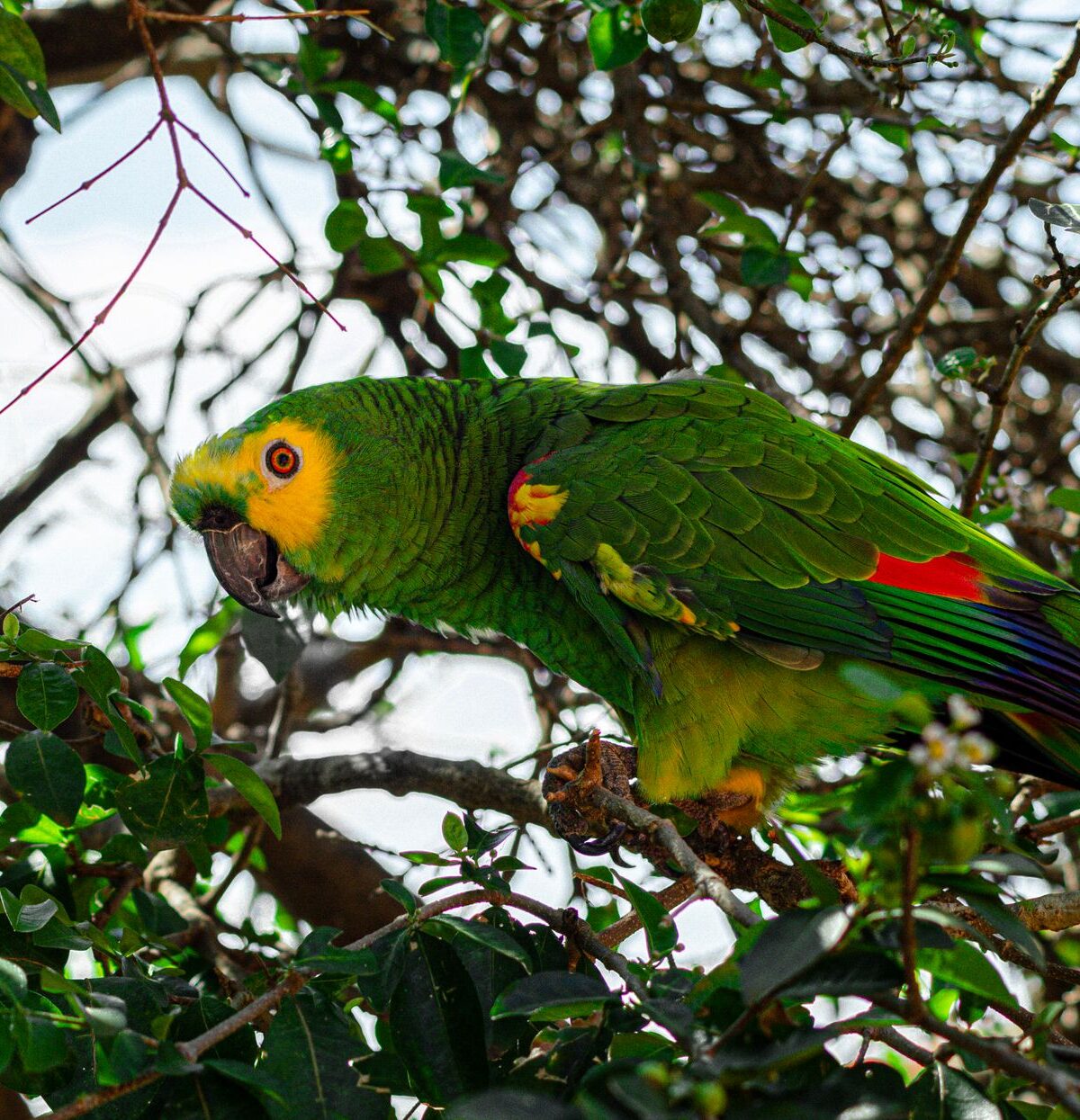
AMAZON PARROT
Amazona spp.
DESCRIPTION
Amazon Parrot (Amazona spp.) is commonly known as the Green Parrot, Yellow-naped Amazon, and Blue-fronted Amazon. These medium to large-sized parrots are characterized by their vibrant green plumage, often accented with splashes of yellow, blue, or red on their heads and wings. They are highly social birds, known for their intelligence and ability to mimic human speech, making them popular pets and companions.
FUN FACTS
- Amazon Parrots are known for their exceptional vocal abilities, often learning to mimic human speech and sounds with remarkable clarity
- In the wild, they can live in flocks of up to 30 individuals, where they engage in complex social behaviors and communication patterns
QUICK INFO
Lifespan25-50 years in captivity
Average Weight300-500 g
Average Length25-40 cm
Diet TypeHerbivore
Social Structuregroup — they are highly social and often found in flocks.
Activity PatternDiurnal
Breeding SeasonSpring (March-June)
- Habitat
- Amazon Parrots inhabit a variety of forested environments, including tropical rainforests, savannas, and mangroves. They prefer areas with abundant food sources and nesting sites.
- Biomes
- Tropical Rainforest, Savanna
- Native Range
- Amazon Parrots are native to Central and South America, with a range extending from Mexico to Brazil.
- Continent
- North America, South America
- Countries
- Mexico, Brazil, Colombia, Venezuela, Ecuador, Peru
- Diet
- Amazon Parrots primarily feed on seeds, nuts, fruits, and flowers. Their strong beaks are well-adapted for cracking open hard seeds and nuts.
- Diet Type
- Herbivore
- Favorite Food
- Fruits, seeds, nuts
- Social Structure
- group — they are highly social and often found in flocks.
- Activity Pattern
- Diurnal
- Group Size
- 5-30
- Territorial
- 0
 VU
VU
 LC
LC
300-500 g
Weight
25-40 cm
Length
- Coloration
- Primarily green with variations of yellow, blue, and red depending on the species.
- Lifespan
- 25-50 years in captivity
- Offspring per Birth
- 2-4
- Sexual Maturity
- 3-5 years
- Breeding Season
- Spring (March-June)
VU
Vulnerable
IUCN Red List Status
- Population Status
- Population numbers vary by species, with some being common while others are threatened.
- Wild Population Estimate
- Unknown
- Population Trend
- Decreasing
- Endangered
- 1
- Threats
- Main threats include habitat loss due to deforestation and illegal trapping for the pet trade. These factors have significantly impacted their populations in the wild.
- Predators
- Large birds of prey, snakes, and mammals such as monkeys can pose threats to Amazon Parrots, especially to their eggs and young.
- Defense Mechanisms
- They often rely on their ability to blend into their surroundings and their loud vocalizations to warn of danger.
- Compatible Animals
- Other parrots, cockatiels, finches
- Found in Zoos
- Common