


AMAZON RIVER DOLPHIN
Inia geoffrensis
DESCRIPTION
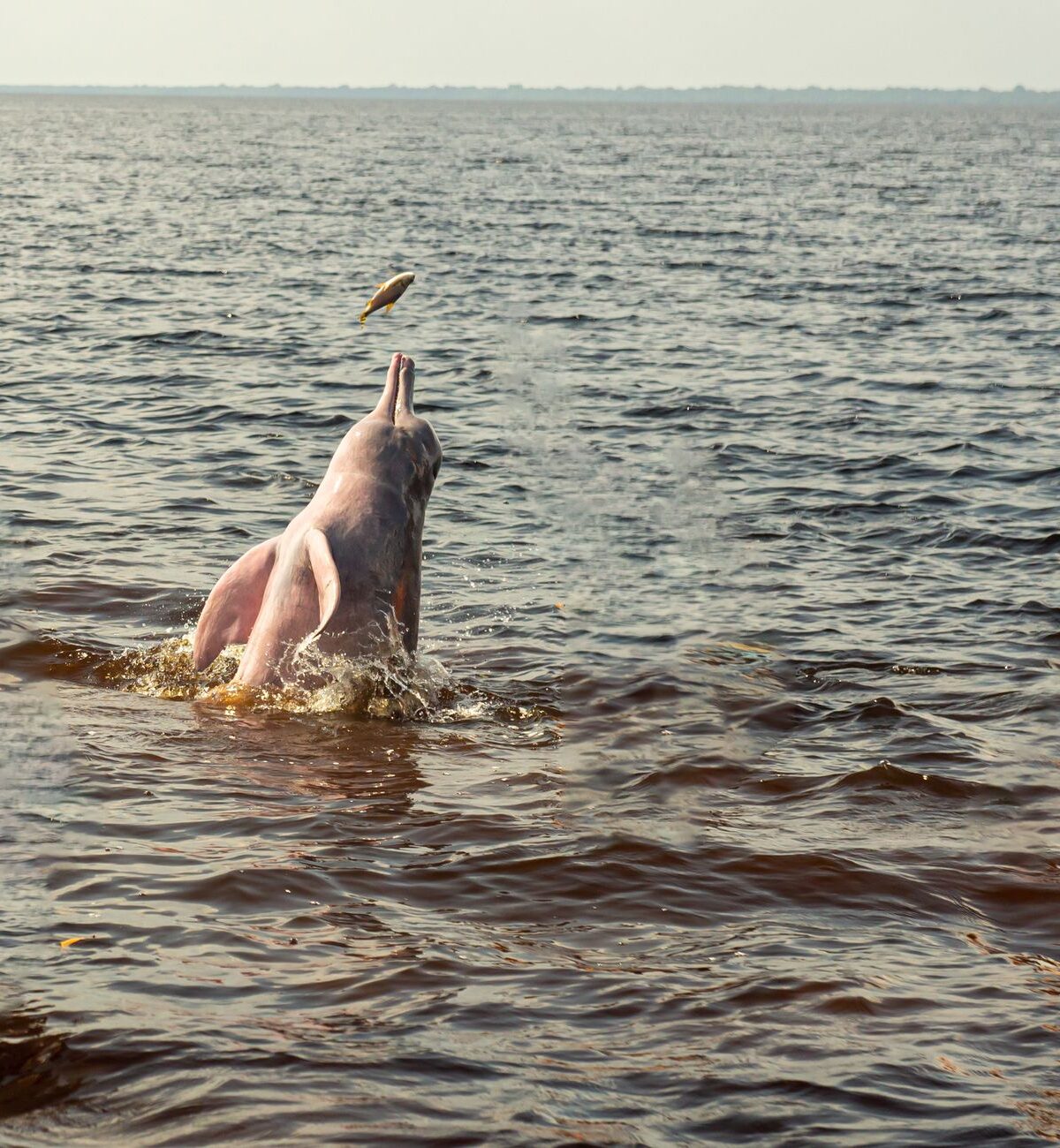
Amazon River Dolphin (Inia geoffrensis), also known as Boto or Pink River Dolphin, is a freshwater dolphin native to the Amazon River and its tributaries. They are known for their distinctive pink coloration, which can vary from gray to bright pink depending on their age and environmental factors. These dolphins are highly intelligent and social animals, often seen swimming in groups, and they exhibit playful behavior, such as leaping out of the water and playing with objects.
FUN FACTS
- Amazon River Dolphins are known for their unique ability to navigate through murky waters using echolocation, which allows them to hunt effectively in their complex habitat
- Additionally, they are one of the few dolphin species that can swim in freshwater, showcasing their remarkable adaptability to different environments
QUICK INFO
Lifespan15-30 years in the wild
Average Weight150-200 kg
Average Length2.5-3.0 m
Diet TypePiscivore
Social StructureThey are generally social animals, often found in small groups, but can also be solitary.
Activity PatternDiurnal
Breeding SeasonYear-round, with peaks during the rainy season
- Habitat
- Amazon River Dolphins inhabit freshwater rivers, lakes, and flooded forests in the Amazon Basin. They prefer shallow waters where they can easily find food and navigate through the complex river systems.
- Biomes
- Freshwater, Tropical Rainforest
- Native Range
- The species is found exclusively in the Amazon River and its tributaries across several countries in South America.
- Continent
- South America
- Countries
- Brazil, Peru, Colombia, Bolivia, Ecuador
- Diet
- They primarily feed on fish, crustaceans, and other aquatic animals. Their diet can vary based on the availability of prey in their habitat.
- Diet Type
- Piscivore
- Favorite Food
- fish, crustaceans
- Social Structure
- They are generally social animals, often found in small groups, but can also be solitary.
- Activity Pattern
- Diurnal
- Group Size
- 2-10
- Territorial
- 0
 LC
LC
150-200 kg
Weight
2.5-3.0 m
Length
- Coloration
- They have a grayish color that can turn pink, especially in older individuals.
- Sexual Dimorphism
- Males are generally larger than females.
- Lifespan
- 15-30 years in the wild
- Gestation Period
- 11 months
- Offspring per Birth
- 1
- Sexual Maturity
- 3-5 years
- Breeding Season
- Year-round, with peaks during the rainy season
VU
Vulnerable
IUCN Red List Status
- Population Status
- The population is currently considered vulnerable due to habitat loss and other threats.
- Wild Population Estimate
- Estimated 10,000-20,000
- Population Trend
- Decreasing
- Endangered
- 1
- Threats
- Main threats include habitat destruction, pollution, and entanglement in fishing gear. These factors have led to a decline in their population.
- Conservation Program
- Various local and international conservation efforts are in place to protect their habitat and reduce threats.
- Predators
- Large fish and occasionally humans pose threats, but they have few natural predators.
- Defense Mechanisms
- They use their agility and speed to evade predators, and their social structure helps in alerting each other to dangers.
- Found in Zoos
- Uncommon