


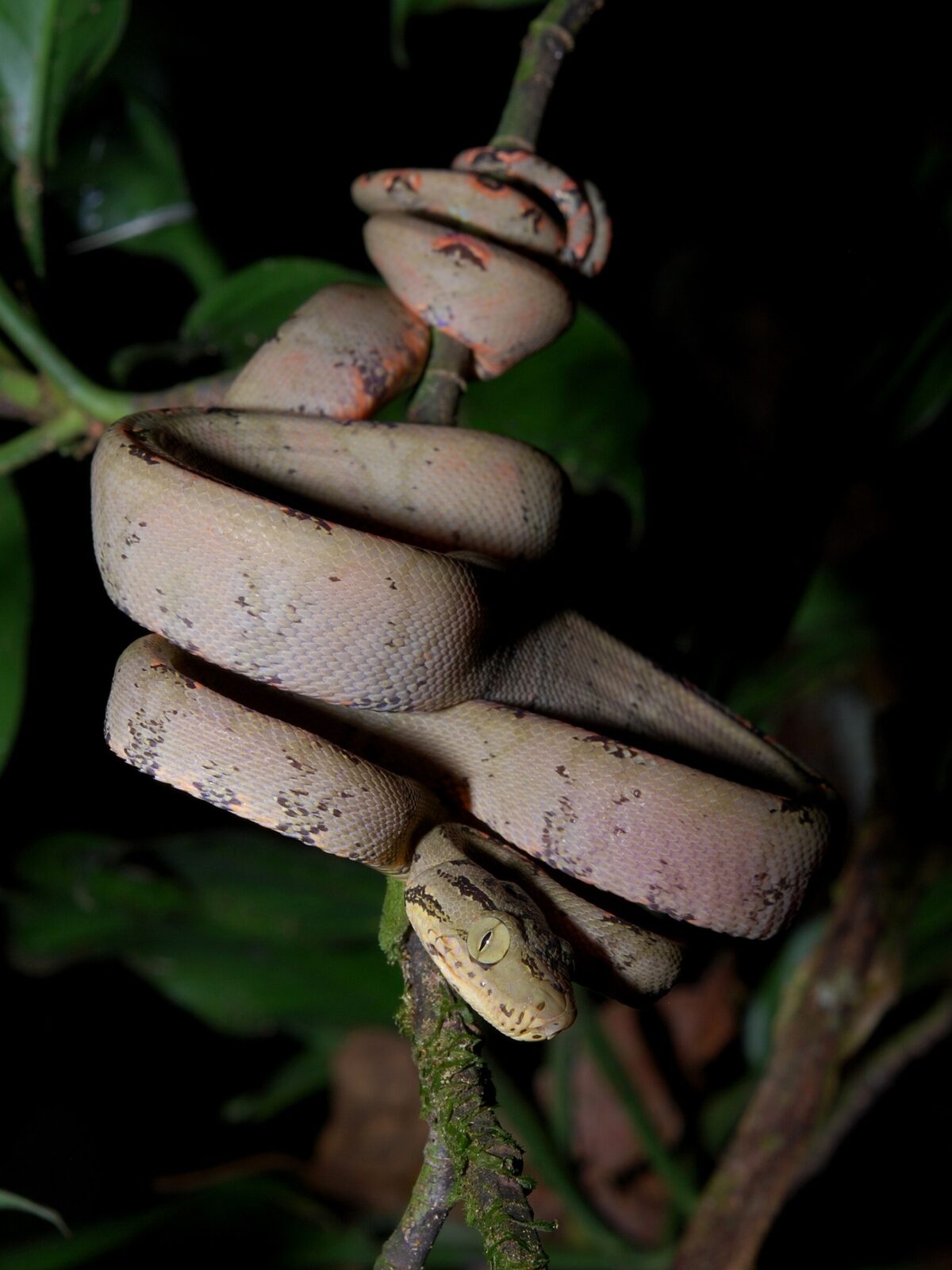
AMAZON TREE BOA
DESCRIPTION
Also called the Green Tree Boa, the Amazon Tree Boa is a strikingly beautiful snake known for its vibrant green coloration, which helps it blend into the lush foliage of its rainforest habitat. This species exhibits a distinctive pattern of yellow or white markings along its body, which can vary significantly among individuals. Primarily arboreal, the Amazon Tree Boa is known for its impressive ability to navigate through trees and is often seen coiled on branches, waiting for prey to pass by.
FUN FACTS
- The Amazon Tree Boa is known for its unique ability to change its color slightly based on its environment, which aids in camouflage
- Additionally, this species has a fascinating method of hunting; it can detect the heat of its prey using specialized pits located on its face, allowing it to locate warm-blooded animals even in low light conditions
QUICK INFO
Lifespan15-20 years in the wild, up to 30 in captivity
Average Weight2-4 kg
Average Length1.5-2.5 m
Diet TypeCarnivore
Social Structuresolitary, typically found alone except during breeding
Activity PatternNocturnal
Breeding SeasonSpring (March-May)
- Habitat
- The Amazon Tree Boa inhabits tropical rainforests, often found in the canopy where it can easily access its prey. It prefers humid environments with plenty of vegetation for cover and hunting.
- Biomes
- Tropical Rainforest
- Native Range
- The Amazon Tree Boa is native to the Amazon Basin, primarily found in countries such as Brazil, Colombia, Peru, and Venezuela.
- Continent
- South America
- Countries
- Brazil, Colombia, Peru, Venezuela
- Diet
- The Amazon Tree Boa primarily feeds on small mammals and birds, using its constricting abilities to subdue its prey. It employs ambush tactics, remaining motionless until an unsuspecting animal comes within striking distance.
- Diet Type
- Carnivore
- Favorite Food
- small mammals, birds
- Social Structure
- solitary, typically found alone except during breeding
- Activity Pattern
- Nocturnal
- Group Size
- 1
- Territorial
- 0
 VU
VU
2-4 kg
Weight
1.5-2.5 m
Length
- Coloration
- vibrant green with yellow or white markings
- Sexual Dimorphism
- females are generally larger than males
- Lifespan
- 15-20 years in the wild, up to 30 in captivity
- Offspring per Birth
- 10-30
- Sexual Maturity
- 2-3 years
- Breeding Season
- Spring (March-May)
LC
Least Concern
IUCN Red List Status
- Population Status
- The population status of the Amazon Tree Boa is currently stable, though habitat loss poses a potential threat.
- Wild Population Estimate
- unknown
- Population Trend
- Stable
- Endangered
- 0
- Threats
- Main threats include habitat destruction due to deforestation and illegal pet trade. These factors can lead to localized declines in certain areas.
- Predators
- Birds of prey, larger snakes, and mammals such as jaguars may prey on the Amazon Tree Boa.
- Defense Mechanisms
- When threatened, the Amazon Tree Boa may hiss loudly and strike defensively, but it generally prefers to remain hidden.
- Found in Zoos
- Common