


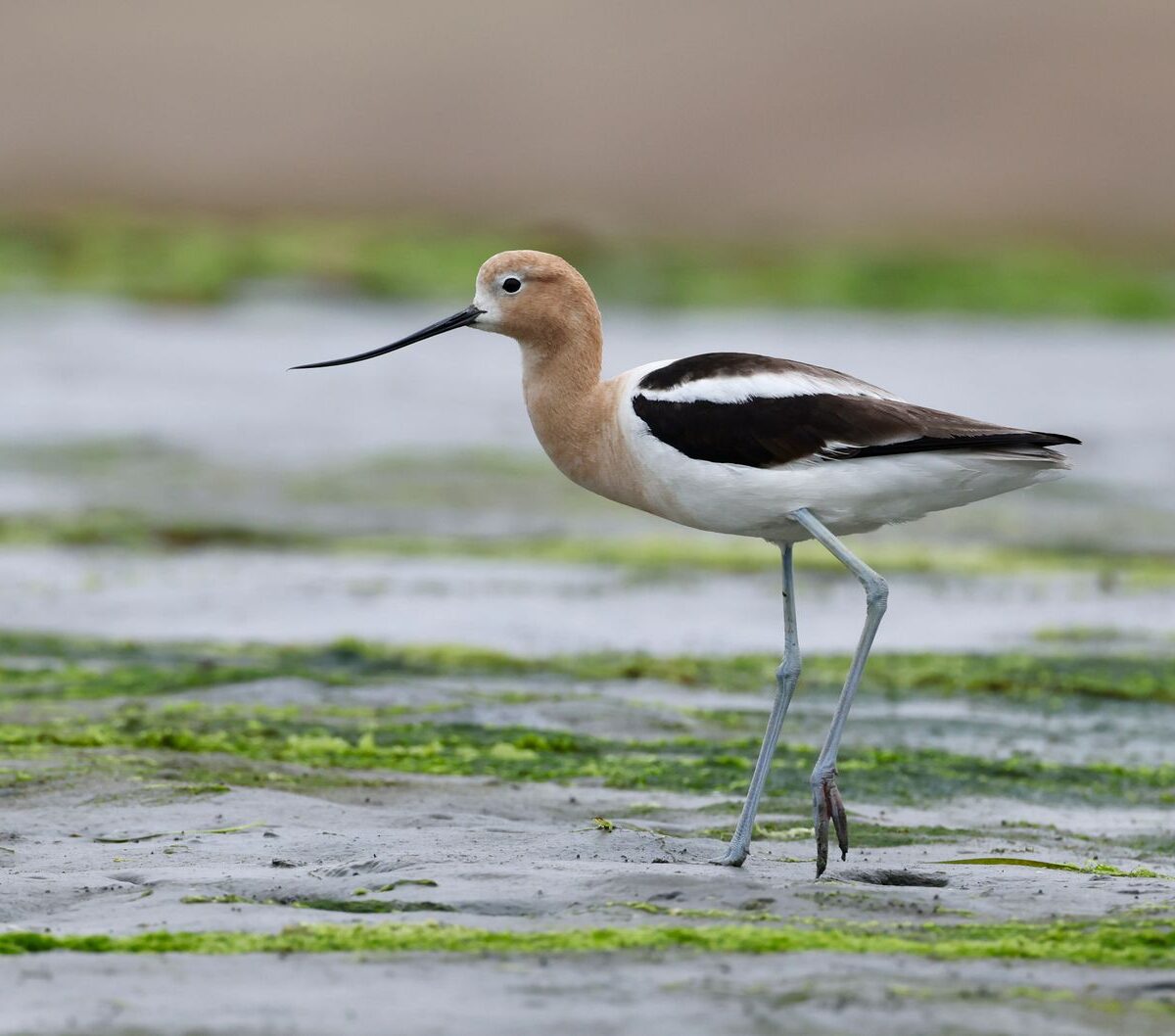
AMERICAN AVOCET
Recurvirostra americana
DESCRIPTION
American Avocet (Recurvirostra americana) is a striking wading bird known for its long, slender legs and distinctive upturned bill. It has a unique plumage that varies with the seasons, featuring a beautiful combination of blue-gray, white, and chestnut colors. This species is often found in shallow wetlands and mudflats, where it forages for food and engages in social behaviors with other avocets.
FUN FACTS
- American Avocets are known for their unique feeding technique, where they sweep their long bills side to side in shallow water to catch small prey
- This behavior not only helps them find food but also showcases their adaptability to different feeding environments
- | During the breeding season, American Avocets engage in elaborate courtship displays, which include synchronized swimming and calling
- These displays strengthen pair bonds and are a vital part of their reproductive success
QUICK INFO
Lifespan10-15 years in the wild
Average Weight200-300 g
Average Length38-43 cm
Diet TypeOmnivore
Social StructureThey are typically found in groups, especially during migration and foraging.
Activity PatternDiurnal
Breeding SeasonSpring (April-July)
- Habitat
- American Avocets inhabit shallow freshwater and saltwater wetlands, including marshes, mudflats, and lagoons. They prefer areas with abundant food sources and suitable nesting sites.
- Biomes
- Wetlands, Coastal
- Native Range
- The native range of the American Avocet includes parts of North America, particularly the western United States and Canada, as well as some areas in Mexico.
- Continent
- North America
- Countries
- United States, Canada, Mexico
- Diet
- American Avocets primarily feed on small invertebrates, including insects and crustaceans, which they find by sweeping their bills through the water or mud. They may also consume some plant material.
- Diet Type
- Omnivore
- Favorite Food
- insects, crustaceans
- Social Structure
- They are typically found in groups, especially during migration and foraging.
- Activity Pattern
- Diurnal
- Group Size
- 10-50
- Territorial
- 0
 LC
LC
 LC
LC
200-300 g
Weight
38-43 cm
Length
- Coloration
- The plumage is primarily white with a blue-gray back and chestnut-colored head and neck during the breeding season.
- Sexual Dimorphism
- Males and females are similar in appearance, but males tend to have slightly brighter coloration during the breeding season.
- Lifespan
- 10-15 years in the wild
- Offspring per Birth
- 3-4
- Sexual Maturity
- 1-2 years
- Breeding Season
- Spring (April-July)
LC
Least Concern
IUCN Red List Status
- Population Status
- The population of American Avocets is currently stable, with some fluctuations due to habitat changes.
- Wild Population Estimate
- 100,000-200,000
- Population Trend
- Stable
- Endangered
- 0
- Threats
- Main threats to American Avocets include habitat loss due to wetland drainage and pollution. Climate change also poses a risk by altering their breeding and feeding habitats.
- Predators
- Common predators include foxes, raccoons, and various birds of prey such as hawks and eagles.
- Defense Mechanisms
- American Avocets use distraction displays to lead potential predators away from their nests, often feigning injury to draw attention away.
- Found in Zoos
- Uncommon