


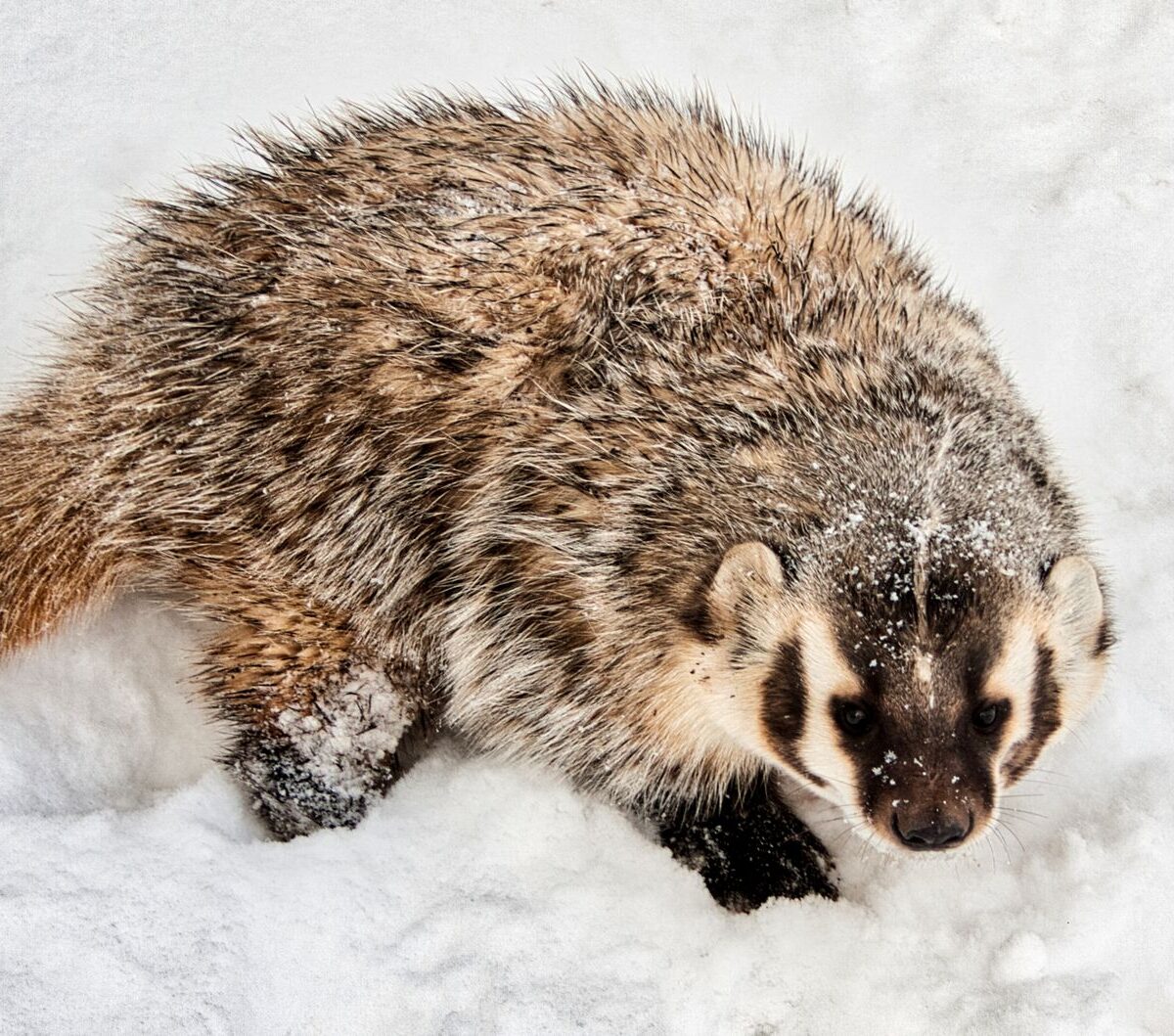
AMERICAN BADGER
Taxidea taxus
DESCRIPTION
American Badger (Taxidea taxus) is a stout, burrowing mammal characterized by its distinctive black and white facial markings and a robust body. They have short legs and long claws adapted for digging, allowing them to create extensive burrow systems. These solitary animals are primarily nocturnal and are known for their tenacity and aggressive behavior when threatened.
FUN FACTS
- American Badgers are known for their impressive digging abilities, capable of excavating a burrow in just a few minutes
- They can also run at speeds of up to 30 miles per hour when threatened or in pursuit of prey
- | Despite their solitary nature, American Badgers have been observed working together with coyotes to hunt for food, showcasing a unique example of interspecies cooperation in the wild
QUICK INFO
Lifespan5-14 years in the wild, up to 20 years in captivit
Average Weight7-12 kg
Average Length60-80 cm
Diet TypeCarnivore
Social Structuresolitary, typically live alone except during mating season
Activity PatternNocturnal
Breeding SeasonLate winter to early spring (February-April)
- Habitat
- American Badgers inhabit a variety of environments, including grasslands, open forests, and agricultural areas. They prefer areas with loose, sandy soil that facilitates digging.
- Biomes
- Grassland, Temperate Forest
- Native Range
- The native range of the American Badger extends across North America, from southern Canada to northern Mexico.
- Continent
- North America
- Countries
- United States, Canada, Mexico
- Diet
- American Badgers primarily feed on small mammals, insects, and occasionally fruits and roots. They are known to hunt ground squirrels, prairie dogs, and other burrowing animals.
- Diet Type
- Carnivore
- Favorite Food
- small mammals, insects
- Social Structure
- solitary, typically live alone except during mating season
- Activity Pattern
- Nocturnal
- Group Size
- 1
- Territorial
- 1
 LC
LC
7-12 kg
Weight
60-80 cm
Length
- Coloration
- grayish-brown fur with distinctive black and white facial markings
- Sexual Dimorphism
- males are generally larger than females
- Lifespan
- 5-14 years in the wild, up to 20 years in captivit
- Gestation Period
- 60-70 days
- Offspring per Birth
- 1-5
- Sexual Maturity
- 1-2 years
- Breeding Season
- Late winter to early spring (February-April)
LC
Least Concern
IUCN Red List Status
- Population Status
- The population of American Badgers is generally stable, though localized declines may occur due to habitat loss.
- Wild Population Estimate
- unknown
- Population Trend
- Stable
- Endangered
- 0
- Threats
- Main threats include habitat destruction due to agriculture and urban development, as well as road mortality. They are also affected by the decline of their prey species.
- Predators
- coyotes, mountain lions, and humans
- Defense Mechanisms
- American Badgers can be aggressive when threatened, using their strong claws and teeth to defend themselves.
- Found in Zoos
- Uncommon