


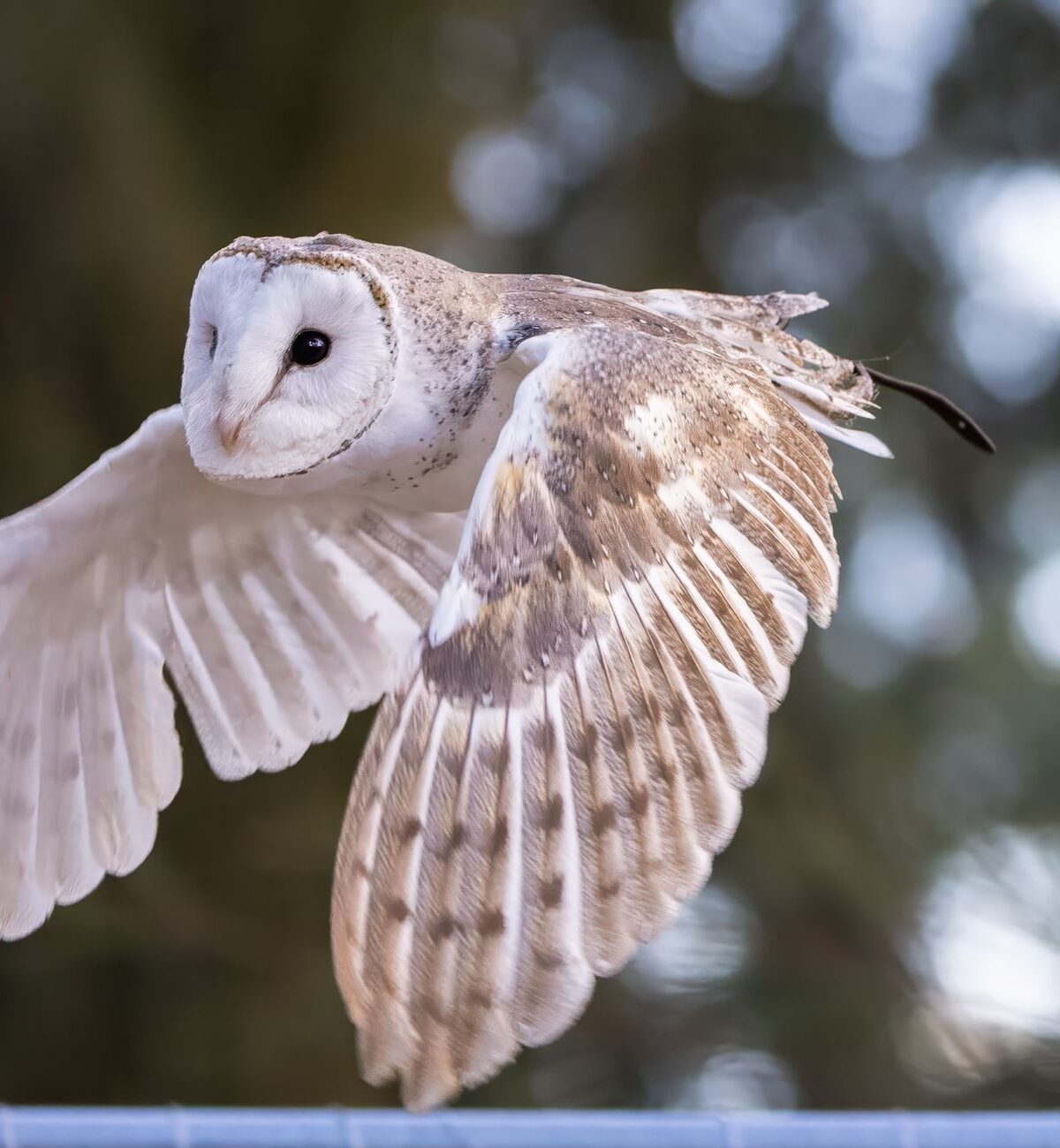
AMERICAN BARN OWL
Tyto furcata
DESCRIPTION
American Barn Owl (Tyto furcata) is a striking bird known for its heart-shaped face and distinctive plumage. It has a mix of white and brown feathers, which provide excellent camouflage in its natural habitat. This species is primarily nocturnal, hunting for small mammals and birds in open fields and grasslands, and is known for its silent flight and exceptional hearing.
FUN FACTS
- American Barn Owls have a unique ability to locate prey in complete darkness using their exceptional hearing, which allows them to detect even the faintest sounds made by small animals
- Additionally, they are known for their distinctive screeching call, which can be heard at night and is often described as ghostly, contributing to their nickname 'Ghost Owl.'
QUICK INFO
Lifespan4-5 years in the wild, up to 10 years in captivity
Average Weight300-600 g
Average Length30-40 cm
Diet TypeCarnivore
Social StructureSolitary, typically roosting alone except during breeding season.
Activity PatternNocturnal
Breeding SeasonSpring to early summer
- Habitat
- American Barn Owls are typically found in open habitats such as grasslands, farmlands, and marshes. They prefer areas with plenty of hunting grounds and suitable nesting sites, such as old barns or tree cavities.
- Biomes
- Grassland, Agricultural
- Native Range
- The American Barn Owl is found throughout North America, from southern Canada to the southern United States and parts of Central America.
- Continent
- North America
- Countries
- United States, Canada, Mexico
- Diet
- The American Barn Owl primarily feeds on small mammals, particularly rodents, but will also consume birds and insects when necessary.
- Diet Type
- Carnivore
- Favorite Food
- Rodents
- Social Structure
- Solitary, typically roosting alone except during breeding season.
- Activity Pattern
- Nocturnal
- Group Size
- 1-2
- Territorial
- 1
 LC
LC
 LC
LC
300-600 g
Weight
30-40 cm
Length
- Coloration
- The plumage is a mix of white, cream, and brown, with a distinctive heart-shaped facial disc.
- Sexual Dimorphism
- Males are generally smaller and have lighter coloration than females.
- Lifespan
- 4-5 years in the wild, up to 10 years in captivity
- Offspring per Birth
- 2-8
- Sexual Maturity
- 1 year
- Breeding Season
- Spring to early summer
LC
Least Concern
IUCN Red List Status
- Population Status
- The population of American Barn Owls is currently stable, although local declines have been noted in some areas due to habitat loss.
- Wild Population Estimate
- 100,000-200,000
- Population Trend
- Stable
- Endangered
- 0
- Threats
- Main threats include habitat destruction, rodenticide use, and vehicle collisions. These factors can significantly impact local populations, especially in urbanized areas.
- Predators
- Great Horned Owl, Red-tailed Hawk, larger mammals such as foxes and raccoons may prey on eggs or young.
- Defense Mechanisms
- American Barn Owls rely on their camouflage and silent flight to avoid detection by predators.
- Found in Zoos
- Uncommon