


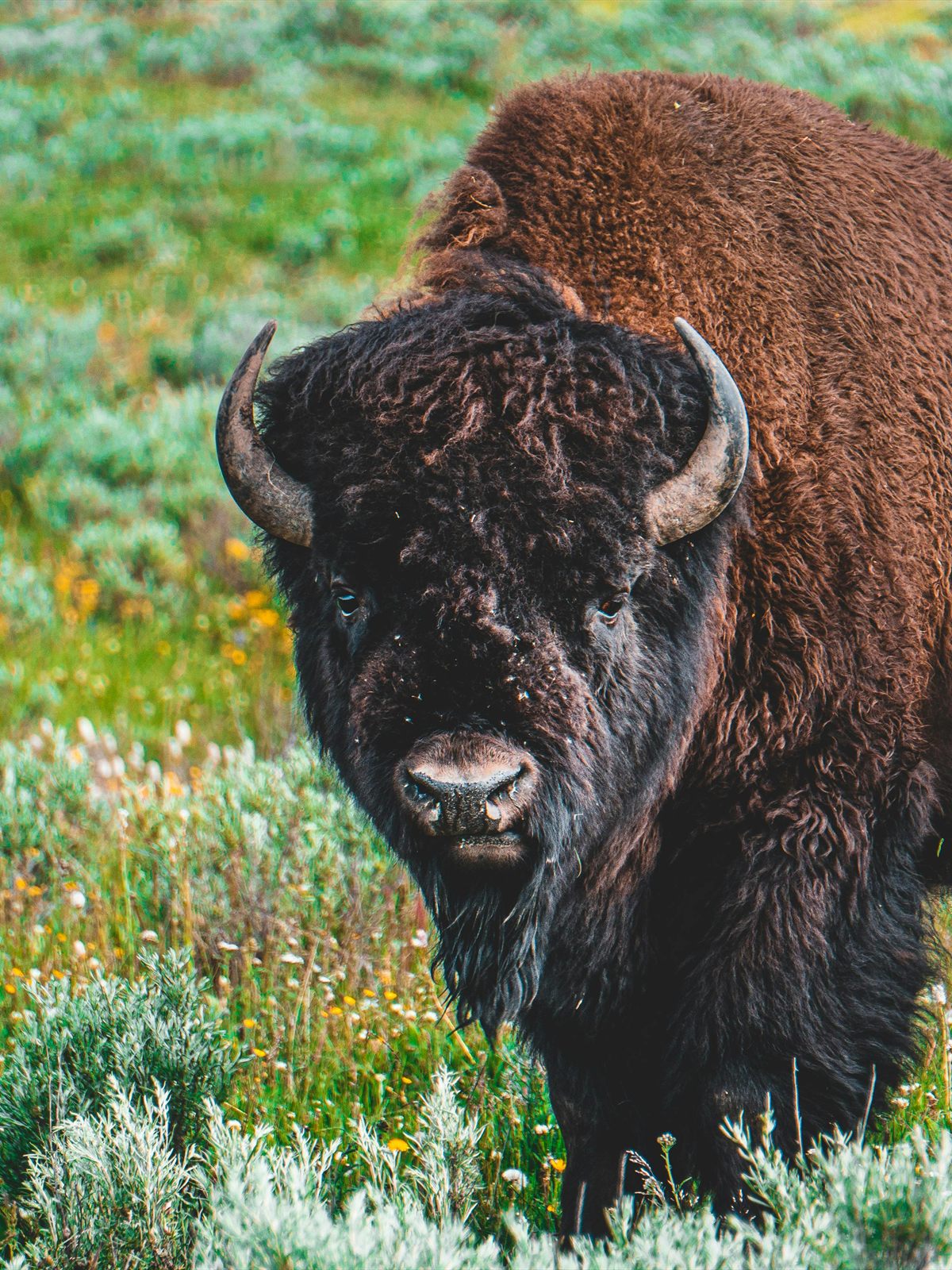
AMERICAN BISON
Bison bison
DESCRIPTION
The American Bison, also known as the buffalo, is a large mammal native to North America. It is characterized by its massive head, humped shoulders, and thick fur, which varies in color from dark brown to light tan.
FUN FACTS
- Bison are the largest land mammals in North America | They can jump up to 6 feet high | Bison have a unique digestive system that allows them to efficiently process tough grasses
QUICK INFO
Lifespan15-25 years in the wild, up to 30 in captivity
Average Weight400-1,000 kg
Average Length2.5-3.5 m
Diet TypeHerbivore
Social Structuregroup — typically found in herds that can range from a few individuals to several hundred.
Activity PatternDiurnal
Breeding SeasonSummer (July-August)
- Habitat
- Bison inhabit open plains, grasslands, and river valleys. They require large areas to roam and graze.
- Biomes
- Grassland, Savanna
- Native Range
- Historically, American Bison roamed across North America from Canada to Mexico.
- Continent
- North America
- Countries
- United States, Canada, Mexico
- Diet
- American Bison are herbivores that primarily graze on grasses and sedges. They play a crucial role in maintaining the health of grassland ecosystems.
- Diet Type
- Herbivore
- Favorite Food
- grasses, sedges
- Social Structure
- group — typically found in herds that can range from a few individuals to several hundred.
- Activity Pattern
- Diurnal
- Group Size
- 10-30
- Territorial
- 0
 LC
LC
 LC
LC
400-1,000 kg
Weight
2.5-3.5 m
Length
1.5 m at shoulder
Height (Shoulder)
- Coloration
- dark brown to light tan with a thick coat of fur
- Sexual Dimorphism
- Males are generally larger and heavier than females.
- Lifespan
- 15-25 years in the wild, up to 30 in captivity
- Gestation Period
- 285 days
- Offspring per Birth
- 1
- Sexual Maturity
- 2-3 years
- Breeding Season
- Summer (July-August)
LC
Least Concern
IUCN Red List Status
- Population Status
- The population of American Bison has rebounded from near extinction in the late 19th century, but they are still considered a conservation success story.
- Wild Population Estimate
- 500,000
- Population Trend
- Increasing
- Endangered
- 0
- Threats
- Main threats include habitat loss and fragmentation, as well as diseases such as brucellosis. Climate change also poses a risk to their habitat.
- Conservation Program
- National Bison Range, Yellowstone National Park Bison Conservation Program
- Predators
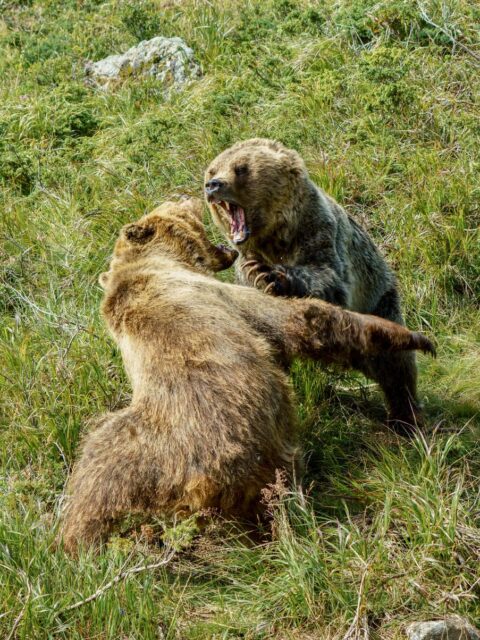
- Wolves, bears, and humans
- Defense Mechanisms
- Bison can run at speeds up to 35 miles per hour and use their size and strength to defend against predators.
- Compatible Animals
- none
- Found in Zoos
- Common