


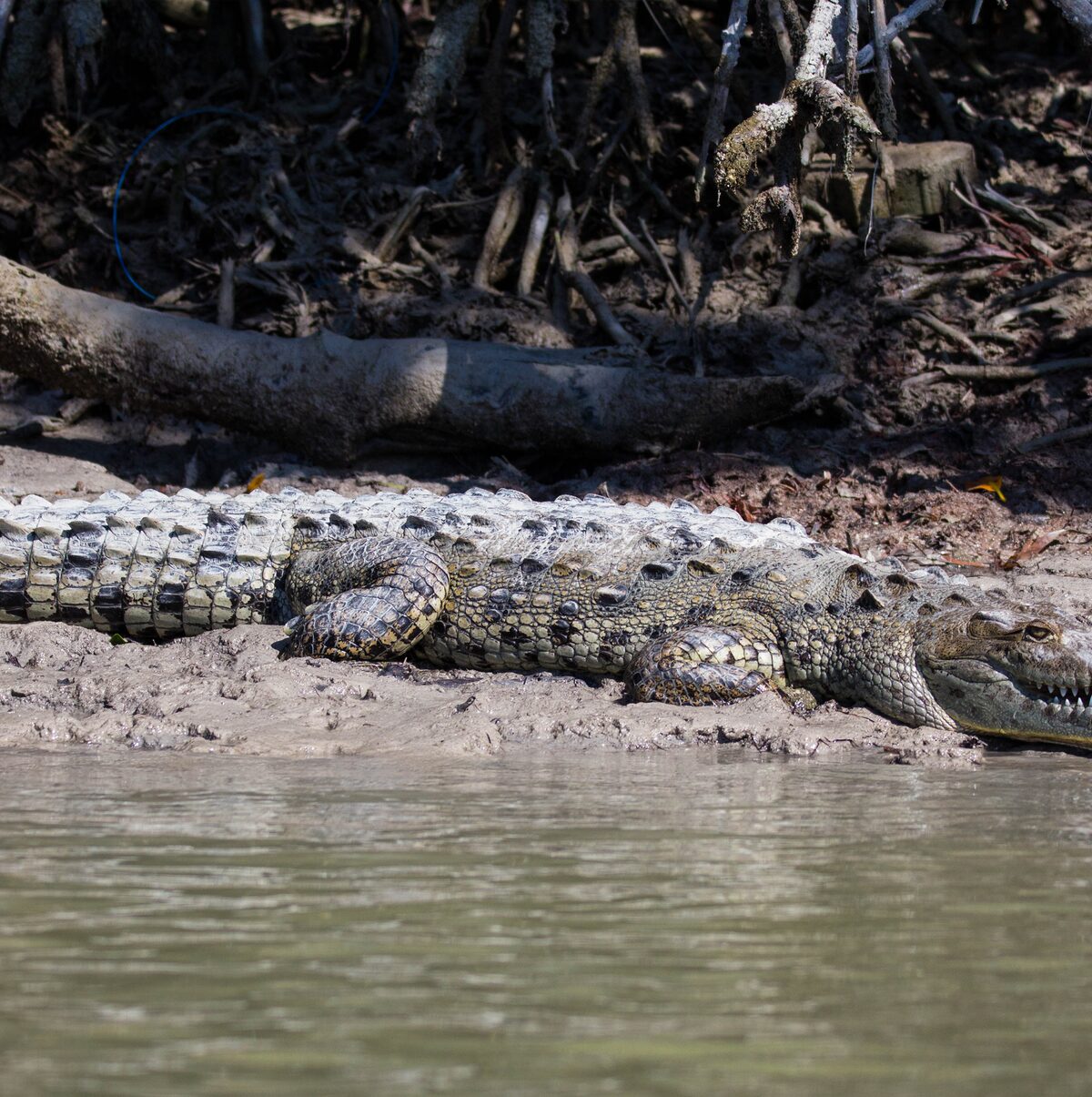
AMERICAN CROCODILE
Crocodylus acutus
DESCRIPTION
American Crocodile (Crocodylus acutus) is a large reptile known for its elongated snout and powerful jaws. It typically exhibits a light olive brown coloration with darker cross-bands, which helps it blend into its natural habitat. This species is primarily found in coastal areas and brackish waters, showcasing a preference for warm climates and often basking in the sun during the day.
FUN FACTS
- American Crocodiles are known for their impressive swimming abilities, capable of reaching speeds of up to 32 km/h in water
- They can also hold their breath for over an hour while submerged, allowing them to ambush prey effectively
- | Unlike many other crocodilian species, American Crocodiles can tolerate saltwater due to specialized glands in their tongues that excrete excess salt
- This adaptation allows them to thrive in coastal habitats where freshwater is scarce
QUICK INFO
Lifespan50-70 years in the wild
Average Weight150-450 kg
Average Length3-4 m
Diet TypeCarnivore
Social Structuresolitary, occasionally seen in groups during basking
Activity PatternDiurnal
Breeding SeasonSpring (April-June)
- Habitat
- They inhabit coastal regions, mangroves, and freshwater lakes, often preferring brackish waters. Their habitat is crucial for nesting and hunting.
- Biomes
- Wetlands, Coastal, Mangrove
- Native Range
- The American Crocodile is native to the coastal areas of the Americas, ranging from southern Florida to the Caribbean and parts of Central America.
- Continent
- North America, Central America, South America
- Countries
- United States, Mexico, Belize, Guatemala, Cuba, Jamaica, Honduras, Colombia, Venezuela
- Diet
- American Crocodiles are carnivorous and primarily feed on fish, crustaceans, and small mammals. They are opportunistic hunters, using stealth and ambush tactics to capture their prey.
- Diet Type
- Carnivore
- Favorite Food
- fish, crustaceans
- Social Structure
- solitary, occasionally seen in groups during basking
- Activity Pattern
- Diurnal
- Group Size
- 1-5
- Territorial
- 1

150-450 kg
Weight
3-4 m
Length
- Coloration
- light olive brown with darker cross-bands
- Sexual Dimorphism
- males are generally larger than females
- Lifespan
- 50-70 years in the wild
- Gestation Period
- 60-90 days
- Offspring per Birth
- 20-60
- Sexual Maturity
- 8-10 years
- Breeding Season
- Spring (April-June)
VU
Vulnerable
IUCN Red List Status
- Population Status
- The population is currently considered vulnerable due to habitat loss and hunting.
- Wild Population Estimate
- 20,000-25,000
- Population Trend
- Decreasing
- Endangered
- 1
- Threats
- Main threats include habitat destruction, poaching, and human-wildlife conflict. These factors have led to a decline in their populations across their range.
- Conservation Program
- Crocodile conservation programs in Florida and other regions aim to protect nesting sites and reduce human interactions.
- Predators
- Humans, large cats, and other crocodiles can pose threats to juvenile American Crocodiles. Adult crocodiles have few natural predators.
- Defense Mechanisms
- They rely on their size, powerful jaws, and camouflage to avoid threats. When threatened, they may also retreat into the water.
- Found in Zoos
- Common