


AMERICAN ROBIN
Turdus migratorius
DESCRIPTION
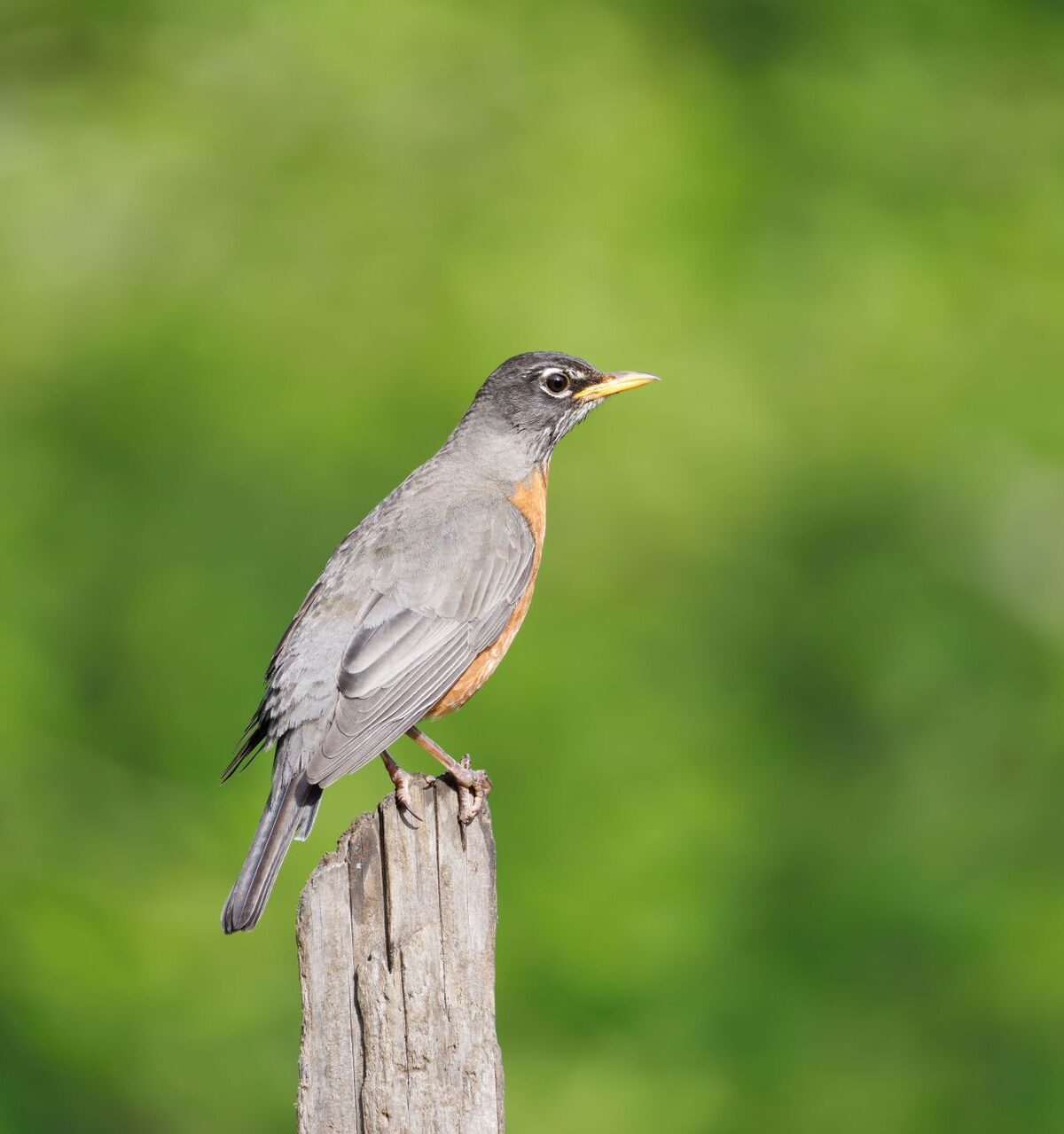
American Robin (Turdus migratorius) is commonly known as the robin. This medium-sized bird is characterized by its bright orange-red breast, grayish-brown back, and a distinctive white eye ring. American Robins are known for their melodious song and are often seen foraging on the ground for food, making them a familiar sight in gardens and parks across North America.
FUN FACTS
- American Robins are often considered a harbinger of spring, as they are one of the first birds to return to northern areas after winter
- Their diet varies seasonally, with a preference for earthworms in spring and summer, while they switch to fruits and berries in the fall and winter.|The American Robin is also known for its unique nesting behavior, often building nests in trees, shrubs, or even on ledges of buildings
- They use mud, grass, and other materials to construct their nests, which can be reused in subsequent years
QUICK INFO
Lifespan2-6 years in the wild, up to 14 years in captivity
Average Weight70-100 g
Average Length23-28 cm
Diet TypeOmnivore
Social Structurepair, typically monogamous during the breeding season
Activity PatternDiurnal
Breeding SeasonSpring (March-June)
- Habitat
- American Robins thrive in a variety of habitats, including forests, gardens, and urban areas. They prefer open spaces with trees for nesting and foraging.
- Biomes
- Temperate Forest, Grassland, Urban
- Native Range
- The American Robin is native to North America, ranging from Canada to Mexico.
- Continent
- North America
- Countries
- United States, Canada, Mexico
- Diet
- American Robins primarily eat insects, fruits, and berries. They are known to forage on the ground, using their keen eyesight to spot food.
- Diet Type
- Omnivore
- Favorite Food
- earthworms, berries
- Social Structure
- pair, typically monogamous during the breeding season
- Activity Pattern
- Diurnal
- Group Size
- 5-30
- Territorial
- 1
 CR
CR
 LC
LC
 LC
LC
70-100 g
Weight
23-28 cm
Length
- Coloration
- bright orange-red breast, grayish-brown back, white eye ring
- Sexual Dimorphism
- males are generally larger and have brighter coloration than females
- Lifespan
- 2-6 years in the wild, up to 14 years in captivity
- Offspring per Birth
- 3-5
- Sexual Maturity
- 1 year
- Breeding Season
- Spring (March-June)
LC
Least Concern
IUCN Red List Status
- Population Status
- The American Robin is widespread and common across its range.
- Wild Population Estimate
- up to 370 million
- Population Trend
- Stable
- Endangered
- 0
- Threats
- Main threats include habitat loss and pesticide use, which can reduce their food sources. However, they are generally adaptable and thrive in urban environments.
- Predators
- hawks, cats, snakes, raccoons, and various birds of prey
- Defense Mechanisms
- American Robins use alarm calls to warn others of danger and may dive at predators to deter them.
- Found in Zoos
- Uncommon