


AMERICAN TOAD
Anaxyrus americanus
DESCRIPTION
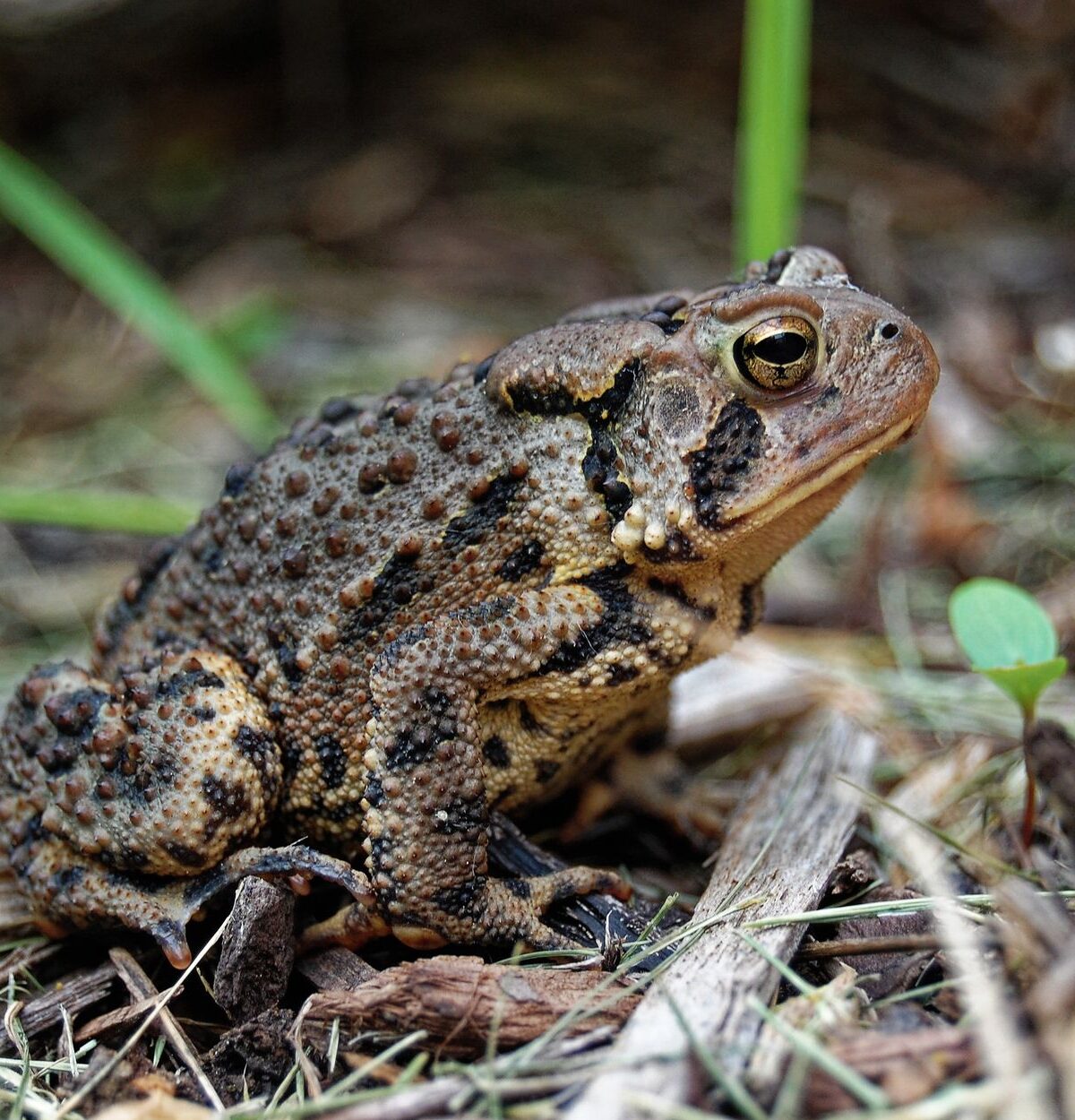
American Toad (Anaxyrus americanus) is commonly known as the Eastern Toad and the Common Toad. This species is characterized by its warty skin, which can vary in color from brown to gray, often with darker spots. They are primarily nocturnal and are known for their distinctive, melodious calls during the breeding season, which can be heard in wetlands and near ponds.
FUN FACTS
- American Toads can absorb water through their skin, which helps them stay hydrated in dry environments
- | They are known for their unique vocalizations, which can vary significantly between individuals, making each toad's call distinct
QUICK INFO
Lifespan5-10 years in the wild, up to 20 years in captivit
Average Weight30-100 g
Average Length6-10 cm
Diet TypeInsectivore
Social Structuresolitary, except during breeding
Activity PatternNocturnal
Breeding SeasonSpring (March-May)
- Habitat
- American Toads are typically found in a variety of habitats, including forests, grasslands, and wetlands. They prefer areas with ample moisture and are often seen near ponds or streams during the breeding season.
- Biomes
- Temperate Forest, Wetlands
- Native Range
- The native range of the American Toad extends across much of North America, from southern Canada to the eastern and central United States.
- Continent
- North America
- Countries
- United States, Canada, Mexico
- Diet
- American Toads primarily feed on insects and other small invertebrates. They use their long, sticky tongues to catch prey, which they consume whole.
- Diet Type
- Insectivore
- Favorite Food
- insects, worms, slugs
- Social Structure
- solitary, except during breeding
- Activity Pattern
- Nocturnal
- Group Size
- 1-10
- Territorial
- 0
 LC
LC
 VU
VU
 LC
LC
30-100 g
Weight
6-10 cm
Length
- Coloration
- warty skin that can be brown, gray, or olive with darker spots
- Sexual Dimorphism
- males are typically smaller and have darker throats during breeding season
- Lifespan
- 5-10 years in the wild, up to 20 years in captivit
- Offspring per Birth
- 3,000-20,000 eggs
- Sexual Maturity
- 2-3 years
- Breeding Season
- Spring (March-May)
LC
Least Concern
IUCN Red List Status
- Population Status
- The population of American Toads is generally stable, though local declines may occur due to habitat loss.
- Wild Population Estimate
- unknown
- Population Trend
- Stable
- Endangered
- 0
- Threats
- Main threats to American Toads include habitat destruction, pollution, and disease. Road mortality is also a significant risk during their migration to breeding sites.
- Predators
- snakes, birds, raccoons, and larger mammals
- Defense Mechanisms
- American Toads have parotoid glands that secrete toxins to deter predators.
- Found in Zoos
- Common