


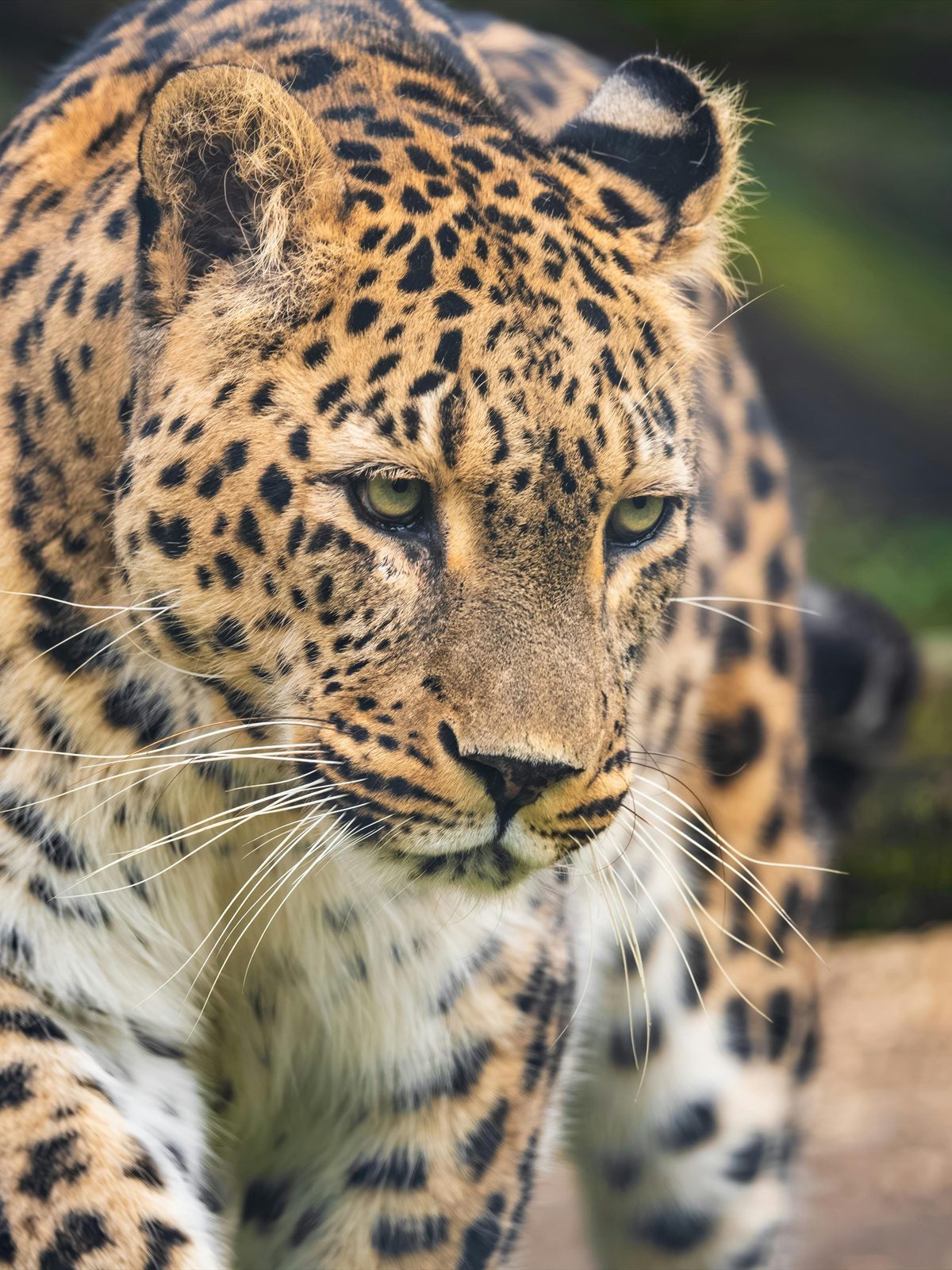
AMUR LEOPARD
Panthera pardus orientalis
DESCRIPTION
The Amur leopard is a critically endangered subspecies of leopard found primarily in the temperate forests of the Russian Far East and Northeast China. It has a thick, luxurious coat that is pale cream to yellow in color, adorned with widely spaced rosettes and dark spots, which provide excellent camouflage in its natural habitat. This solitary and elusive big cat is known for its agility and strength, often climbing trees and traversing rugged terrain in search of prey.
FUN FACTS
- The Amur leopard is one of the rarest big cats in the world, with a population that has been critically low due to habitat destruction and poaching
- Conservationists have been working tirelessly to protect this magnificent species, and recent efforts have shown a slight increase in their numbers
- | Unlike many other leopard subspecies, the Amur leopard has adapted to a colder climate, developing a thicker coat to withstand harsh winters
- This adaptation not only helps them survive but also makes them uniquely beautiful, with their striking fur patterns standing out against the snowy landscapes they inhabit
QUICK INFO
Lifespan10-15 years in the wild, up to 20 years in captivi
Average Weight32-48 kg
Average Length1.2-1.9 m
Diet TypeCarnivore
Social StructureSolitary, with males and females meeting only for mating.
Activity PatternNocturnal
Breeding SeasonWinter (January-March)
- Habitat
- Amur leopards inhabit temperate forests characterized by a mix of coniferous and deciduous trees. They prefer areas with dense vegetation for cover and proximity to water sources.
- Biomes
- Temperate Forest
- Native Range
- The native range of the Amur leopard includes the Russian Far East and parts of Northeast China.
- Continent
- Asia
- Countries
- Russia, China
- Diet
- The Amur leopard primarily preys on ungulates such as roe deer and sika deer, but it also hunts smaller mammals and birds. Its hunting strategy involves stalking and ambushing its prey, utilizing its keen senses and stealth.
- Diet Type
- Carnivore
- Favorite Food
- roe deer, sika deer
- Social Structure
- Solitary, with males and females meeting only for mating.
- Activity Pattern
- Nocturnal
- Group Size
- 1
- Territorial
- 1
32-48 kg
Weight
1.2-1.9 m
Length
- Coloration
- Pale cream to yellow with dark rosettes and spots.
- Sexual Dimorphism
- Males are generally larger than females.
- Lifespan
- 10-15 years in the wild, up to 20 years in captivi
- Gestation Period
- 90-105 days
- Offspring per Birth
- 1-4
- Sexual Maturity
- 2-3 years
- Breeding Season
- Winter (January-March)
CR
Critically Endangered
IUCN Red List Status
- Population Status
- The Amur leopard population is critically low, with estimates suggesting fewer than 100 individuals remain in the wild.
- Wild Population Estimate
- Less than 100
- Population Trend
- Increasing
- Endangered
- 1
- Threats
- The main threats to the Amur leopard include habitat loss due to logging and human encroachment, poaching for their beautiful fur, and depletion of prey species. Conservation efforts are ongoing to protect their habitat and reduce human-wildlife conflict.
- Conservation Program
- The Land of the Leopard National Park in Russia is a significant conservation area aimed at protecting the Amur leopard and its habitat.
- Defense Mechanisms
- Amur leopards rely on their agility, stealth, and camouflage to evade threats and ambush prey.
- Found in Zoos
- Uncommon