


ANDEAN MILKSNAKE
Lampropeltis triangulum
DESCRIPTION
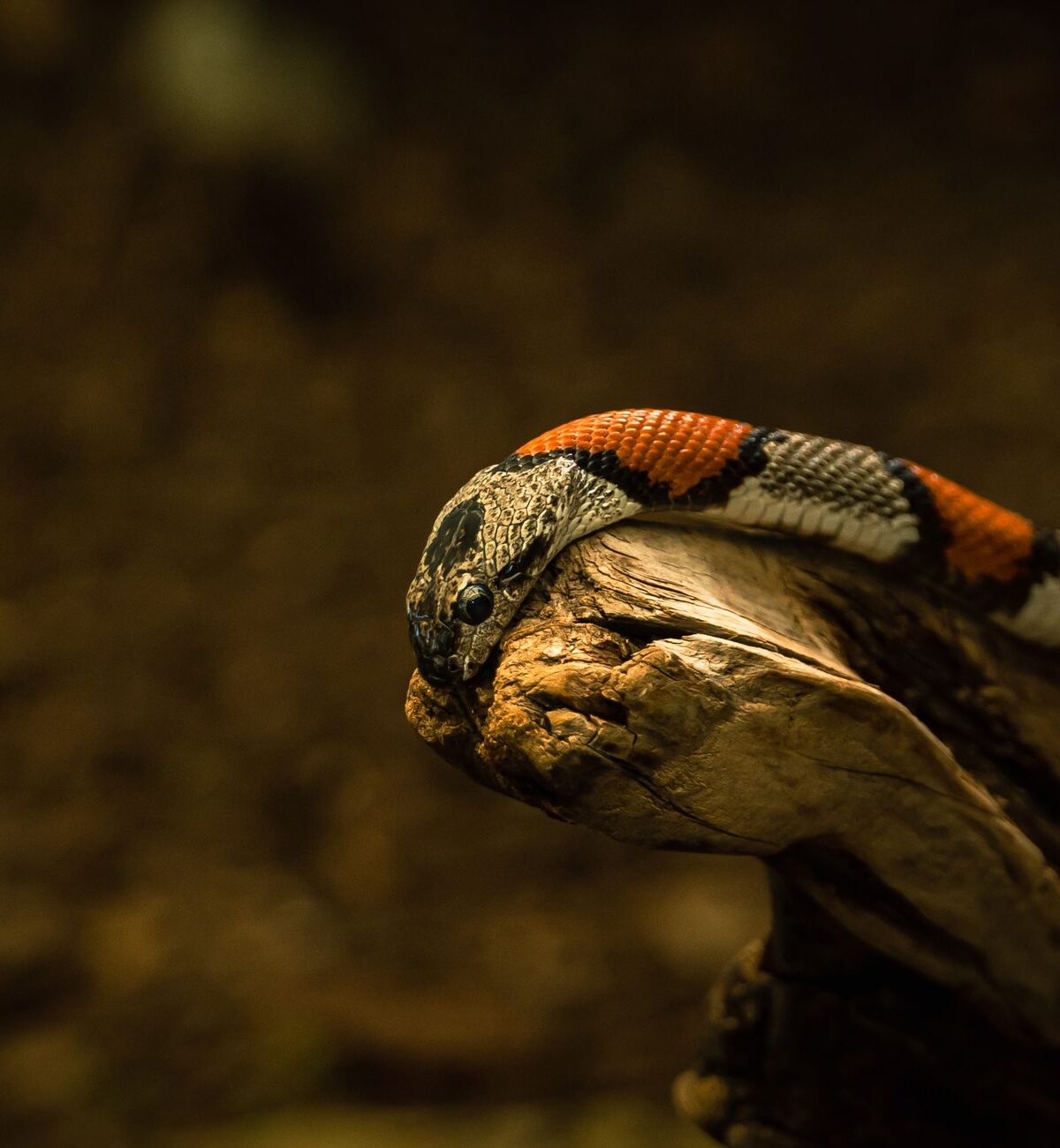
Also called the Milk Snake and Common Milk Snake, the Andean Milksnake (Lampropeltis triangulum) is a strikingly colorful species known for its vibrant patterns. It typically exhibits a series of red, black, and white or yellow bands, which can vary in intensity and arrangement among individuals. This snake is primarily terrestrial and is often found in a variety of habitats, showcasing a behavior that includes both active foraging and hiding in crevices or under debris.
FUN FACTS
- The Andean Milksnake is often confused with the venomous Coral Snake due to its similar coloration, which serves as a form of mimicry to avoid predation
- Additionally, these snakes are popular in the pet trade because of their striking appearance and relatively docile nature, making them a favorite among reptile enthusiasts
QUICK INFO
Lifespan10-15 years in the wild, up to 20 years in captivi
Average Weight0.5-1.5 kg
Average Length1.2-1.8 m
Diet TypeCarnivore
Social StructureSolitary, typically found alone except during mating.
Activity PatternNocturnal
Breeding SeasonSpring (March-May)
- Habitat
- The Andean Milksnake inhabits a range of environments, including grasslands, forests, and rocky areas. It prefers areas with ample cover for hiding and hunting.
- Biomes
- Temperate Forest, Grassland, Rocky Mountain
- Native Range
- The Andean Milksnake is native to the Andean regions of South America, particularly in countries like Colombia, Ecuador, and Peru.
- Continent
- South America
- Countries
- Colombia, Ecuador, Peru
- Diet
- The Andean Milksnake primarily feeds on small mammals, birds, and reptiles. It is known for its ability to consume prey that is larger than its head due to its flexible jaw structure.
- Diet Type
- Carnivore
- Favorite Food
- Rodents, birds, small reptiles
- Social Structure
- Solitary, typically found alone except during mating.
- Activity Pattern
- Nocturnal
- Group Size
- 1
- Territorial
- 0
 VU
VU
0.5-1.5 kg
Weight
1.2-1.8 m
Length
- Coloration
- Vibrant bands of red, black, and white or yellow.
- Sexual Dimorphism
- Males are generally smaller and have longer tails than females.
- Lifespan
- 10-15 years in the wild, up to 20 years in captivi
- Offspring per Birth
- 4-20
- Sexual Maturity
- 2-3 years
- Breeding Season
- Spring (March-May)
LC
Least Concern
IUCN Red List Status
- Population Status
- The population of Andean Milksnakes is currently stable, though habitat loss poses a potential threat.
- Wild Population Estimate
- Unknown
- Population Trend
- Stable
- Endangered
- 0
- Threats
- Main threats include habitat destruction due to agriculture and urbanization. Additionally, they may be targeted by the pet trade.
- Predators
- Birds of prey, larger snakes, and mammals such as foxes.
- Defense Mechanisms
- Andean Milksnakes can mimic the coloration of venomous snakes as a defense mechanism, deterring potential predators.
- Compatible Animals
- Other non-venomous snakes, small lizards
- Found in Zoos
- Common