


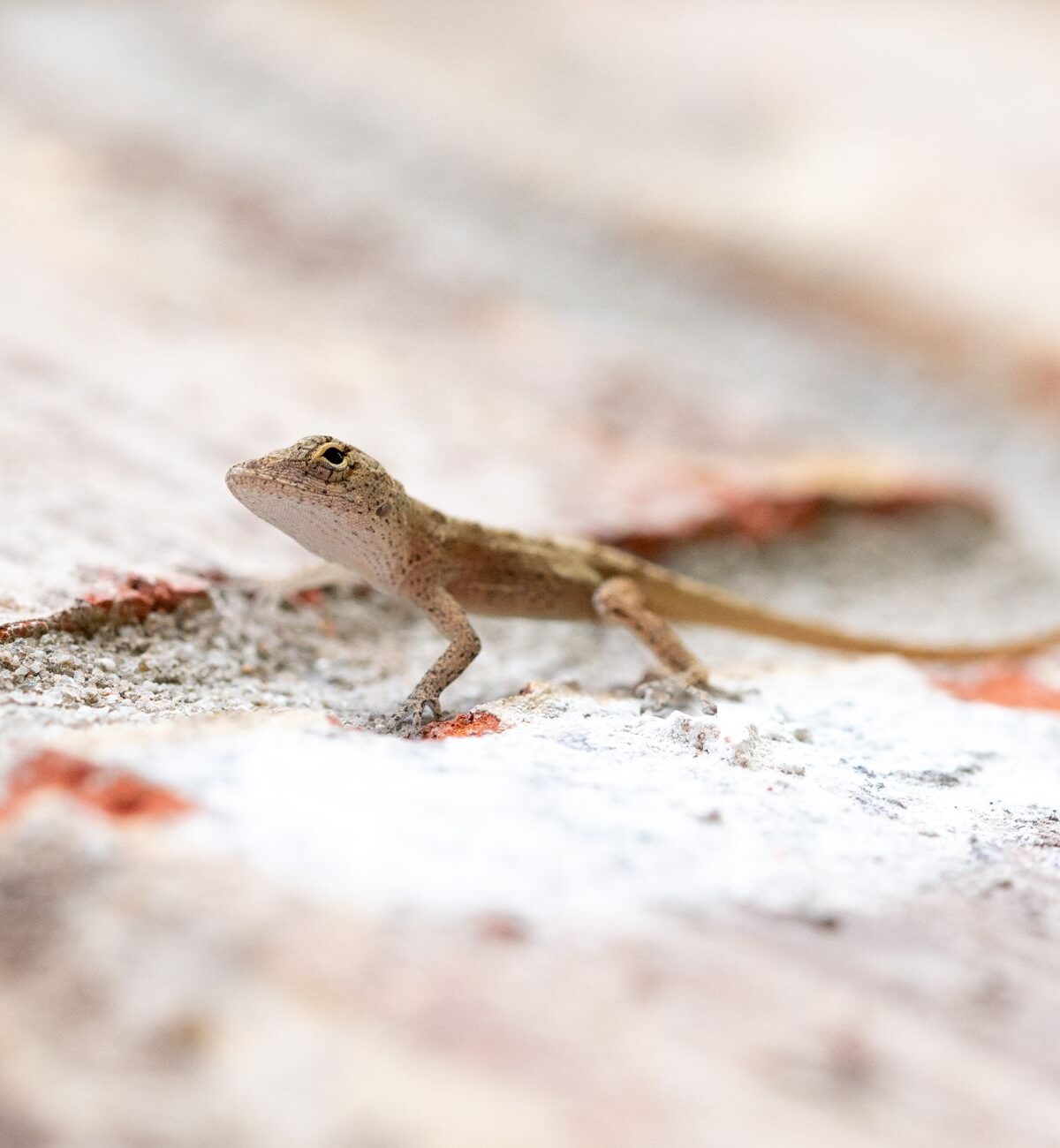
ANOLE
Anolis spp.
DESCRIPTION
Anole (Anolis spp.) is commonly known as the Green Anole and the American Anole. These small lizards are characterized by their vibrant green coloration, although they can change to brown depending on their environment and stress levels. They are agile climbers, often found basking on branches and leaves, and are known for their distinctive throat flap, or dewlap, which males use to attract females and establish territory.
FUN FACTS
- Anoles are known for their ability to change color, which helps them regulate their body temperature and communicate with other lizards
- This color change can occur in seconds, allowing them to adapt to their environment or signal to potential mates
- | The Green Anole is often referred to as the 'American chameleon,' although it is not a true chameleon
- Unlike chameleons, Anoles do not have the ability to change their color for camouflage; instead, their color change is primarily a response to temperature and mood
QUICK INFO
Lifespan2-8 years in the wild, up to 10 years in captivity
Average Weight5-20 g
Average Length15-20 cm
Diet TypeInsectivore
Social Structuresolitary, with males often defending territories
Activity PatternDiurnal
Breeding SeasonSpring to early summer
- Habitat
- Anoles inhabit a variety of environments, including forests, gardens, and urban areas. They prefer areas with plenty of vegetation for climbing and hunting.
- Biomes
- Tropical Rainforest, Temperate Forest, Urban
- Native Range
- Anoles are native to the southeastern United States, the Caribbean, and parts of Central America.
- Continent
- North America, Central America, South America
- Countries
- United States, Cuba, Jamaica, Puerto Rico, Dominican Republic
- Diet
- Anoles primarily feed on small insects and other invertebrates. They are adept hunters, using their quick reflexes to catch prey.
- Diet Type
- Insectivore
- Favorite Food
- small insects
- Social Structure
- solitary, with males often defending territories
- Activity Pattern
- Diurnal
- Group Size
- 1-5
- Territorial
- 1
 VU
VU
 LC
LC

5-20 g
Weight
15-20 cm
Length
- Coloration
- typically green, can change to brown
- Sexual Dimorphism
- males are generally larger and have more pronounced dewlaps
- Lifespan
- 2-8 years in the wild, up to 10 years in captivity
- Offspring per Birth
- 3-10 eggs
- Sexual Maturity
- 6-12 months
- Breeding Season
- Spring to early summer
LC
Least Concern
IUCN Red List Status
- Population Status
- Anole populations are generally stable, but some species face habitat loss.
- Wild Population Estimate
- unknown
- Population Trend
- Stable
- Endangered
- 0
- Threats
- Main threats include habitat destruction and competition with invasive species. Urban development and pesticide use also pose risks to their populations.
- Predators
- birds, snakes, larger lizards, and small mammals
- Defense Mechanisms
- Anoles can change color to blend in with their surroundings, and they can also drop their tails to escape predators.
- Found in Zoos
- Common