


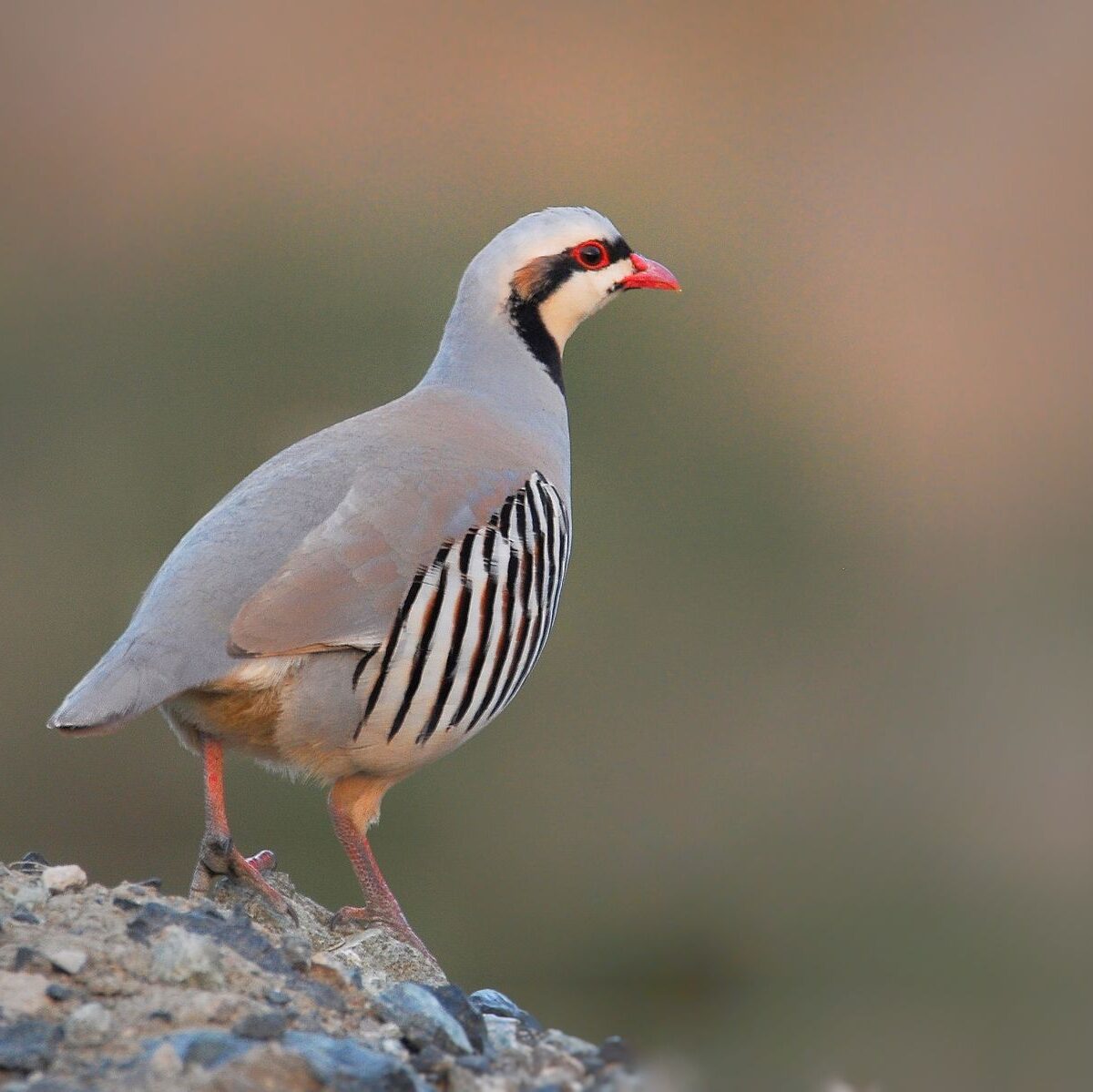
ARABIAN CHUKAR
Alectoris melanocephala
DESCRIPTION
Arabian chukar (Alectoris melanocephala) is commonly known as the chukar partridge. This bird features a distinctive appearance with a grayish-brown body, a black crown, and a striking black line that runs from its beak to its eye. They are known for their loud, distinctive calls and are often found in rocky, arid regions where they exhibit a strong preference for steep, rugged terrain.
FUN FACTS
- Arabian chukars are known for their unique vocalizations, which can be heard during courtship displays and territorial calls
- These calls are not only important for communication but also play a role in attracting mates
- | The species has adapted well to its harsh environment, often being found in areas with limited water sources
- They can survive on moisture obtained from their food, making them well-suited for arid habitats
QUICK INFO
Lifespan5-10 years in the wild, up to 15 years in captivit
Average Weight0.5-0.7 kg
Average Length30-32 cm
Diet TypeOmnivore
Social StructureThey are typically found in small groups or pairs, often consisting of a male and female.
Activity PatternDiurnal
Breeding SeasonSpring (March-May)
- Habitat
- These birds inhabit rocky hillsides, scrublands, and open grasslands, often favoring areas with sparse vegetation. They are well-adapted to arid environments and can be found at elevations ranging from sea level to over 2,000 meters.
- Biomes
- Desert, Grassland, Scrubland
- Native Range
- The Arabian chukar is native to the Arabian Peninsula, particularly in countries like Saudi Arabia, Oman, and the United Arab Emirates.
- Continent
- Asia
- Countries
- Saudi Arabia, Oman, United Arab Emirates, Yemen
- Diet
- Arabian chukars primarily feed on seeds, grains, and various plant materials, foraging on the ground for food. They may also consume insects and small invertebrates when available.
- Diet Type
- Omnivore
- Favorite Food
- seeds, grains, plant materials
- Social Structure
- They are typically found in small groups or pairs, often consisting of a male and female.
- Activity Pattern
- Diurnal
- Group Size
- 2-10
- Territorial
- 1
 CR
CR
0.5-0.7 kg
Weight
30-32 cm
Length
- Coloration
- Grayish-brown body with a black crown and distinctive black facial markings.
- Sexual Dimorphism
- Males are generally larger and have more vibrant coloration compared to females.
- Lifespan
- 5-10 years in the wild, up to 15 years in captivit
- Offspring per Birth
- 6-12 eggs
- Sexual Maturity
- 1 year
- Breeding Season
- Spring (March-May)
LC
Least Concern
IUCN Red List Status
- Population Status
- The population of Arabian chukars is currently stable, but they face habitat loss in some areas.
- Wild Population Estimate
- 50,000-100,000
- Population Trend
- Stable
- Endangered
- 0
- Threats
- Main threats include habitat destruction due to urbanization and agricultural expansion. Additionally, hunting pressure can impact local populations.
- Predators
- Foxes, hawks, and snakes are known predators of the Arabian chukar.
- Defense Mechanisms
- They rely on their camouflage and ability to run quickly to escape predators.
- Found in Zoos
- Uncommon