


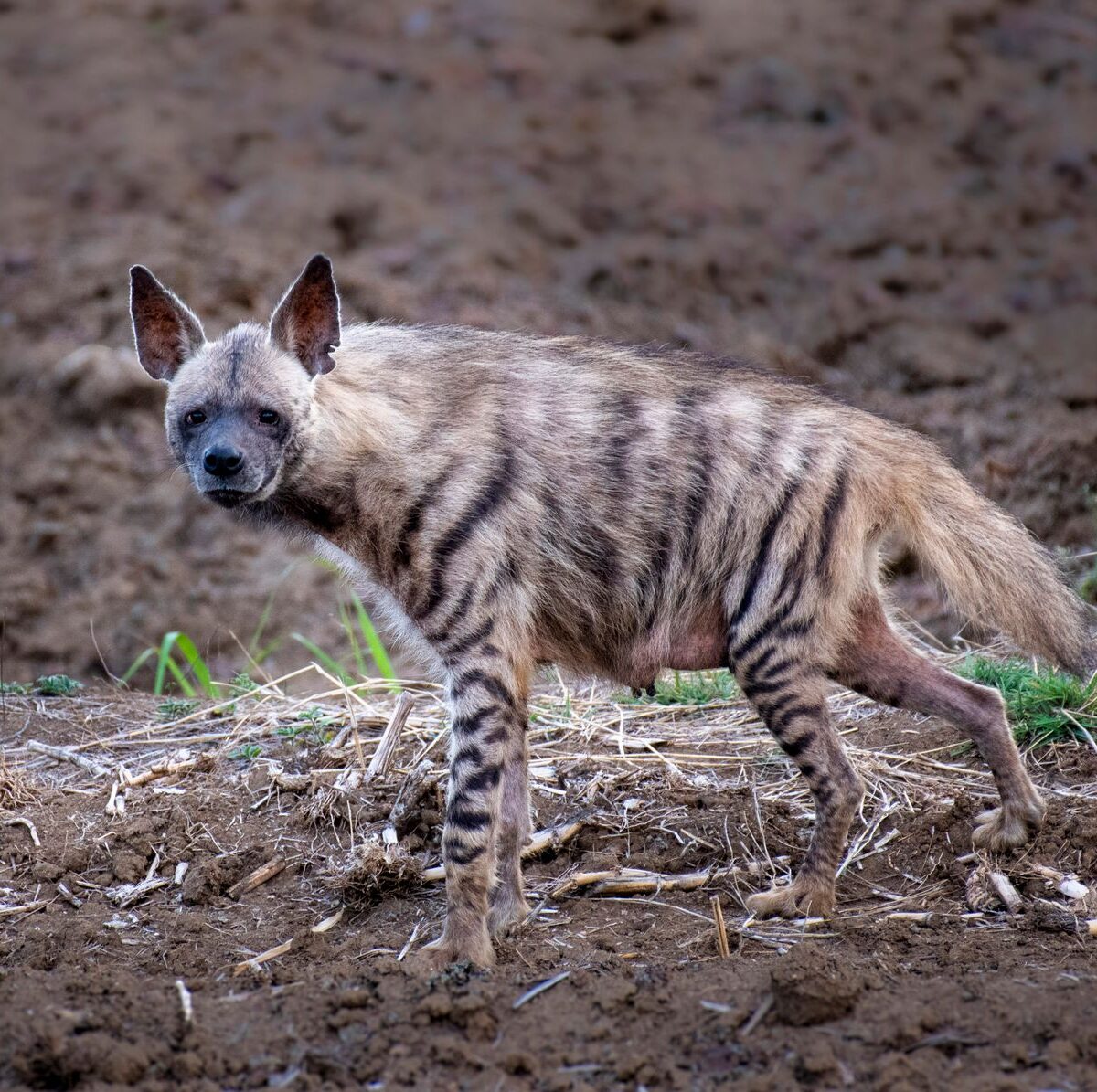
ARABIAN STRIPED HYENA
Hyaena hyaena sultana
DESCRIPTION
Arabian striped hyena (Hyaena hyaena sultana) is a subspecies of the striped hyena, characterized by its distinctive striped coat and a more slender build compared to other hyena species. This hyena has a shaggy, grayish-brown fur with dark stripes along its body, which helps it blend into its arid desert habitat. Known for its scavenging behavior, the Arabian striped hyena plays a crucial role in the ecosystem by cleaning up carrion and maintaining the balance of the food web.
FUN FACTS
- Arabian striped hyenas are known for their unique vocalizations, which include a variety of sounds such as whoops, growls, and giggles, making them one of the most vocal members of the hyena family
- Additionally, they have a highly developed sense of smell, allowing them to locate carrion from great distances, which is essential for their scavenging lifestyle
QUICK INFO
Lifespan10-12 years in the wild, up to 20 years in captivi
Average Weight25-50 kg
Average Length90-110 cm
Diet TypeCarnivore
Social StructureSolitary or small family groups, typically consisting of a mother and her offspring.
Activity PatternNocturnal
Breeding SeasonYear-round, with peaks depending on local conditions
- Habitat
- This species inhabits arid and semi-arid regions, including deserts and scrublands. It prefers areas with sparse vegetation where it can easily locate food and shelter.
- Biomes
- Desert, Grassland
- Native Range
- The Arabian striped hyena is native to the Arabian Peninsula, particularly in countries like Saudi Arabia, Oman, and the United Arab Emirates.
- Continent
- Asia
- Countries
- Saudi Arabia, Oman, United Arab Emirates
- Diet
- The Arabian striped hyena primarily feeds on carrion, but it also hunts small mammals and birds when necessary. It is an opportunistic feeder, often consuming whatever food sources are available.
- Diet Type
- Carnivore
- Favorite Food
- carrion, small mammals
- Social Structure
- Solitary or small family groups, typically consisting of a mother and her offspring.
- Activity Pattern
- Nocturnal
- Group Size
- 1-5
- Territorial
- 1
 VU
VU
25-50 kg
Weight
90-110 cm
Length
- Coloration
- Grayish-brown fur with dark stripes
- Sexual Dimorphism
- Males are generally larger than females.
- Lifespan
- 10-12 years in the wild, up to 20 years in captivi
- Gestation Period
- 90-100 days
- Offspring per Birth
- 2-4
- Sexual Maturity
- 2-3 years
- Breeding Season
- Year-round, with peaks depending on local conditions
VU
Vulnerable
IUCN Red List Status
- Population Status
- The population of Arabian striped hyenas is currently declining due to habitat loss and persecution.
- Wild Population Estimate
- Unknown, but likely fewer than 10,000 individuals
- Population Trend
- Decreasing
- Endangered
- 1
- Threats
- Main threats include habitat destruction, hunting, and conflict with humans. As human populations expand, the hyena's natural habitat is increasingly encroached upon, leading to a decline in their numbers.
- Predators
- Humans are the primary threat, but young hyenas may be vulnerable to larger carnivores such as lions and leopards.
- Defense Mechanisms
- They use their strong jaws and teeth to defend themselves, and their vocalizations can deter potential threats.
- Found in Zoos
- Uncommon