


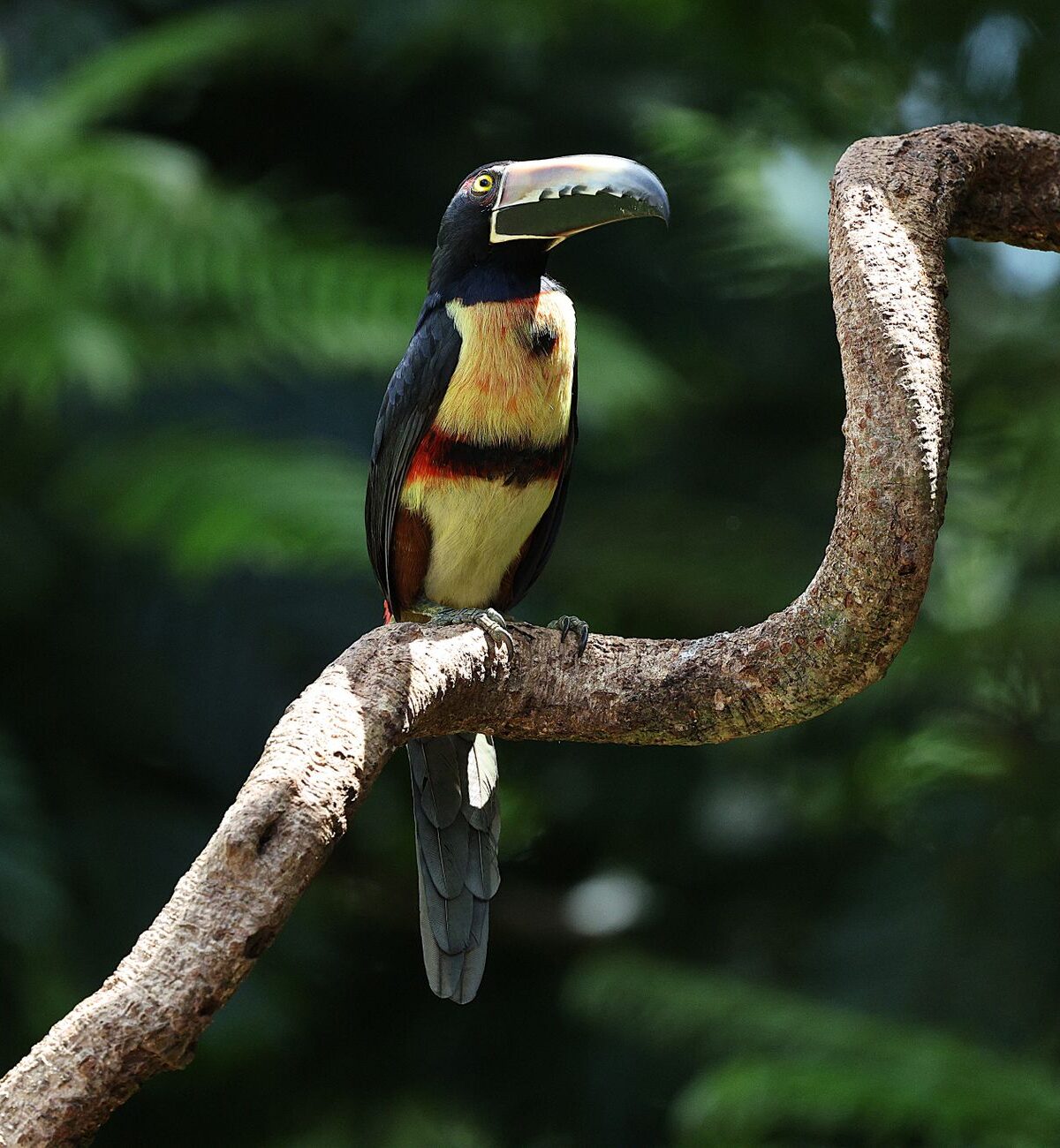
ARACARI
DESCRIPTION
Aracari is a type of toucan found primarily in Central and South America. These birds are characterized by their vibrant plumage, which often includes bright yellow, green, and black colors, along with a distinctive long, curved bill. Aracaris are social birds, often seen in small groups, and they play a crucial role in their ecosystems as seed dispersers.
FUN FACTS
- Aracaris have a unique feeding behavior where they toss fruit into the air to catch it with their bills, showcasing their dexterity and coordination
- Additionally, their vibrant colors and playful nature make them popular attractions in zoos, where they often engage in social interactions that delight visitors
QUICK INFO
Lifespan10-15 years in the wild, up to 20 years in captivi
Average Weight100-200 g
Average Length40-50 cm
Diet TypeOmnivore
Social StructureAracaris are typically found in small groups, often consisting of family units. They exhibit cooperative breeding behavior, where non-breeding individuals help care for the young.
Activity PatternDiurnal
Breeding SeasonVaries by region, typically during the rainy season
- Habitat
- Aracaris inhabit tropical and subtropical forests, often favoring areas with abundant fruiting trees. They are typically found in the canopy layer, where they can easily access their food sources.
- Biomes
- Tropical Rainforest, Subtropical Forest
- Native Range
- Aracaris are native to Central and South America, ranging from southern Mexico to northern Argentina.
- Continent
- North America, South America
- Countries
- Mexico, Guatemala, Honduras, Colombia, Ecuador, Brazil, Argentina
- Diet
- Aracaris primarily feed on fruits, but they also consume insects and small vertebrates. Their diet is essential for maintaining the health of their forest habitats.
- Diet Type
- Omnivore
- Favorite Food
- fruits, insects
- Social Structure
- Aracaris are typically found in small groups, often consisting of family units. They exhibit cooperative breeding behavior, where non-breeding individuals help care for the young.
- Activity Pattern
- Diurnal
- Group Size
- 3-10
- Territorial
- 0
 LC
LC
 DD
DD
100-200 g
Weight
40-50 cm
Length
- Coloration
- bright yellow, green, and black plumage with a large, colorful bill
- Sexual Dimorphism
- males and females are similar in appearance, with slight size differences
- Lifespan
- 10-15 years in the wild, up to 20 years in captivi
- Offspring per Birth
- 2-4
- Sexual Maturity
- 1-2 years
- Breeding Season
- Varies by region, typically during the rainy season
LC
Least Concern
IUCN Red List Status
- Population Status
- The population of Aracaris is currently stable, but habitat loss poses a potential threat.
- Wild Population Estimate
- unknown
- Population Trend
- Stable
- Endangered
- 0
- Threats
- The main threats to Aracaris include habitat destruction due to deforestation and fragmentation. Additionally, they may be affected by the illegal pet trade.
- Predators
- snakes, raptors, and larger mammals may prey on Aracaris, especially their eggs and young.
- Defense Mechanisms
- Aracaris rely on their agility and ability to hide in the dense foliage to evade predators.
- Compatible Animals
- none
- Found in Zoos
- Uncommon