


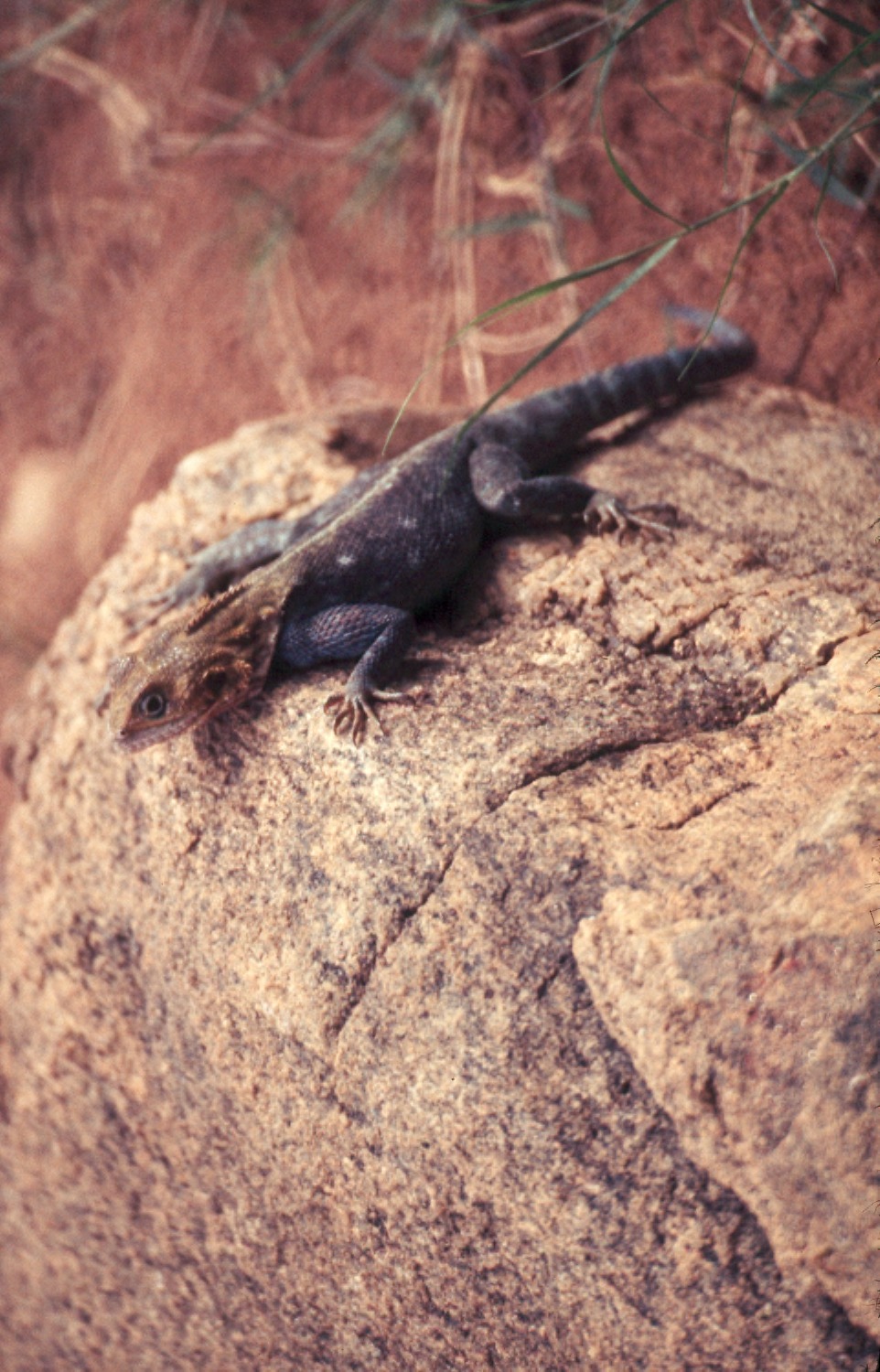
ARBOREAL AGAMID LIZARD
DESCRIPTION
Also called the Green Tree Agama and Tree Agama, the Arboreal Agamid Lizard is a vibrant lizard known for its striking green coloration that helps it blend into the foliage of its arboreal habitat. These lizards exhibit a slender body and long limbs, which aid in climbing and navigating through trees. They are primarily diurnal and are often seen basking in the sun or foraging among branches, showcasing their agile and active nature.
FUN FACTS
- The Arboreal Agamid Lizard is an excellent climber, using its long limbs and sharp claws to navigate through trees with ease
- They are also known for their vibrant coloration, which can change slightly based on their mood and environmental conditions.| These lizards have a unique social behavior during the breeding season, where males will display their colors and perform elaborate movements to attract females, showcasing their fitness and health
QUICK INFO
Lifespan5-10 years in the wild, up to 15 in captivity
Average Weight50-100 g
Average Length20-30 cm
Diet TypeOmnivore
Social Structuresolitary, occasionally seen in pairs during breeding
Activity PatternDiurnal
Breeding SeasonSpring to early summer
- Habitat
- This species is typically found in tropical and subtropical forests, where it inhabits the canopy and upper branches of trees. Its arboreal lifestyle is well-suited to its environment, allowing it to escape predators and find food.
- Biomes
- Tropical Rainforest, Subtropical Forest
- Native Range
- The Arboreal Agamid Lizard is native to parts of Africa, particularly in regions with dense forest cover.
- Continent
- Africa
- Countries
- Cameroon, Nigeria, Gabon
- Diet
- The Arboreal Agamid Lizard primarily feeds on insects and other small invertebrates, but it may also consume some plant material. This omnivorous diet allows it to thrive in its natural habitat.
- Diet Type
- Omnivore
- Favorite Food
- insects, small invertebrates
- Social Structure
- solitary, occasionally seen in pairs during breeding
- Activity Pattern
- Diurnal
- Group Size
- 1-2
- Territorial
- 0
 VU
VU
 LC
LC
50-100 g
Weight
20-30 cm
Length
- Coloration
- vibrant green with possible blue or yellow markings
- Sexual Dimorphism
- males are typically larger and more colorful than females
- Lifespan
- 5-10 years in the wild, up to 15 in captivity
- Offspring per Birth
- 3-10
- Sexual Maturity
- 1-2 years
- Breeding Season
- Spring to early summer
LC
Least Concern
IUCN Red List Status
- Population Status
- The population is currently stable, but habitat loss poses a potential threat.
- Wild Population Estimate
- unknown
- Population Trend
- Stable
- Endangered
- 0
- Threats
- Main threats include habitat destruction due to deforestation and urbanization. These activities reduce their natural habitat and food sources.
- Predators
- Birds of prey, snakes, and larger reptiles are known to prey on Arboreal Agamid Lizards.
- Defense Mechanisms
- They can quickly escape into the foliage to avoid predators, utilizing their climbing skills.
- Found in Zoos
- Uncommon