


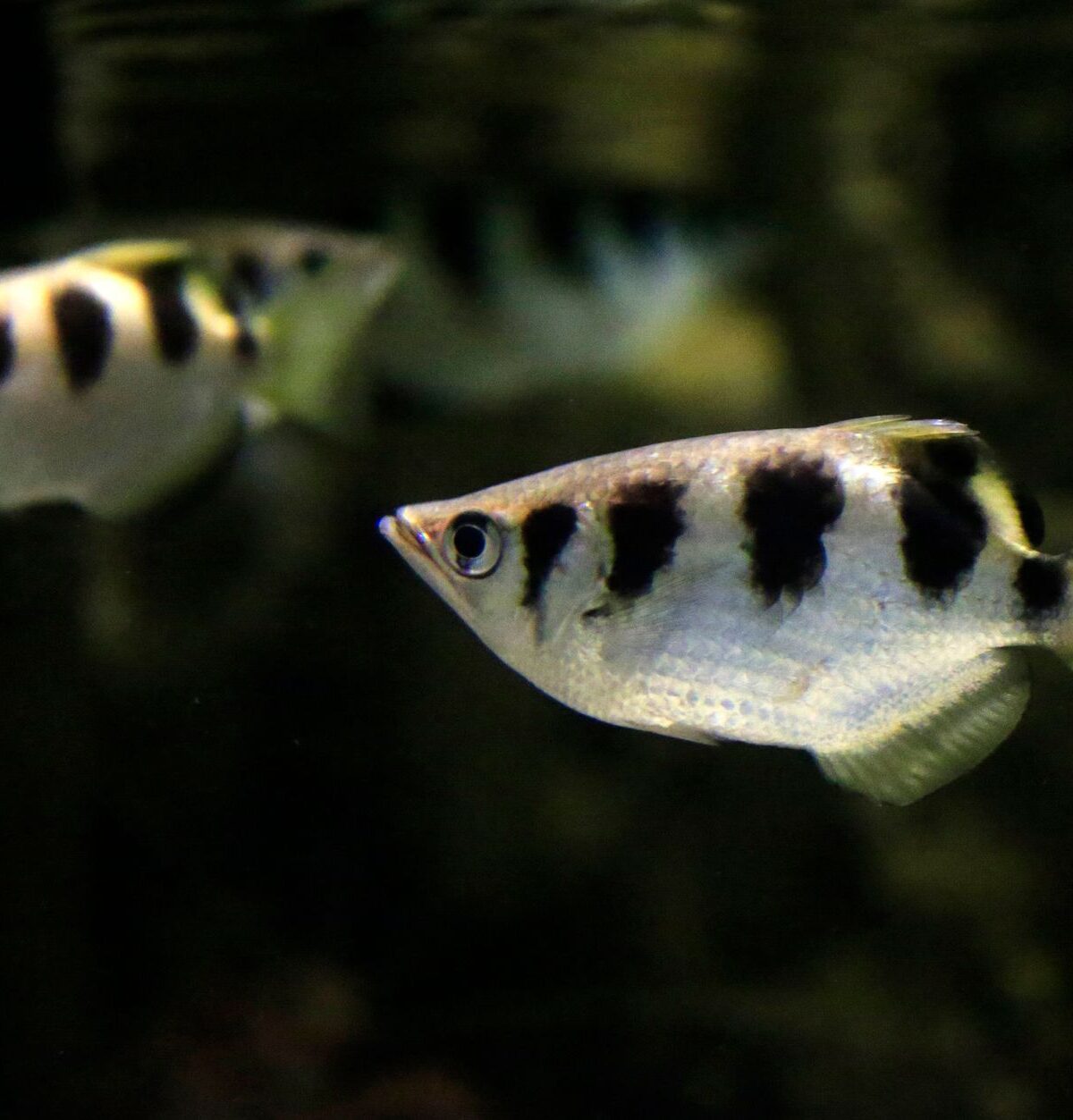
ARCHER FISH
Toxotes species
DESCRIPTION
Archer Fish (Toxotes species) is known for its remarkable ability to shoot jets of water to knock insects and other prey from overhanging vegetation into the water. These fish have a distinctive elongated body and a flattened head, which aids in their unique hunting technique. They are typically found in brackish and freshwater habitats, showcasing a fascinating adaptation to their ecological niche.
FUN FACTS
- Archer Fish are capable of accurately shooting water up to 2 meters to knock insects off branches
- Their unique hunting technique has fascinated researchers and aquarists alike, leading to studies on their precise aiming abilities.|These fish have specialized adaptations in their mouths and eyes that allow them to calculate the refraction of light when aiming at prey above the water
- This remarkable skill showcases their evolutionary adaptations to their environment
QUICK INFO
Lifespan5-10 years in the wild, up to 15 years in captivit
Average Weight0.5-1 kg
Average Length20-30 cm
Diet TypeCarnivore
Social Structuregroup — they are often seen in small schools, which can enhance their hunting success.
Activity PatternDiurnal
Breeding SeasonVariable, often during the rainy season
- Habitat
- Archer Fish inhabit shallow waters of rivers, estuaries, and mangrove swamps. They prefer areas with abundant vegetation where they can hunt effectively.
- Biomes
- Freshwater, Estuary, Mangrove
- Native Range
- Archer Fish are native to Southeast Asia, particularly in countries surrounding the Indo-Pacific region.
- Continent
- Asia
- Countries
- India, Thailand, Indonesia, Malaysia, Philippines
- Diet
- Archer Fish primarily feed on insects and small invertebrates that fall into the water. They are known for their precision in targeting prey with their water jets.
- Diet Type
- Carnivore
- Favorite Food
- insects, small invertebrates
- Social Structure
- group — they are often seen in small schools, which can enhance their hunting success.
- Activity Pattern
- Diurnal
- Group Size
- 5-15
- Territorial
- 0
 VU
VU
0.5-1 kg
Weight
20-30 cm
Length
- Coloration
- Typically silver with dark vertical stripes, providing camouflage in their natural habitat.
- Sexual Dimorphism
- Males are generally smaller and more colorful than females.
- Lifespan
- 5-10 years in the wild, up to 15 years in captivit
- Sexual Maturity
- 1-2 years
- Breeding Season
- Variable, often during the rainy season
LC
Least Concern
IUCN Red List Status
- Population Status
- Population status is currently stable, but habitat loss poses a potential threat.
- Wild Population Estimate
- Unknown
- Population Trend
- Stable
- Endangered
- 0
- Threats
- Main threats include habitat destruction due to pollution and urban development. Overfishing can also impact local populations.
- Predators
- Larger fish, birds, and some reptiles are known to prey on Archer Fish.
- Defense Mechanisms
- They rely on their ability to camouflage and their schooling behavior to evade predators.
- Compatible Animals
- none
- Found in Zoos
- Uncommon