


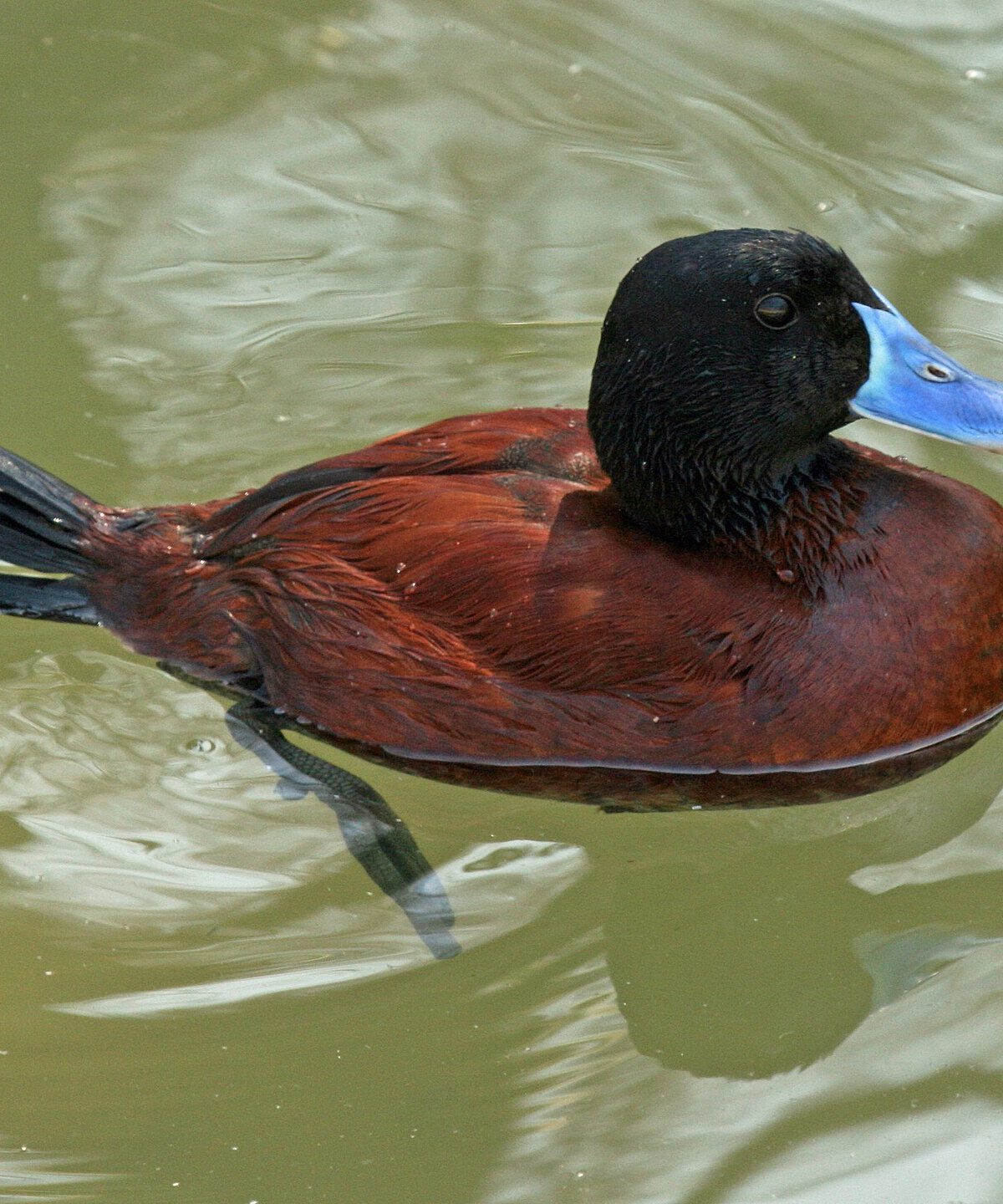
ARGENTINE RUDDY DUCK
Oxyura vittata
DESCRIPTION
Argentine Ruddy Duck (Oxyura vittata) is a small, diving duck known for its striking plumage, particularly in males during the breeding season, which features bright blue bills and chestnut-colored bodies. These ducks are often found in shallow freshwater lakes and marshes, where they engage in elaborate courtship displays, including head bobbing and tail flicking. Their behavior is characterized by a preference for diving to forage for food, which primarily consists of aquatic invertebrates and plant material.
FUN FACTS
- Argentine Ruddy Ducks are known for their elaborate courtship displays, which can include a series of head bobbing and tail flicking movements that are quite a sight to behold
- Additionally, these ducks have a unique adaptation that allows them to dive efficiently, using their feet to propel themselves underwater while foraging for food.| Despite their small size, Argentine Ruddy Ducks are quite territorial during the breeding season, often engaging in aggressive displays to defend their nesting areas from intruders
QUICK INFO
Lifespan5-10 years in the wild
Average Weight300-500 g
Average Length30-38 cm
Diet TypeOmnivore
Social StructureThey are typically found in pairs during the breeding season, but can also be seen in small groups outside of this period.
Activity PatternDiurnal
Breeding SeasonSpring to early summer
- Habitat
- Argentine Ruddy Ducks inhabit freshwater lakes, marshes, and wetlands, often favoring areas with dense vegetation. They are typically found in shallow waters where they can easily dive for food.
- Biomes
- Wetlands, Freshwater
- Native Range
- This species is native to parts of South America, particularly in Argentina and surrounding regions.
- Continent
- South America
- Countries
- Argentina, Bolivia, Paraguay
- Diet
- They primarily feed on aquatic invertebrates and some plant matter.
- Diet Type
- Omnivore
- Favorite Food
- aquatic invertebrates
- Social Structure
- They are typically found in pairs during the breeding season, but can also be seen in small groups outside of this period.
- Activity Pattern
- Diurnal
- Group Size
- 2-10
- Territorial
- 1

 VU
VU
300-500 g
Weight
30-38 cm
Length
- Coloration
- Males are bright chestnut with a blue bill during breeding, while females are mottled brown and gray.
- Sexual Dimorphism
- Males and females have distinctly different plumage, with males being more colorful.
- Lifespan
- 5-10 years in the wild
- Offspring per Birth
- 5-10
- Sexual Maturity
- 1 year
- Breeding Season
- Spring to early summer
LC
Least Concern
IUCN Red List Status
- Population Status
- The population is currently stable, but habitat loss poses a potential threat.
- Wild Population Estimate
- Unknown
- Population Trend
- Stable
- Endangered
- 0
- Threats
- Main threats include habitat destruction due to agricultural expansion and pollution of water bodies. These factors can significantly impact their breeding and feeding grounds.
- Predators
- Foxes, birds of prey, and larger fish can pose threats to Argentine Ruddy Ducks, particularly to their eggs and young.
- Defense Mechanisms
- They often rely on their ability to dive quickly to escape predators.
- Found in Zoos
- Uncommon