


ARIZONA BLACK RATTLESNAKE
Crotalus cerberus
DESCRIPTION
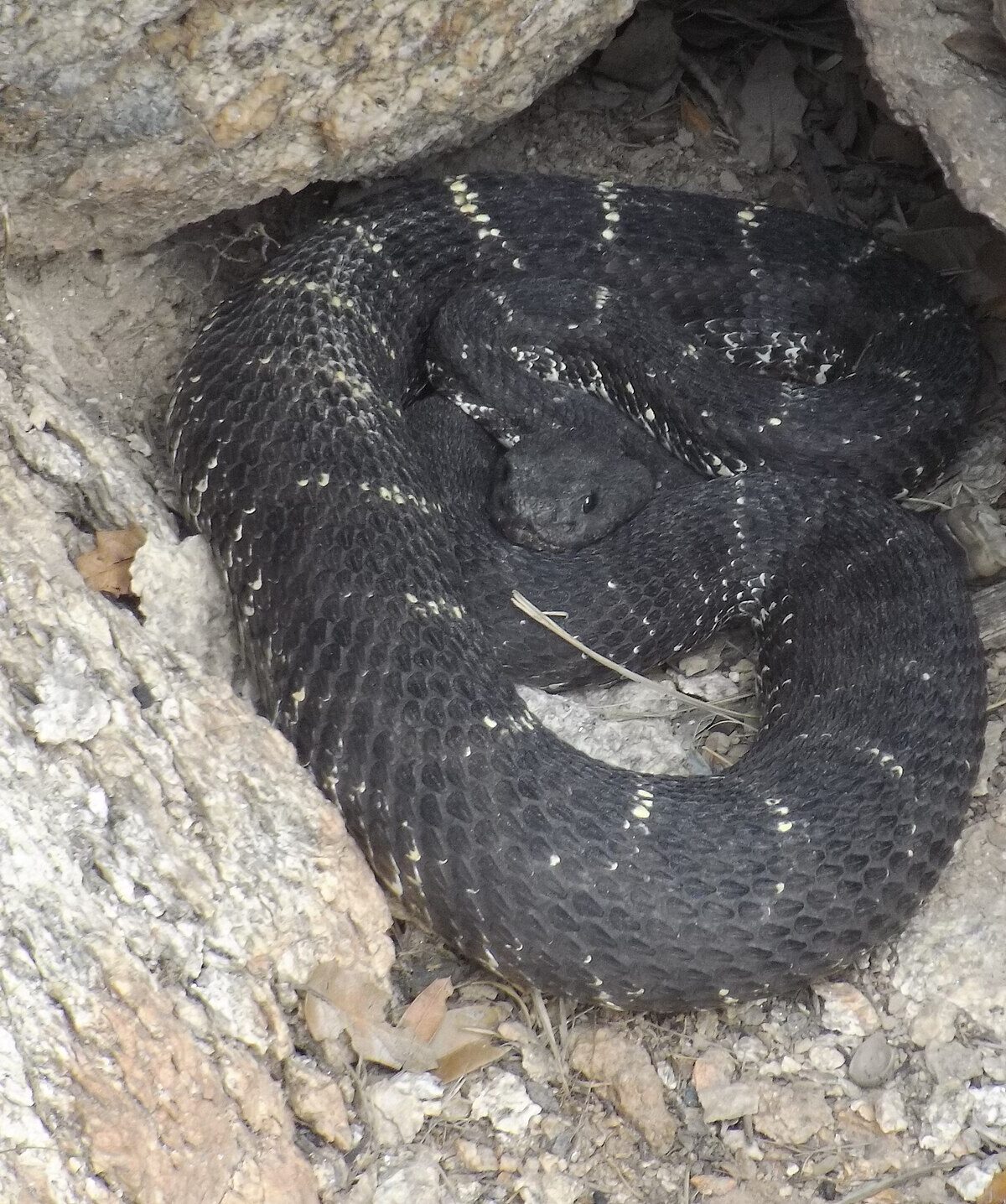
Arizona Black Rattlesnake (Crotalus cerberus) is a strikingly dark-colored snake, often appearing almost entirely black or dark gray, with a distinctive rattle at the end of its tail. This species is known for its robust body and relatively large size, typically reaching lengths of 3 to 4 feet. Primarily found in rocky and arid environments, it exhibits a crepuscular activity pattern, being most active during dawn and dusk, which aids in avoiding the heat of the day.
FUN FACTS
- The rattle of the Arizona Black Rattlesnake is made of keratin, the same material as human nails, and it grows with each shedding of the skin, adding a new segment each time
- Despite their fearsome reputation, these snakes play a crucial role in their ecosystem by controlling rodent populations, which helps maintain a balance in their habitat
QUICK INFO
Lifespan10-20 years in the wild, up to 25 years in captivi
Average Weight1-2 kg
Average Length0.9-1.2 m
Diet TypeCarnivore
Social Structuresolitary
Activity PatternCrepuscular
Breeding SeasonSpring (April-June)
- Habitat
- This species inhabits rocky hillsides, canyons, and desert areas, often favoring locations with ample cover. They are also found in grasslands and scrublands, where they can easily ambush prey.
- Biomes
- Desert, Grassland
- Native Range
- The Arizona Black Rattlesnake is native to the southwestern United States, particularly in Arizona and parts of New Mexico.
- Continent
- North America
- Countries
- United States
- Diet
- Arizona Black Rattlesnakes primarily feed on small mammals, birds, and occasionally lizards. They use their heat-sensing pits to locate warm-blooded prey, striking with precision.
- Diet Type
- Carnivore
- Favorite Food
- small mammals, birds
- Social Structure
- solitary
- Activity Pattern
- Crepuscular
- Group Size
- 1
- Territorial
- 1
 VU
VU

1-2 kg
Weight
0.9-1.2 m
Length
- Coloration
- primarily black or dark gray with lighter bands or spots
- Sexual Dimorphism
- males are generally smaller than females
- Lifespan
- 10-20 years in the wild, up to 25 years in captivi
- Gestation Period
- 90-100 days
- Offspring per Birth
- 4-15
- Sexual Maturity
- 2-3 years
- Breeding Season
- Spring (April-June)
LC
Least Concern
IUCN Red List Status
- Population Status
- The population is currently stable, but habitat loss poses a potential threat.
- Wild Population Estimate
- unknown
- Population Trend
- Stable
- Endangered
- 0
- Threats
- Main threats include habitat destruction due to urban development and road mortality. Additionally, they face persecution from humans who fear snakes.
- Predators
- birds of prey, coyotes, larger snakes
- Defense Mechanisms
- They use their rattle as a warning signal to deter potential threats and can deliver a venomous bite if provoked.
- Found in Zoos
- Uncommon