


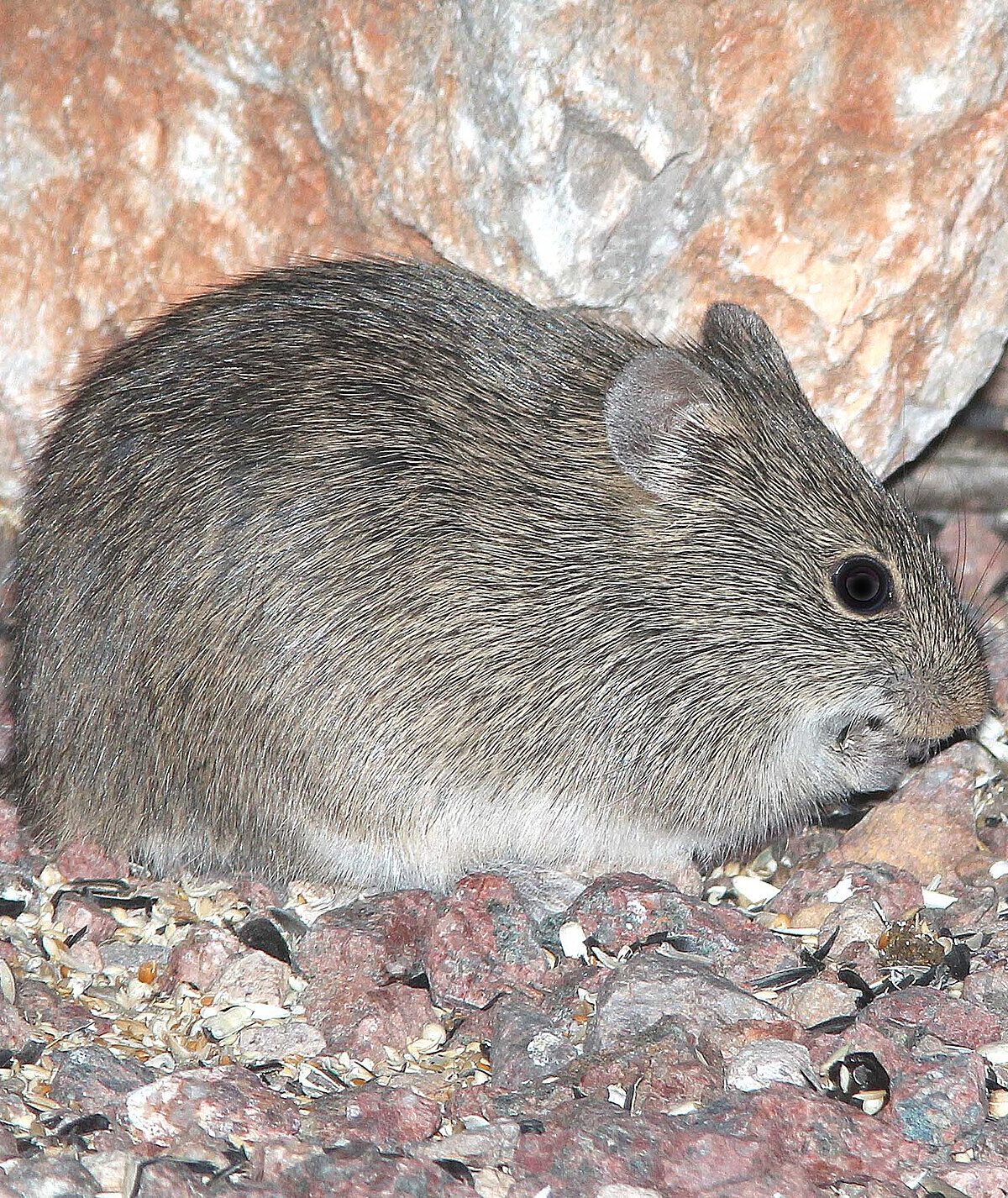
ARIZONA COTTON RAT
Sigmodon arizonae
DESCRIPTION
Arizona Cotton Rat (Sigmodon arizonae) is a medium-sized rodent characterized by its dense fur and long tail. It typically exhibits a grayish-brown coloration with lighter underparts, which helps it blend into its grassland and scrub habitats. This species is primarily nocturnal and is known for its burrowing behavior, creating extensive tunnel systems in the ground.
FUN FACTS
- Arizona Cotton Rats are known for their impressive burrowing skills, which allow them to create complex tunnel systems that can extend several meters underground
- These tunnels not only provide shelter from predators but also help regulate their body temperature in extreme weather conditions
- | Despite their small size, Arizona Cotton Rats play a crucial role in their ecosystem by aerating the soil and dispersing seeds, which contributes to the health of their habitat
- Their foraging habits can significantly influence plant community dynamics in grassland ecosystems
QUICK INFO
Lifespan1-2 years in the wild, up to 3 years in captivity
Average Weight100-200 g
Average Length20-30 cm
Diet TypeHerbivore
Social Structuresolitary, occasionally social during breeding
Activity PatternNocturnal
Breeding SeasonSpring to early fall
- Habitat
- This species inhabits grasslands, deserts, and scrub areas, often near water sources. They prefer areas with dense vegetation that provides cover and food resources.
- Biomes
- Desert, Grassland
- Native Range
- The Arizona Cotton Rat is native to the southwestern United States, particularly in Arizona and parts of New Mexico.
- Continent
- North America
- Countries
- United States, Mexico
- Diet
- Arizona Cotton Rats are primarily herbivorous, feeding on a variety of grasses, seeds, and other plant materials. They may occasionally consume insects, especially during times of food scarcity.
- Diet Type
- Herbivore
- Favorite Food
- grasses, seeds
- Social Structure
- solitary, occasionally social during breeding
- Activity Pattern
- Nocturnal
- Group Size
- 1-5
- Territorial
- 0
 CR
CR
 LC
LC
100-200 g
Weight
20-30 cm
Length
- Coloration
- grayish-brown with lighter underparts
- Lifespan
- 1-2 years in the wild, up to 3 years in captivity
- Gestation Period
- 25-30 days
- Offspring per Birth
- 3-8
- Sexual Maturity
- 2-3 months
- Breeding Season
- Spring to early fall
LC
Least Concern
IUCN Red List Status
- Population Status
- The population of Arizona Cotton Rats is currently stable, though habitat loss poses a potential threat.
- Wild Population Estimate
- unknown
- Population Trend
- Stable
- Endangered
- 0
- Threats
- Main threats include habitat destruction due to urban development and agricultural expansion. Additionally, predation by domestic cats and other predators can impact local populations.
- Predators
- hawks, owls, snakes, foxes
- Defense Mechanisms
- Arizona Cotton Rats rely on their burrowing behavior for protection, quickly retreating to their tunnels when threatened.
- Found in Zoos
- Rare