


ARIZONA MOUNTAIN KINGSNAKE
Lampropeltis pyromelana
DESCRIPTION
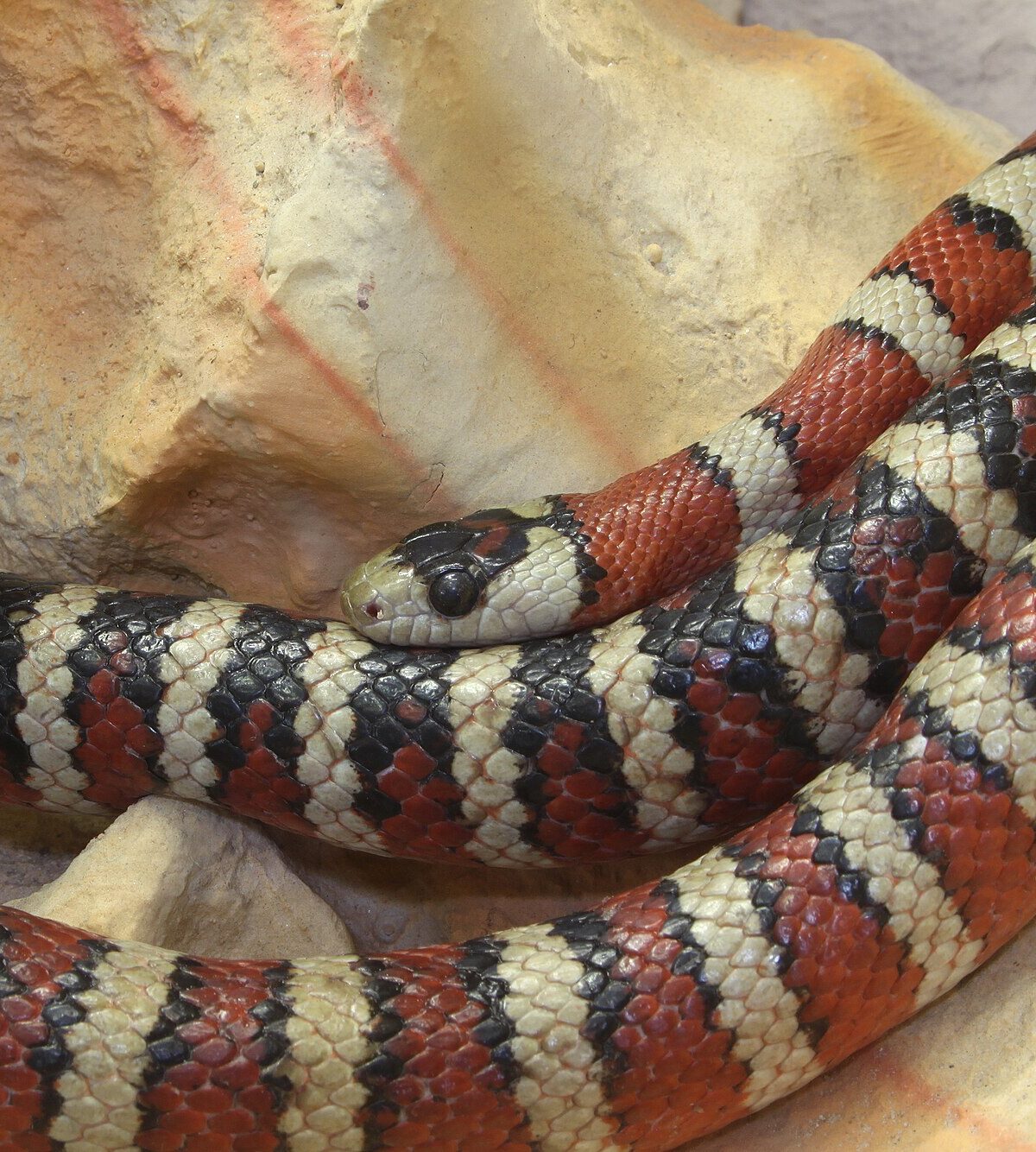
Arizona Mountain Kingsnake (Lampropeltis pyromelana) is commonly known as the pyromelana and mountain kingsnake. This striking snake is characterized by its vibrant coloration, typically featuring bold bands of red, black, and yellow or white. It is a non-venomous constrictor that exhibits a docile nature, making it a popular choice among reptile enthusiasts.
FUN FACTS
- Arizona Mountain Kingsnakes are known for their impressive ability to mimic the coloration of the venomous coral snake, which helps them avoid predation
- Additionally, they are often kept as pets due to their striking appearance and manageable size, making them a favorite among reptile enthusiasts
QUICK INFO
Lifespan10-15 years in the wild, up to 20 years in captivi
Average Weight0.5-1.5 kg
Average Length1.2-1.5 m
Diet TypeCarnivore
Social Structuresolitary
Activity PatternDiurnal
Breeding SeasonSpring (April-June)
- Habitat
- These snakes inhabit a variety of environments, including rocky hillsides, grasslands, and pine forests. They are often found in areas with ample cover, such as under rocks or logs.
- Biomes
- Temperate Forest, Grassland, Desert
- Native Range
- The native range of the Arizona Mountain Kingsnake includes the southwestern United States and parts of northern Mexico.
- Continent
- North America
- Countries
- United States, Mexico
- Diet
- Arizona Mountain Kingsnakes primarily feed on small mammals, birds, and other reptiles. They are known to be opportunistic feeders, consuming whatever prey is available in their environment.
- Diet Type
- Carnivore
- Favorite Food
- small mammals, birds, reptiles
- Social Structure
- solitary
- Activity Pattern
- Diurnal
- Group Size
- 1
- Territorial
- 0
 VU
VU

0.5-1.5 kg
Weight
1.2-1.5 m
Length
- Coloration
- vibrant bands of red, black, and yellow or white
- Sexual Dimorphism
- males are generally smaller than females
- Lifespan
- 10-15 years in the wild, up to 20 years in captivi
- Offspring per Birth
- 3-12
- Sexual Maturity
- 2-3 years
- Breeding Season
- Spring (April-June)
LC
Least Concern
IUCN Red List Status
- Population Status
- The population of Arizona Mountain Kingsnakes is currently stable, with no significant declines reported.
- Wild Population Estimate
- unknown
- Population Trend
- Stable
- Endangered
- 0
- Threats
- Main threats include habitat loss due to urban development and road mortality. Additionally, they are sometimes collected for the pet trade, which can impact local populations.
- Predators
- birds of prey, larger snakes, mammals such as raccoons and foxes
- Defense Mechanisms
- They exhibit a mimicry behavior, resembling venomous species to deter potential predators.
- Found in Zoos
- Common