


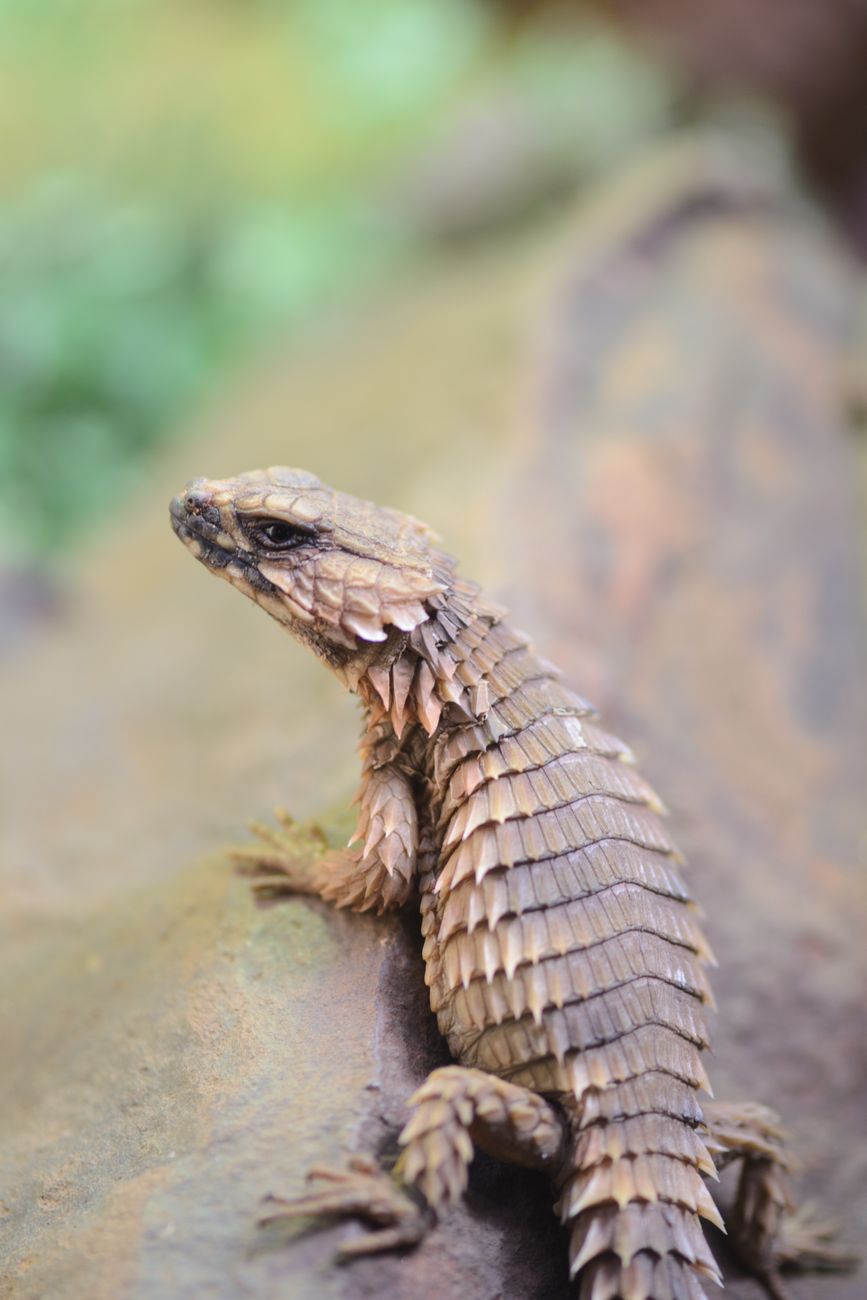
ARMADILLO GIRDLED LIZARD
Ouroborus cataphractus
DESCRIPTION
Armadillo Girdled Lizard (Ouroborus cataphractus) is commonly known as the Golden Girdled Lizard and Armadillo Lizard. This unique lizard is characterized by its distinctive armored appearance, featuring a body covered in hard, bony scales that provide excellent protection against predators. When threatened, it can roll into a ball, much like an armadillo, using its spiky tail to secure itself in this position, making it difficult for predators to access.
FUN FACTS
- The Armadillo Girdled Lizard is one of the few lizards that can roll into a ball as a defense mechanism, similar to how an armadillo does
- This behavior not only protects them from predators but also helps them retain moisture in their arid habitats
- | These lizards have a unique social structure, often being solitary except during the breeding season, which is quite different from many other lizard species that may live in groups
- Their ability to adapt to rocky environments showcases their evolutionary success in harsh conditions
QUICK INFO
Lifespan10-15 years in the wild, up to 20 years in captivi
Average Weight100-200 g
Average Length15-20 cm
Diet TypeInsectivore
Social Structuresolitary, typically found alone except during mating season
Activity PatternDiurnal
Breeding SeasonSpring (September-November)
- Habitat
- This species is typically found in rocky outcrops and arid regions, where it can hide among the crevices. It prefers habitats that provide ample cover and access to its insect prey.
- Biomes
- Desert, Semi-arid
- Native Range
- The Armadillo Girdled Lizard is native to southern Africa, particularly in regions of Namibia and South Africa.
- Continent
- Africa
- Countries
- Namibia, South Africa
- Diet
- The Armadillo Girdled Lizard primarily feeds on insects and other small invertebrates. It has a specialized diet that includes ants and termites, which it forages for in its rocky habitat.
- Diet Type
- Insectivore
- Favorite Food
- ants, termites
- Social Structure
- solitary, typically found alone except during mating season
- Activity Pattern
- Diurnal
- Group Size
- 1
- Territorial
- 0
 VU
VU
 LC
LC
100-200 g
Weight
15-20 cm
Length
- Coloration
- The coloration is typically a mix of brown and yellow, providing camouflage against the rocky environment.
- Lifespan
- 10-15 years in the wild, up to 20 years in captivi
- Offspring per Birth
- 2-6
- Sexual Maturity
- 2-3 years
- Breeding Season
- Spring (September-November)
LC
Least Concern
IUCN Red List Status
- Population Status
- The population is currently stable, but habitat destruction poses a potential threat.
- Wild Population Estimate
- Unknown
- Population Trend
- Stable
- Endangered
- 0
- Threats
- Main threats include habitat loss due to human encroachment and climate change. Additionally, they are sometimes collected for the pet trade.
- Predators
- Birds of prey, snakes, and small mammals are known to prey on Armadillo Girdled Lizards.
- Defense Mechanisms
- When threatened, these lizards can roll into a ball, using their spiky tails to secure themselves, making it difficult for predators to access them.
- Found in Zoos
- Uncommon