


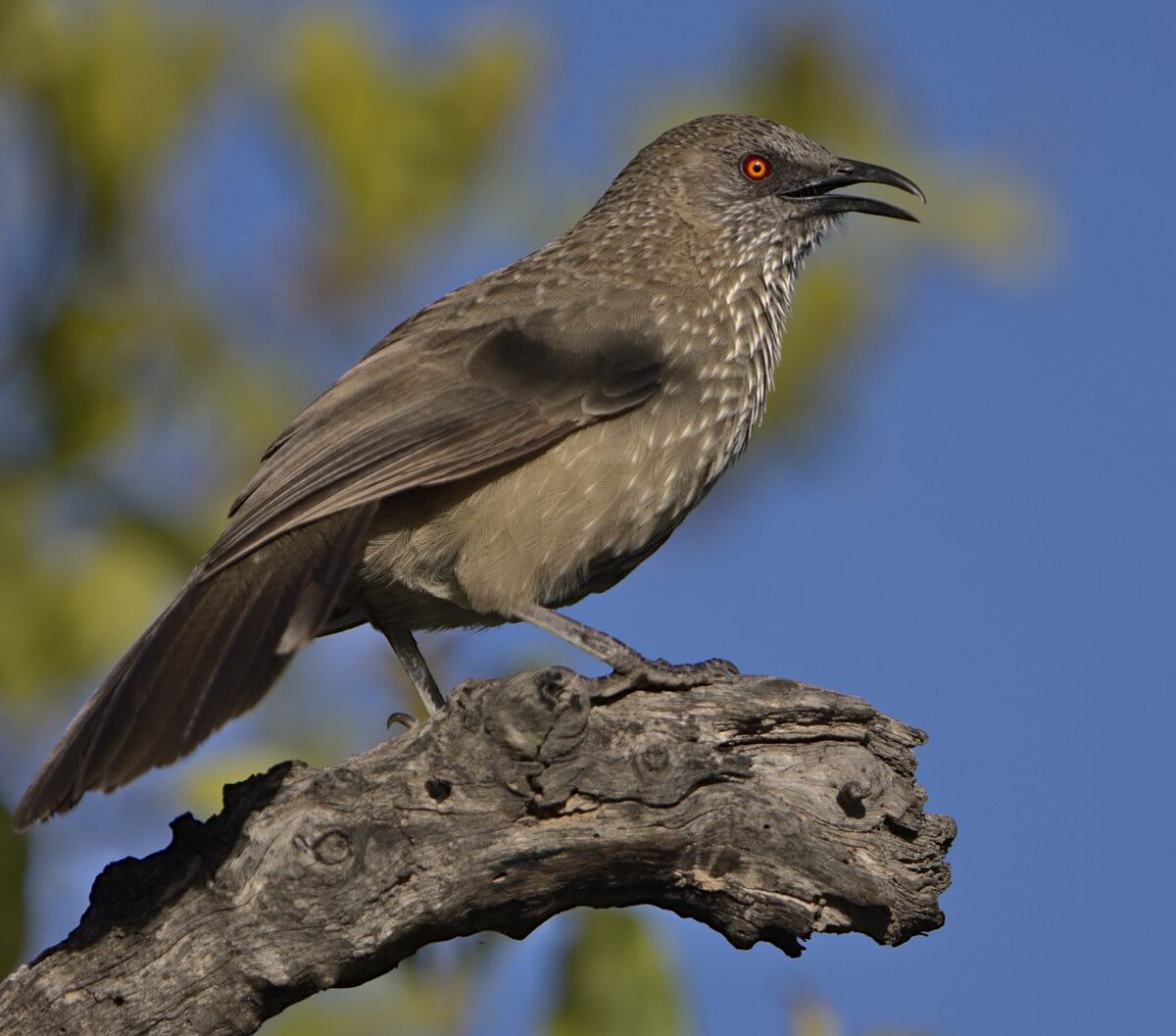
ARROW-MARKED BABBLER
Turdoides jardineii
DESCRIPTION
Arrow-marked babbler (Turdoides jardineii) is a small, social bird known for its distinctive arrow-shaped markings on its wings and tail. It has a brownish-grey plumage with a lighter underbelly, making it well-camouflaged in its natural habitat. This species is highly vocal and often found in groups, engaging in cooperative behaviors such as foraging and nest building.
FUN FACTS
- Arrow-marked babblers are known for their complex social structures and cooperative breeding habits, where non-breeding individuals help care for the young
- They are also quite vocal, with a range of calls that serve different purposes, from alerting others to danger to coordinating group movements
QUICK INFO
Lifespanup to 10 years in the wild
Average Weight30-50 g
Average Length20-25 cm
Diet TypeOmnivore
Social Structuregroup — they are highly social and often found in flocks.
Activity PatternDiurnal
Breeding SeasonSpring to early summer
- Habitat
- This species inhabits open woodlands, scrublands, and grasslands, often near water sources. They prefer areas with dense undergrowth for nesting and foraging.
- Biomes
- Savanna, Grassland, Woodland
- Native Range
- Arrow-marked babblers are native to southern Africa, particularly found in countries like South Africa, Botswana, and Namibia.
- Continent
- Africa
- Countries
- South Africa, Botswana, Namibia
- Diet
- Arrow-marked babblers primarily feed on insects, seeds, and fruits, foraging on the ground and in low vegetation. They are known to exhibit foraging behaviors that involve searching for food in leaf litter and among grasses.
- Diet Type
- Omnivore
- Favorite Food
- insects, seeds, fruits
- Social Structure
- group — they are highly social and often found in flocks.
- Activity Pattern
- Diurnal
- Group Size
- 5-20
- Territorial
- 0
 LC
LC
 VU
VU
 LC
LC
30-50 g
Weight
20-25 cm
Length
- Coloration
- brownish-grey with lighter underparts and distinctive arrow-shaped markings
- Lifespan
- up to 10 years in the wild
- Offspring per Birth
- 3-5
- Sexual Maturity
- 1 year
- Breeding Season
- Spring to early summer
LC
Least Concern
IUCN Red List Status
- Population Status
- The population of Arrow-marked babblers is currently stable, with no significant declines reported.
- Wild Population Estimate
- unknown
- Population Trend
- Stable
- Endangered
- 0
- Threats
- The main threats to Arrow-marked babblers include habitat loss due to agricultural expansion and urban development. However, they are currently not facing significant threats that would impact their population.
- Predators
- snakes, birds of prey, domestic cats
- Defense Mechanisms
- They often rely on their social structure for protection, using alarm calls to warn others of potential threats.
- Found in Zoos
- Uncommon