


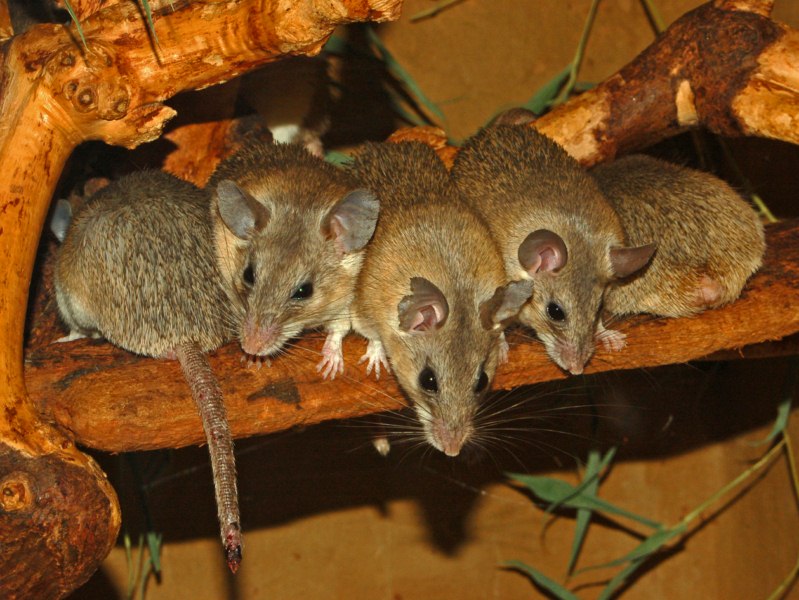
ASIA MINOR SPINY MOUSE
Acomys cilicicus
DESCRIPTION
Asia Minor Spiny Mouse (Acomys cilicicus) is a small rodent characterized by its spiny fur, which provides it with a unique appearance compared to other mice. This species exhibits a nocturnal lifestyle, often foraging for food during the night and retreating to its burrows during the day. Ecologically, it plays a significant role in its habitat by aiding in seed dispersal and serving as prey for various predators.
FUN FACTS
- Asia Minor Spiny Mice have a unique adaptation in their fur, which consists of stiff, spiny hairs that help deter predators
- These mice are also known for their impressive climbing abilities, allowing them to escape threats by quickly ascending shrubs and trees.| Despite their small size, Asia Minor Spiny Mice are quite resilient and can thrive in various environments, showcasing their adaptability to changing habitats
QUICK INFO
Lifespan2-3 years in the wild, up to 5 years in captivity
Average Weight30-50 g
Average Length8-10 cm
Diet TypeOmnivore
Social Structuresolitary, occasionally seen in pairs during breeding
Activity PatternNocturnal
Breeding SeasonSpring to early summer
- Habitat
- This species is typically found in rocky and scrubby areas, often preferring habitats with dense vegetation for cover. It constructs burrows in the ground, which provide shelter and protection from predators.
- Biomes
- Mediterranean, Temperate Forest
- Native Range
- The Asia Minor Spiny Mouse is native to the eastern Mediterranean region, particularly in parts of Turkey and surrounding areas.
- Continent
- Asia, Europe
- Countries
- Turkey
- Diet
- The Asia Minor Spiny Mouse primarily feeds on seeds, fruits, and insects, showcasing its omnivorous diet. It forages on the ground and in low vegetation, utilizing its keen sense of smell to locate food.
- Diet Type
- Omnivore
- Favorite Food
- seeds and fruits
- Social Structure
- solitary, occasionally seen in pairs during breeding
- Activity Pattern
- Nocturnal
- Group Size
- 1-2
- Territorial
- 0

 LC
LC
30-50 g
Weight
8-10 cm
Length
- Coloration
- The fur is typically a mix of brown and gray, with a lighter underbelly.
- Lifespan
- 2-3 years in the wild, up to 5 years in captivity
- Gestation Period
- 30 days
- Offspring per Birth
- 3-6
- Sexual Maturity
- 2-3 months
- Breeding Season
- Spring to early summer
LC
Least Concern
IUCN Red List Status
- Population Status
- The population of Asia Minor Spiny Mouse is currently stable, though specific numbers are not well-documented.
- Wild Population Estimate
- unknown
- Population Trend
- Stable
- Endangered
- 0
- Threats
- Main threats include habitat destruction due to urbanization and agricultural expansion. Additionally, predation by domestic cats and other animals poses a risk to their populations.
- Predators
- Owls, snakes, and small carnivorous mammals such as weasels and foxes.
- Defense Mechanisms
- They rely on their agility and ability to hide in dense vegetation to evade predators.
- Found in Zoos
- Rare