


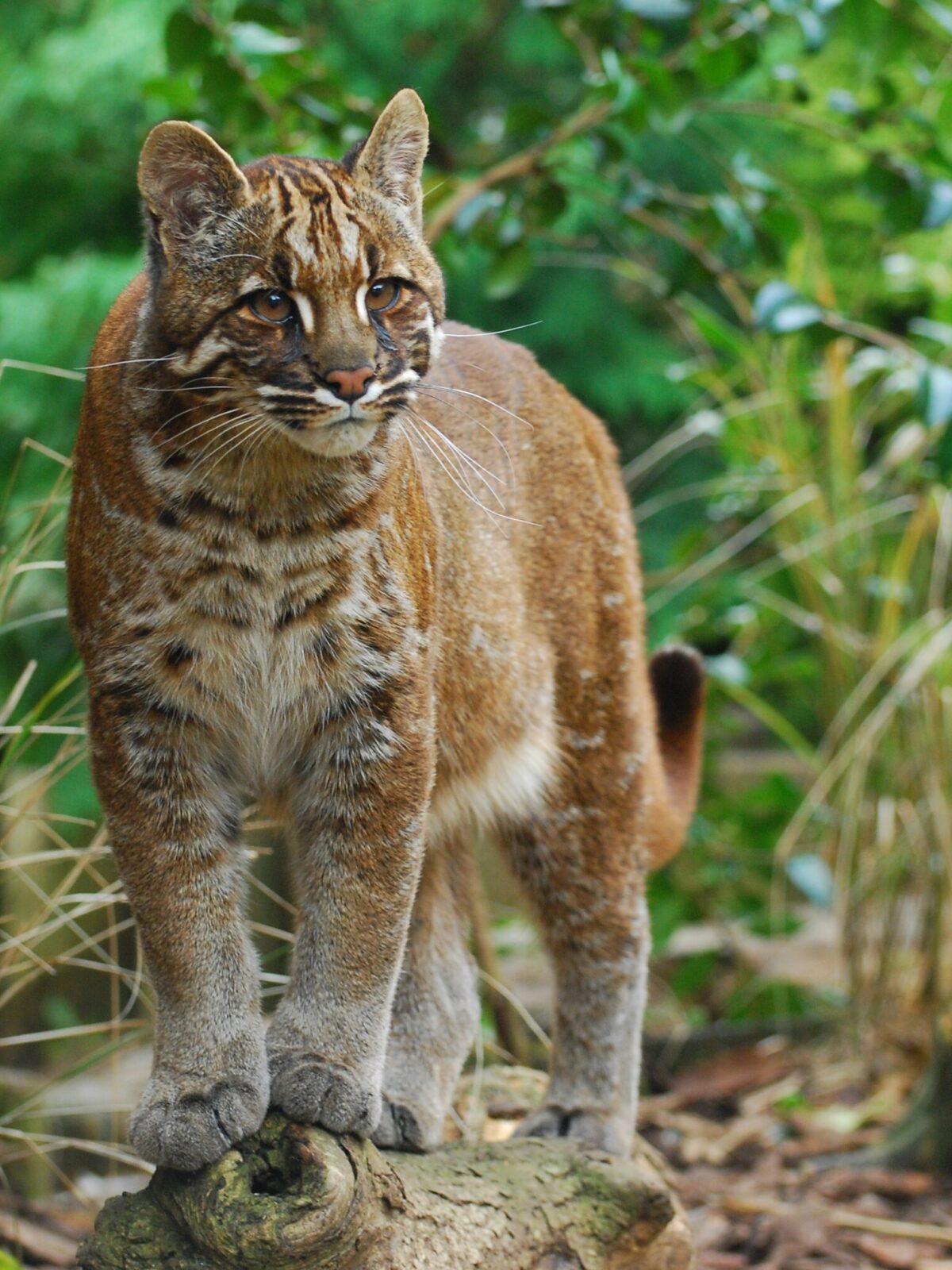
ASIAN GOLDEN CAT
DESCRIPTION
Also called Temminck's Cat, the Asian Golden Cat is a medium-sized wild cat known for its striking golden-brown fur, which can vary in shade and may have dark spots or stripes. This elusive feline is primarily found in forested areas across Southeast Asia, where it exhibits a solitary and secretive behavior, often hunting at dawn or dusk. The Asian Golden Cat plays a crucial role in its ecosystem as a predator, helping to maintain the balance of prey populations in its habitat.
FUN FACTS
- Asian Golden Cats are known for their remarkable climbing abilities, often seen resting on tree branches or stalking prey from above
- They have a unique vocalization that includes a range of sounds, from growls to purrs, which they use to communicate with each other in the dense forests they inhabit.|Despite their name, Asian Golden Cats are not closely related to domestic cats and are more closely aligned with other wild cats like the leopard cat and the bay cat, showcasing the diversity within the Felidae family
QUICK INFO
Lifespan10-15 years in the wild, up to 20 years in captivi
Average Weight8-16 kg
Average Length75-110 cm
Diet TypeCarnivore
Social Structuresolitary, typically living alone except during mating season or a mother with her young
Activity PatternCrepuscular
Breeding SeasonYear-round, with peaks depending on the region
- Habitat
- Asian Golden Cats inhabit dense forests, including tropical and subtropical rainforests, as well as mountainous regions. They prefer areas with ample cover for stalking prey and resting.
- Biomes
- Tropical Rainforest, Temperate Forest
- Native Range
- The species is native to Southeast Asia, ranging from the Himalayas in the west to southern China and down to the Malay Peninsula.
- Continent
- Asia
- Countries
- India, Nepal, Bhutan, Bangladesh, Myanmar, Thailand, Laos, Vietnam, Cambodia, Malaysia, Indonesia, China
- Diet
- The Asian Golden Cat primarily preys on small to medium-sized mammals, birds, and occasionally reptiles. Its diet can vary based on the availability of prey in its habitat.
- Diet Type
- Carnivore
- Favorite Food
- small mammals, birds
- Social Structure
- solitary, typically living alone except during mating season or a mother with her young
- Activity Pattern
- Crepuscular
- Group Size
- 1
- Territorial
- 1
 EN
EN
8-16 kg
Weight
75-110 cm
Length
- Coloration
- golden-brown fur with possible dark spots or stripes
- Sexual Dimorphism
- males are generally larger than females
- Lifespan
- 10-15 years in the wild, up to 20 years in captivi
- Gestation Period
- 75-80 days
- Offspring per Birth
- 1-4
- Sexual Maturity
- 2-3 years
- Breeding Season
- Year-round, with peaks depending on the region
VU
Vulnerable
IUCN Red List Status
- Population Status
- The population of Asian Golden Cats is currently considered to be decreasing due to habitat loss and hunting.
- Wild Population Estimate
- unknown
- Population Trend
- Decreasing
- Endangered
- 1
- Threats
- Main threats include habitat destruction due to logging and agriculture, as well as poaching for their beautiful fur. These factors have led to a decline in their population across their range.
- Predators
- Humans are the primary threat, but young Asian Golden Cats may be vulnerable to larger predators such as leopards and tigers.
- Defense Mechanisms
- They rely on their camouflage and stealth to avoid detection by both predators and prey.
- Found in Zoos
- Uncommon