


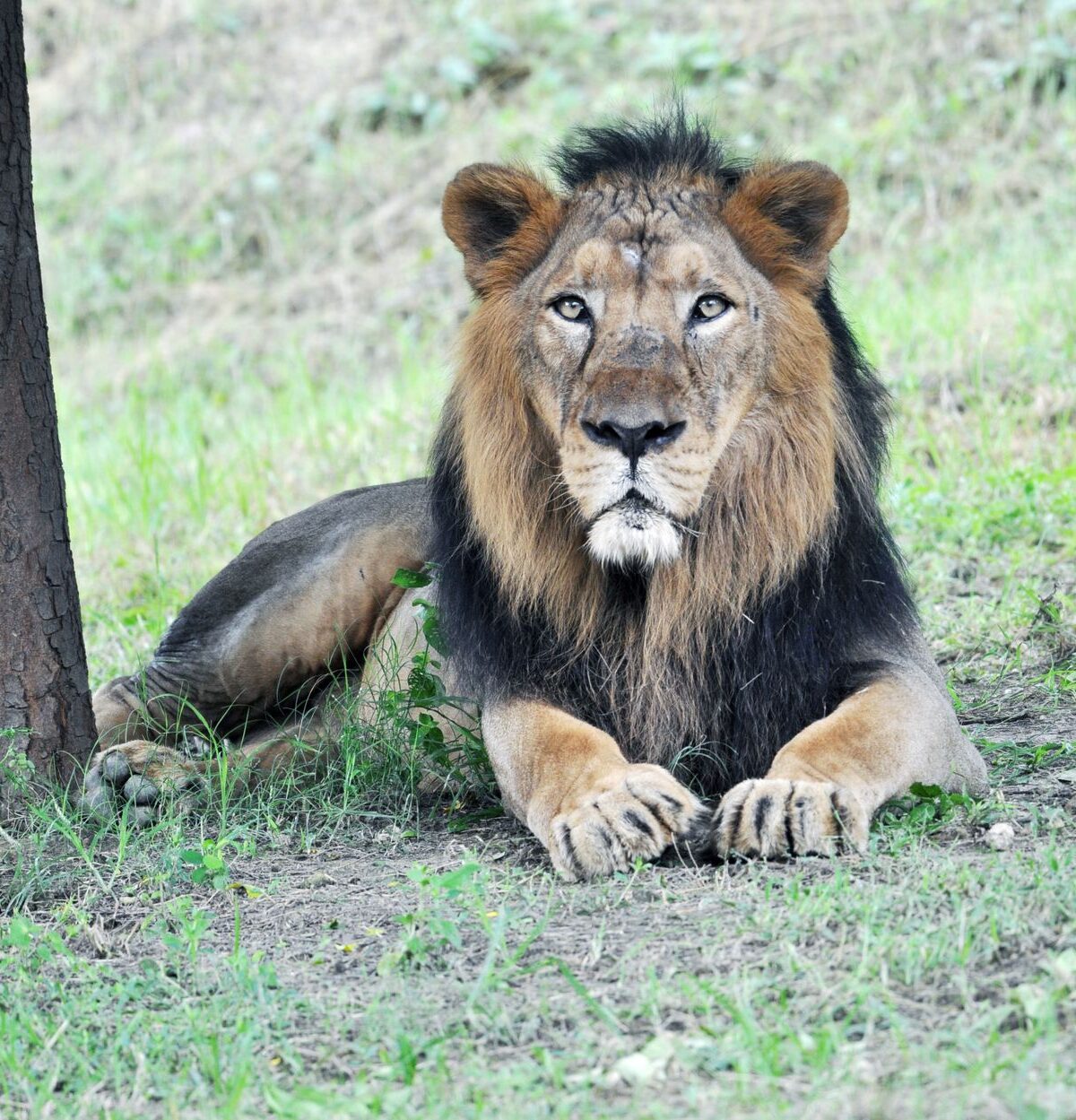
ASIATIC LION
Panthera leo persica
DESCRIPTION
Asiatic Lion, also known as the Indian Lion or Persian Lion, is a subspecies of lion found primarily in the Gir Forest of India. They are slightly smaller than their African counterparts, with males typically having a less developed mane, which is often shorter and sparser. These lions are social animals, living in prides, but they tend to be more solitary than African lions, often hunting alone or in small groups.
FUN FACTS
- Asiatic Lions are unique among lions as they are the only subspecies that live in a forested habitat, adapting their hunting strategies to the dense vegetation
- | Unlike African lions, Asiatic Lions have a smaller pride structure, which allows them to be more adaptable in their hunting techniques, often relying on stealth and surprise rather than sheer numbers
QUICK INFO
Lifespan10-15 years in the wild, up to 20 years in captivi
Average Weight120-190 kg
Average Length1.5-2.5 m
Diet TypeCarnivore
Social Structurepride, typically consisting of related females and a few males
Activity PatternNocturnal
Breeding SeasonYear-round
- Habitat
- Asiatic Lions inhabit dry deciduous forests, scrublands, and grasslands. They prefer areas with ample cover for stalking prey and access to water sources.
- Biomes
- Savanna, Grassland, Forest
- Native Range
- Historically, Asiatic Lions roamed across the Middle East and into India, but today they are confined to the Gir Forest National Park in Gujarat, India.
- Continent
- Asia
- Countries
- India
- Diet
- Asiatic Lions are carnivorous and primarily hunt large ungulates. Their diet mainly consists of deer, antelope, and wild boar.
- Diet Type
- Carnivore
- Favorite Food
- deer, antelope, wild boar
- Social Structure
- pride, typically consisting of related females and a few males
- Activity Pattern
- Nocturnal
- Group Size
- 3-10
- Territorial
- 1
120-190 kg
Weight
1.5-2.5 m
Length
1.0 m at shoulder
Height (Shoulder)
- Coloration
- light tan to sandy color with a slightly darker mane in males
- Sexual Dimorphism
- males are larger and have manes, while females are smaller and lack manes
- Lifespan
- 10-15 years in the wild, up to 20 years in captivi
- Gestation Period
- 110 days
- Offspring per Birth
- 1-4
- Sexual Maturity
- 3-4 years
- Breeding Season
- Year-round
EN
Endangered
IUCN Red List Status
- Population Status
- The population of Asiatic Lions has been recovering due to conservation efforts, but they remain limited to a small area.
- Wild Population Estimate
- 600-700
- Population Trend
- Increasing
- Endangered
- 1
- Threats
- Main threats include habitat loss, human-wildlife conflict, and poaching. The small population size also makes them vulnerable to disease outbreaks.
- Conservation Program
- Project Lion, a conservation initiative aimed at protecting and increasing the Asiatic Lion population.
- Predators
- Humans are the primary threat, but young lions may be at risk from other large carnivores such as leopards.
- Defense Mechanisms
- Asiatic Lions use their strength and social structure to defend their territory and pride from intruders.
- Found in Zoos
- Uncommon