


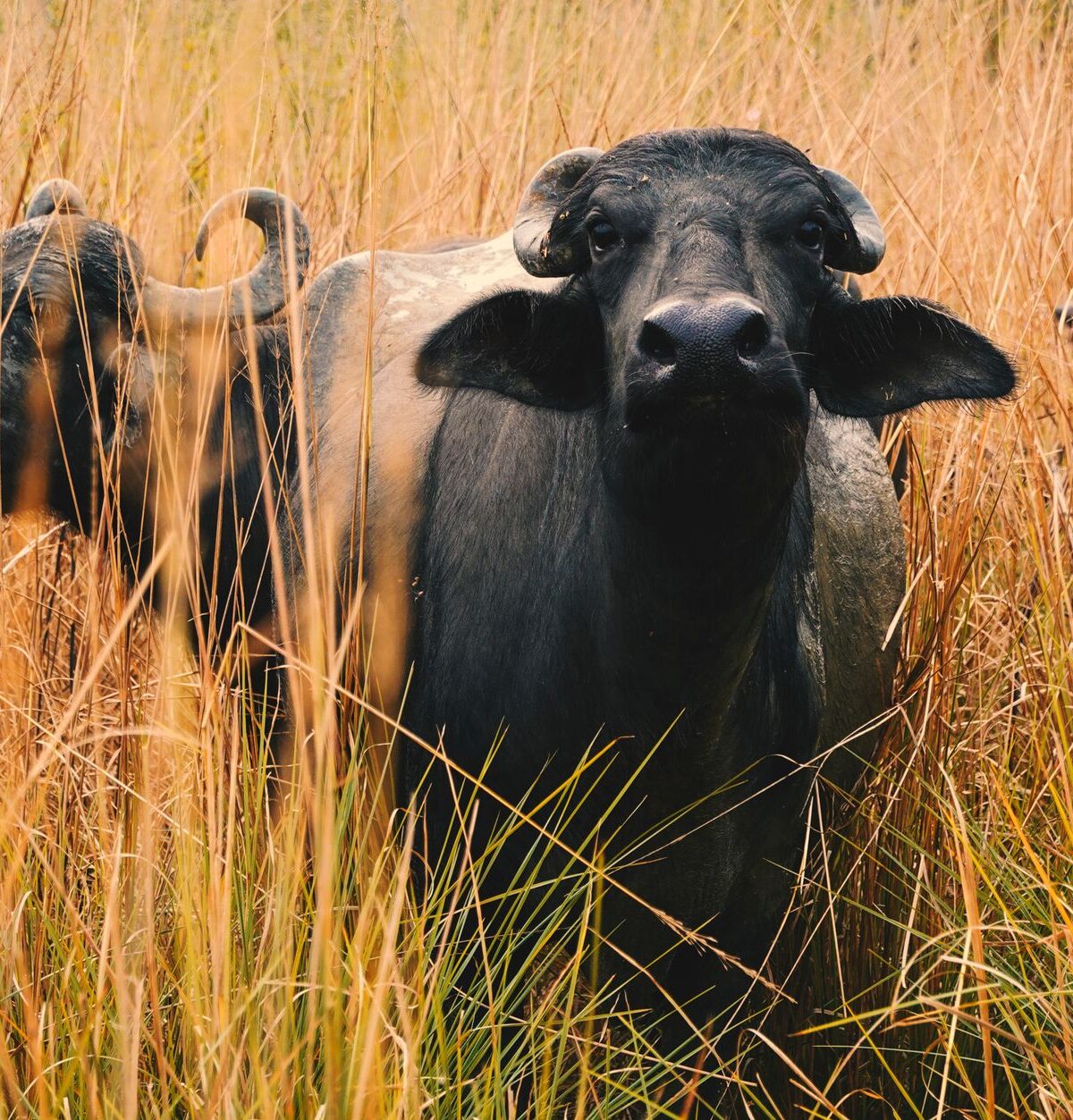
ASIATIC WATER BUFFALO
Bubalus arnee
DESCRIPTION
Asiatic Water Buffalo (Bubalus arnee) is commonly known as the Indian Water Buffalo and is a large bovine species characterized by its massive build and curved horns. They have a dark, almost black coloration, with a sparse covering of hair, which helps them adapt to their hot and humid habitats. These animals are primarily found in wetlands and are known for their strong swimming abilities, often submerging themselves in water to cool off and escape from predators.
FUN FACTS
- Asiatic Water Buffalo are excellent swimmers and can submerge themselves completely in water, leaving only their nostrils above the surface
- This behavior not only helps them cool off but also allows them to escape from predators
- | They play a significant role in their ecosystems by helping to maintain wetland habitats through their grazing, which promotes plant diversity and supports other wildlife species
QUICK INFO
Lifespan15-25 years in the wild, up to 30 years in captivi
Average Weight400-800 kg
Average Length2.0-3.0 m
Diet TypeHerbivore
Social Structuregroup — they typically live in herds led by a dominant female.
Activity PatternDiurnal
Breeding SeasonYear-round, with peaks during the rainy season
- Habitat
- They inhabit wetlands, swamps, and riverine areas, often preferring regions with abundant water sources. Their habitat is crucial for their survival, providing both food and a means to regulate body temperature.
- Biomes
- Wetlands, Grasslands
- Native Range
- The native range of the Asiatic Water Buffalo includes parts of South Asia, Southeast Asia, and some regions of China.
- Continent
- Asia
- Countries
- India, Nepal, Bangladesh, Myanmar, Thailand, Vietnam, China
- Diet
- Asiatic Water Buffalo are herbivores that primarily graze on grasses, aquatic plants, and other vegetation. They are known to consume a large quantity of food daily to sustain their size.
- Diet Type
- Herbivore
- Favorite Food
- grasses, aquatic plants
- Social Structure
- group — they typically live in herds led by a dominant female.
- Activity Pattern
- Diurnal
- Group Size
- 5-30
- Territorial
- 0
 EN
EN
 VU
VU
400-800 kg
Weight
2.0-3.0 m
Length
1.5-1.8 m at shoulder
Height (Shoulder)
- Coloration
- dark gray to black with sparse hair
- Sexual Dimorphism
- males are generally larger than females
- Lifespan
- 15-25 years in the wild, up to 30 years in captivi
- Gestation Period
- 300 days
- Offspring per Birth
- 1
- Sexual Maturity
- 3-4 years
- Breeding Season
- Year-round, with peaks during the rainy season
EN
Endangered
IUCN Red List Status
- Population Status
- The population of Asiatic Water Buffalo is currently declining due to habitat loss and hunting.
- Wild Population Estimate
- 10,000-15,000
- Population Trend
- Decreasing
- Endangered
- 1
- Threats
- Main threats include habitat destruction due to agriculture and urbanization, as well as hunting for meat and horns. Additionally, competition with domestic buffalo for resources poses a significant risk to their survival.
- Conservation Program
- Various conservation programs are in place, including habitat restoration and protection efforts in national parks.
- Predators
- Tigers, leopards, and crocodiles are known predators of the Asiatic Water Buffalo, particularly when they are young or vulnerable.
- Defense Mechanisms
- They often use their size and strength to defend against predators, and they can also form protective circles around their young.
- Compatible Animals
- nil
- Found in Zoos
- Uncommon