


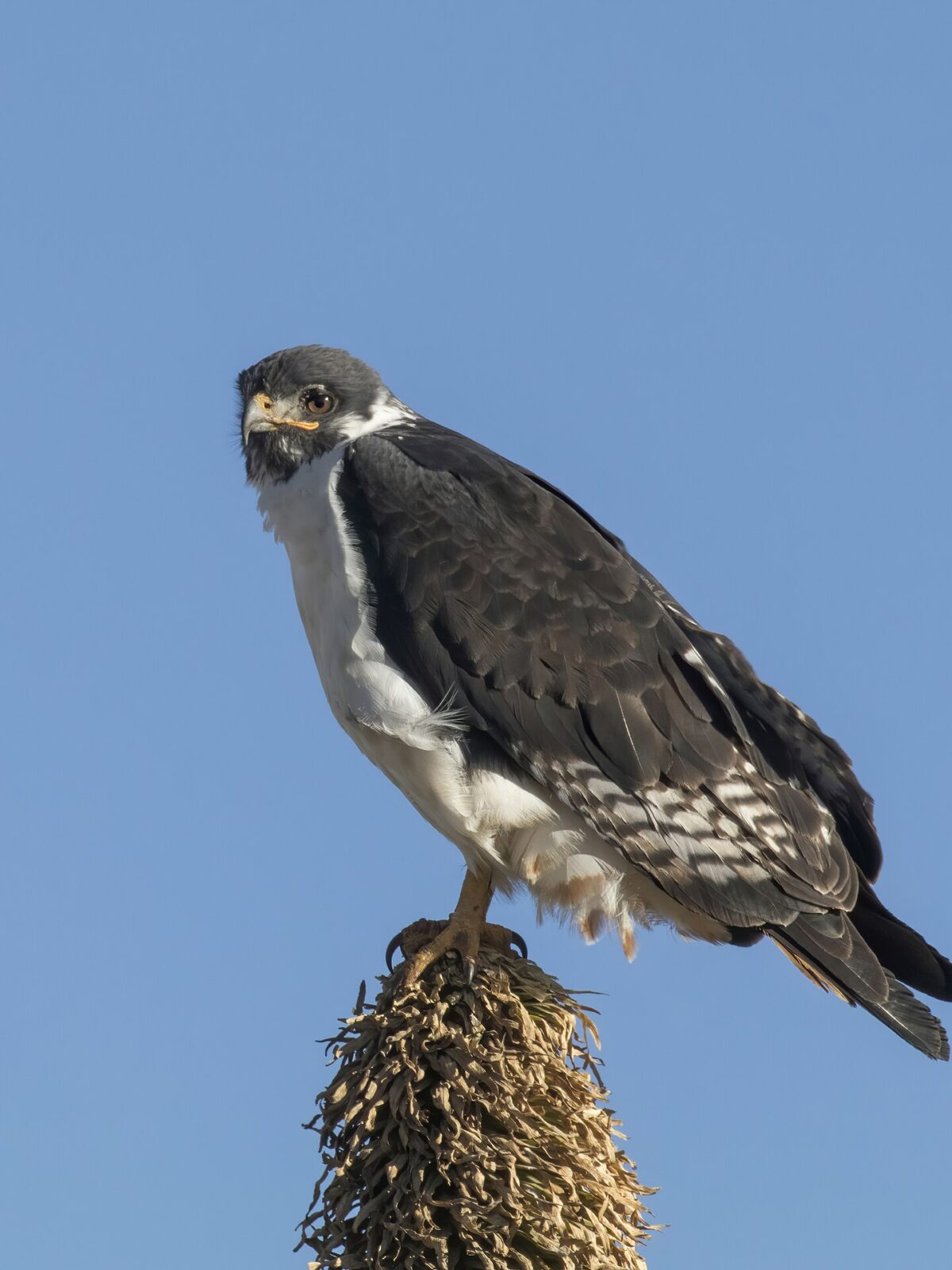
AUGUR BUZZARD
Buteo augur
DESCRIPTION
Augur Buzzard (Buteo augur) is commonly known as the African Buzzard. This bird of prey exhibits a robust body with a broad wingspan, typically featuring a mix of dark brown and white plumage. It is known for its distinctive call and soaring flight, often seen gliding effortlessly over its territory in search of food.
FUN FACTS
- The Augur Buzzard is known for its impressive aerial displays during courtship, where it performs acrobatic flights to attract a mate
- Additionally, this species has a unique ability to adapt to various habitats, allowing it to thrive in both rural and urban environments
QUICK INFO
Lifespanup to 20 years in the wild
Average Weight0.7-1.5 kg
Average Length45-60 cm
Diet TypeCarnivore
Social Structuresolitary or pair, typically seen alone or with a mate
Activity PatternDiurnal
Breeding SeasonSpring (August-October)
- Habitat
- This species inhabits a variety of environments, including open grasslands, savannas, and mountainous regions. It prefers areas with scattered trees for perching and nesting.
- Biomes
- Savanna, Grassland, Montane
- Native Range
- The Augur Buzzard is native to eastern and southern Africa, ranging from Ethiopia and Kenya down to South Africa.
- Continent
- Africa
- Countries
- Ethiopia, Kenya, Tanzania, South Africa, Zimbabwe
- Diet
- The Augur Buzzard primarily feeds on small mammals, birds, and reptiles. It employs a sit-and-wait hunting strategy, often perching on high vantage points to spot potential prey.
- Diet Type
- Carnivore
- Favorite Food
- small mammals, birds, reptiles
- Social Structure
- solitary or pair, typically seen alone or with a mate
- Activity Pattern
- Diurnal
- Group Size
- 1-2
- Territorial
- 1
0.7-1.5 kg
Weight
45-60 cm
Length
- Coloration
- dark brown upperparts with white underparts and a distinctive white tail with dark bands
- Sexual Dimorphism
- males are generally smaller than females
- Lifespan
- up to 20 years in the wild
- Offspring per Birth
- 1-3
- Sexual Maturity
- 2-3 years
- Breeding Season
- Spring (August-October)
LC
Least Concern
IUCN Red List Status
- Population Status
- The population is currently stable, but habitat loss poses a potential threat.
- Wild Population Estimate
- unknown
- Population Trend
- Stable
- Endangered
- 0
- Threats
- Main threats include habitat destruction due to agriculture and urbanization. Additionally, they may face persecution from farmers who view them as threats to livestock.
- Predators
- larger birds of prey, such as eagles, may occasionally prey on juvenile Augur Buzzards.
- Defense Mechanisms
- They rely on their ability to soar and evade predators, as well as their sharp talons and beak for defense.
- Found in Zoos
- Uncommon