


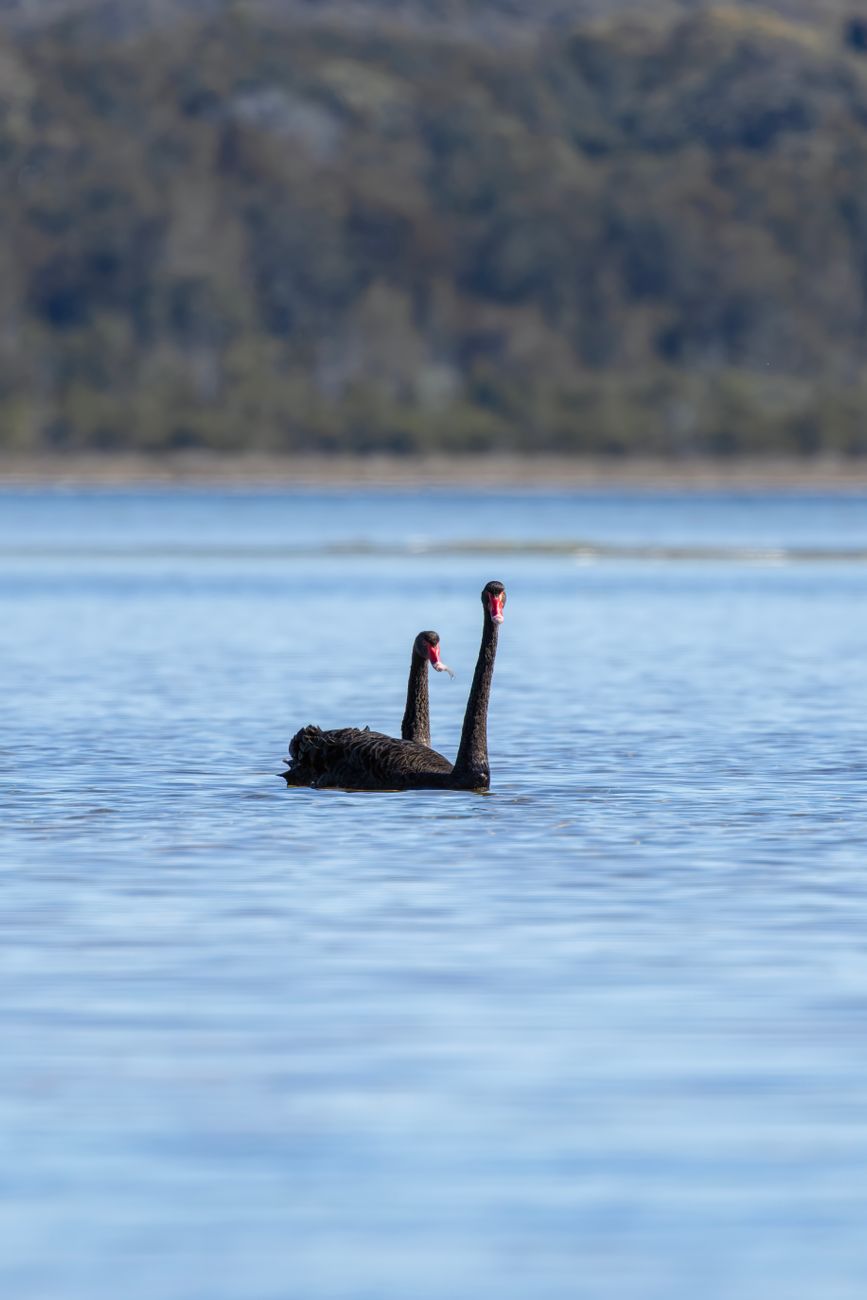
AUSTRALIAN BLACK SWAN
Cygnus atratus
DESCRIPTION
Australian Black Swan (Cygnus atratus) is commonly known as the Black Swan. This large waterbird is characterized by its striking black plumage and bright red bill, which sets it apart from other swan species. They are known for their graceful swimming and are often seen gliding across lakes and rivers in pairs or small groups, displaying a range of social behaviors.
FUN FACTS
- Australian Black Swans are unique among swan species for their black coloration, which is a result of a genetic mutation
- They are also known for their vocalizations, which include a range of honks and trumpets that can be heard over long distances
QUICK INFO
Lifespan10-15 years in the wild, up to 20 years in captivi
Average Weight4-9 kg
Average Length1.2-1.4 m
Diet TypeHerbivore
Social StructureThey are typically found in pairs or small groups, often forming larger flocks during migration or in areas with abundant food.
Activity PatternDiurnal
Breeding SeasonSpring to early summer (August to January)
- Habitat
- These swans inhabit a variety of freshwater environments, including lakes, rivers, and wetlands. They prefer areas with abundant vegetation for feeding and nesting.
- Biomes
- Wetlands, Freshwater
- Native Range
- The native range of the Australian Black Swan includes the eastern and southwestern regions of Australia, as well as Tasmania.
- Continent
- Australia
- Countries
- Australia, Tasmania
- Diet
- Australian Black Swans primarily feed on aquatic plants, algae, and grasses. They are known to graze on land as well, particularly in agricultural areas.
- Diet Type
- Herbivore
- Favorite Food
- aquatic plants, algae, grasses
- Social Structure
- They are typically found in pairs or small groups, often forming larger flocks during migration or in areas with abundant food.
- Activity Pattern
- Diurnal
- Group Size
- 2-30
- Territorial
- 1

4-9 kg
Weight
1.2-1.4 m
Length
- Coloration
- The plumage is predominantly black with a distinctive red bill and white flight feathers.
- Sexual Dimorphism
- Males and females are similar in appearance, though males are generally larger.
- Lifespan
- 10-15 years in the wild, up to 20 years in captivi
- Offspring per Birth
- 3-8
- Sexual Maturity
- 2-3 years
- Breeding Season
- Spring to early summer (August to January)
LC
Least Concern
IUCN Red List Status
- Population Status
- The population of Australian Black Swans is currently stable, with healthy numbers in their native range.
- Wild Population Estimate
- 100,000+
- Population Trend
- Stable
- Endangered
- 0
- Threats
- Main threats include habitat loss due to urban development and pollution of waterways. Additionally, hunting and predation by introduced species can impact local populations.
- Predators
- Foxes, dogs, and large birds of prey can pose threats to eggs and young swans.
- Defense Mechanisms
- They can be aggressive when defending their nests and will hiss or flap their wings to deter threats.
- Compatible Animals
- Other waterfowl, ducks, geese
- Found in Zoos
- Common